
Related News
- 00
0000-00
How Shipbuilding Supply Chain Lead Times Affect Vessel Delivery Schedules - 00
0000-00
Maritime Digitalization: Where Fleet Operators Can Cut Fuel and Compliance Risk - 00
0000-00
Class Approval for Podded Thrusters: Design, Testing, and Vessel Integration Requirements - 00
0000-00
When carbon optimized voyage planning delivers measurable savings - 00
0000-00
How a twin engine load sharing system prevents uneven loading

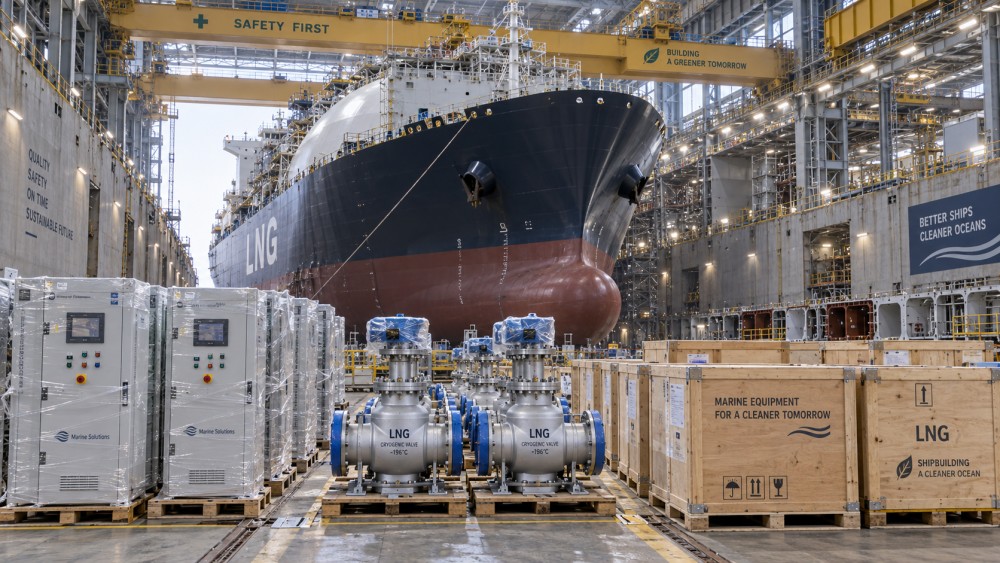
A shipping delay becomes critical when it affects a system that cannot be safely or commercially bypassed during construction, commissioning, class inspection, or delivery. On an LNG carrier, that may be a cryogenic valve, gas detection component, or control device tied to the cargo-handling system. On a cruise vessel, it may be an electrical integration module whose absence prevents commissioning of several connected subsystems. For an offshore vessel, a delayed propulsion drive, subsea interface component, or power-management part can hold up a tightly sequenced yard schedule.
Buyers should treat these delays as a project-control issue, not simply a freight problem. Airfreight, courier escalation, and supplier pressure may help at the margin, but they cannot resolve a part that has not completed manufacture, factory acceptance testing, export clearance, or classification documentation. The practical response is to establish the actual constraint, measure its effect on the vessel schedule, and choose the least risky recovery path before delay notices turn into missed milestones.
First, identify whether the delayed item is truly on the critical path
“Critical equipment” is often used too broadly. A costly item is not automatically schedule-critical, while a relatively small sensor, cable assembly, software license, or certified fastener package may be the one component preventing a system from being energized or accepted. Buyers need to distinguish between equipment that is operationally important and equipment that is currently blocking a defined project activity.
The first question is: what work cannot proceed, be tested, or be signed off without this delivery? The answer should come from the shipyard’s integrated schedule and the relevant OEM, not from a purchase-order due date alone. A late scrubber pump, for example, may still allow fabrication work to continue if foundations, pipe spools, electrical terminations, and interfaces can be completed independently. A late control cabinet may halt functional testing even when the physical installation is nearly complete.
For each delayed line item, the buyer should establish four dates:
- The supplier’s confirmed ready-for-dispatch date, including testing and documentation.
- The realistic port-to-yard transit and customs-clearance duration for the selected transport mode.
- The last acceptable arrival date before a scheduled installation, test, inspection, or delivery event is affected.
- The date at which recovery becomes materially more expensive or operationally unsafe.
This separates an inconvenient delay from one that demands executive intervention. It also prevents a common error: paying for expedited transport when the supplier’s actual constraint is unfinished engineering, a missing subcomponent, or pending certification.
Ask for evidence of progress, not optimistic delivery language
A supplier statement that equipment is “nearly ready” provides little basis for schedule decisions. In marine projects, a component may be mechanically complete but still unavailable because software configuration, pressure testing, witness inspection, packing, dangerous-goods declaration, export paperwork, or class-related documentation remains open. The buyer needs a short, evidence-based status report that identifies the remaining gates to dispatch.
For a delayed critical item, request a recovery plan that includes the manufacturing stage, outstanding materials, planned test dates, document status, packing readiness, transport booking status, and named owners for each action. The plan should show dependencies rather than only a revised estimated delivery date. If an electronics supplier is waiting on a board or a valve manufacturer is waiting on a certified actuator, the exposure lies with that dependency and should be visible.
The useful level of detail depends on the equipment. A VFD drive or marine power-management module may require confirmation of cabinet assembly, firmware loading, factory acceptance testing, packing, and interface data release. For cryogenic or pressure-containing equipment, buyers should confirm that the relevant material traceability, test records, and inspection documents will travel with the equipment or be available in time for acceptance. Replacing a late physical delivery with incomplete documentation can simply move the disruption to the next commissioning gate.
Frequent status calls are useful only when they drive decisions. A concise dashboard with milestone dates, blockers, logistics mode, and required buyer or yard actions is more effective than repeated narrative updates. The buyer should also specify when a supplier must escalate a new risk. Waiting until a missed dispatch date is confirmed can remove the remaining options for resequencing or substitution.
Do not assume faster freight is the best recovery measure
Expedited freight is appropriate when the equipment is complete, correctly packed, export-ready, and genuinely capable of saving a downstream milestone. It is less effective when the primary delay is still inside the factory. In that situation, an airfreight quotation can create a false sense of recovery while the real issue remains unresolved.
Buyers should compare options against the value of the schedule impact, not against freight cost in isolation. A high-cost transport method can be justified where it protects a vessel delivery date, a dry-dock window, a commissioning team mobilization, or a contractual interface with another supplier. It may be poor value where the shipyard has productive work available elsewhere, or where the delayed item will still wait for civil, piping, electrical, or software prerequisites.
Partial shipment deserves particular scrutiny. Sending foundations, cable glands, mounting hardware, or non-critical auxiliaries early can allow installation teams to make progress. Shipping only part of a highly integrated package may create no usable advance at all. The yard should confirm exactly which tasks become available from the partial delivery and whether the parts can be stored, protected, and tracked without damage or loss.
Build alternatives before a delay becomes an emergency
Alternative sourcing is often discussed as though it were a simple commercial lever. For vessel equipment, it may require technical review, revised drawings, electrical or piping interface checks, software changes, owner approval, class involvement, new test records, and agreement on future spares and service responsibility. A substitute that arrives quickly but introduces weeks of integration uncertainty is rarely a true recovery option.
That does not make dual or alternative sourcing irrelevant. It makes early qualification essential. Buyers should identify which equipment categories have a realistic second-source path and which are too integrated, proprietary, or certification-dependent to switch late. Commodity-like materials and certain standard components may be more replaceable than specialized LNG cargo-system devices, custom electrical cabinets, pod propulsion hardware, or exhaust-treatment control assemblies.
For high-risk packages, a practical procurement file should retain enough information to assess substitution quickly: approved specifications, interface drawings, certification requirements, software and communication protocols, acceptable deviation limits, spare-parts implications, and decision authority. This work is most valuable before the first delay occurs. During an active disruption, the aim is to compare approved paths rather than begin a full technical selection exercise under schedule pressure.
Buyers should also be cautious about treating a similar model number as equivalent equipment. The differences that matter may be hidden in materials, hazardous-area ratings, cryogenic suitability, control logic, pressure class, communication interfaces, or documentation scope. Equipment installed on a vessel must work within a system and approval framework; physical fit alone is not enough.
Use inventory selectively, based on failure and schedule exposure
Holding more inventory is not a universal answer. Large marine equipment can be capital-intensive, project-specific, difficult to preserve, and vulnerable to configuration changes. Yet a zero-stock approach can be fragile when a small number of specialized parts controls commissioning or future vessel availability.
The more useful approach is risk-ranked inventory planning. Buyers should consider stock or reserved capacity where three conditions overlap: lead times are uncertain or long, a missing item stops a high-value activity, and substitution is difficult. This can apply to selected control modules, sensors, seals, actuation components, electrical spares, certified cables, and service kits, depending on the vessel design and supplier arrangement.
For equipment that cannot sensibly be held in stock, suppliers may be asked to reserve manufacturing slots, maintain defined safety stock of critical subcomponents, or agree to transparent allocation rules. The contract should make clear what is actually reserved. A vague commitment to “priority production” has little value if materials, test capacity, or export documentation remain unconstrained.
Inventory decisions should also account for configuration control. Stocked equipment must match the approved project revision, required certificates, and applicable software or firmware baseline. A spare drive or controller with the wrong settings, interfaces, or documentation may be useful only after rework that defeats the purpose of holding it.
Coordinate the commercial response with the technical response
When a delay is serious, procurement cannot manage it alone. The shipyard needs to assess resequencing and access constraints. The OEM needs to confirm technical alternatives and testing implications. The logistics partner needs the latest dimensions, packing status, export data, and transport restrictions. The owner or project management team may need to assess delivery consequences and approve deviations. Classification-related questions must be addressed through the appropriate technical and approval channels.
A single issue owner should keep these parties aligned around one recovery schedule. Without that discipline, each party can report progress within its own scope while the vessel program still loses time at the interfaces. The owner’s task is to keep the decision framed around the next blocked milestone: what must happen, by whom, and by when for that milestone to remain achievable.
Commercial rights should be preserved, but they should not consume the early response. Buyers may need to document notices, cost exposure, and contractual obligations. At the same time, the immediate goal is to recover the delivery path. Arguments over liability will not release equipment from a factory, obtain an export document, or make a replacement compatible with the installed system.
Turn each delay into a procurement control improvement
After the immediate issue is stabilized, buyers should review why the warning came late and whether the purchase strategy matched the equipment’s importance. The answer may reveal weak milestone reporting, insufficient verification of sub-tier suppliers, an unrealistic transport assumption, poorly defined documentation requirements, or a lack of decision authority for escalation.
For critical vessel equipment, delivery management should begin at specification and contracting, continue through manufacturing and documentation, and remain connected to the yard’s commissioning sequence. The strongest response to a shipping delay is rarely a last-minute transport upgrade. It is a controlled process that identifies the real bottleneck early enough to preserve choices: accelerate, resequence, substitute, protect inventory, or accept a managed schedule consequence with clear commercial ownership.