
Related News
- 00
0000-00
How Shipbuilding Supply Chain Lead Times Affect Vessel Delivery Schedules - 00
0000-00
Maritime Digitalization: Where Fleet Operators Can Cut Fuel and Compliance Risk - 00
0000-00
Class Approval for Podded Thrusters: Design, Testing, and Vessel Integration Requirements - 00
0000-00
When carbon optimized voyage planning delivers measurable savings - 00
0000-00
How a twin engine load sharing system prevents uneven loading

For a fleet executive, the most expensive voyage is rarely the one with the highest bunker invoice. It is the voyage that burns more fuel than necessary, arrives outside a commercially useful window, exposes the vessel to avoidable weather stress, or produces an emissions profile that becomes difficult to explain to charterers, financiers, and regulators.
That is why carbon optimized voyage planning is moving beyond a sustainability discussion and into operating-margin management. In practical terms, it is the discipline of selecting and continuously adjusting a voyage plan using fuel, weather, currents, vessel performance, schedule commitments, safety limits, port constraints, and carbon exposure as connected variables rather than separate operational tasks.
The question for decision-makers is not whether a lower-carbon route is theoretically possible. It is whether the planning process can produce savings that are measurable, repeatable, auditable, and commercially acceptable across real voyages. The answer depends on where the savings originate, how operational trade-offs are governed, and whether shore teams and crews are working from the same decision logic.
Carbon optimization becomes valuable when it changes operating decisions
A routing recommendation alone does not create value. The measurable result appears when a recommendation changes a decision that affects fuel consumption, vessel speed, engine loading, arrival timing, or emissions liability.
Consider a vessel approaching a port where berth availability is uncertain. A conventional response may be to maintain a higher speed “just in case,” only to wait at anchorage after arrival. Carbon optimized voyage planning can identify an economically sound alternative: reduce speed earlier, remain within safe engine operating conditions, use forecast weather and current data to refine the arrival window, and coordinate with the terminal or chartering side. The vessel may consume less fuel without losing its operational position.
This logic is often described as just-in-time arrival, but its effectiveness depends on more than a revised ETA. It requires confidence in port-call information, clear commercial authority to adjust speed, and a performance model that can estimate the fuel implications of different operating profiles. Without those elements, “slow down” remains an informal instruction rather than a controlled savings mechanism.
For many operators, the strongest business case comes from managing the gap between planned and actual performance. A voyage plan may assume a clean hull, stable weather, a defined draft, and a specific main-engine load. Reality changes at sea. Wind direction shifts, swell increases, cargo conditions evolve, and auxiliary loads rise. A planning system that does not incorporate actual vessel behavior may create an attractive forecast but little financial improvement.
Where measurable savings usually emerge
Fuel reduction is the most visible outcome, but it is not the only one. A sound carbon optimization program should make value visible in several operational and financial categories.
- Route and weather alignment: Avoiding severe head seas, adverse currents, excessive wind resistance, or unnecessary detours can reduce consumption and protect schedule reliability. The best route is not always the shortest line on the chart; it is the route with the lowest total cost under defined safety and commercial constraints.
- Speed and engine-load management: Small, well-timed adjustments can matter more than dramatic speed reductions. Planning must account for an engine’s efficient operating range, generator demand, shaft power, propulsion configuration, and any limits associated with machinery health.
- Reduced waiting time: Better arrival synchronization can curb fuel burned while rushing toward congested ports or operating generators during extended anchorage periods.
- Carbon-cost visibility: As emissions reporting and regional carbon mechanisms influence voyage economics, each tonne of fuel has a broader cost footprint. Planning that connects fuel use with emissions exposure improves commercial comparisons between voyage options.
- Maintenance-informed performance: Repeated deviations between predicted and actual consumption can reveal hull fouling, propeller degradation, machinery inefficiency, or an incorrect performance baseline. The saving may be realized through maintenance action rather than navigation alone.
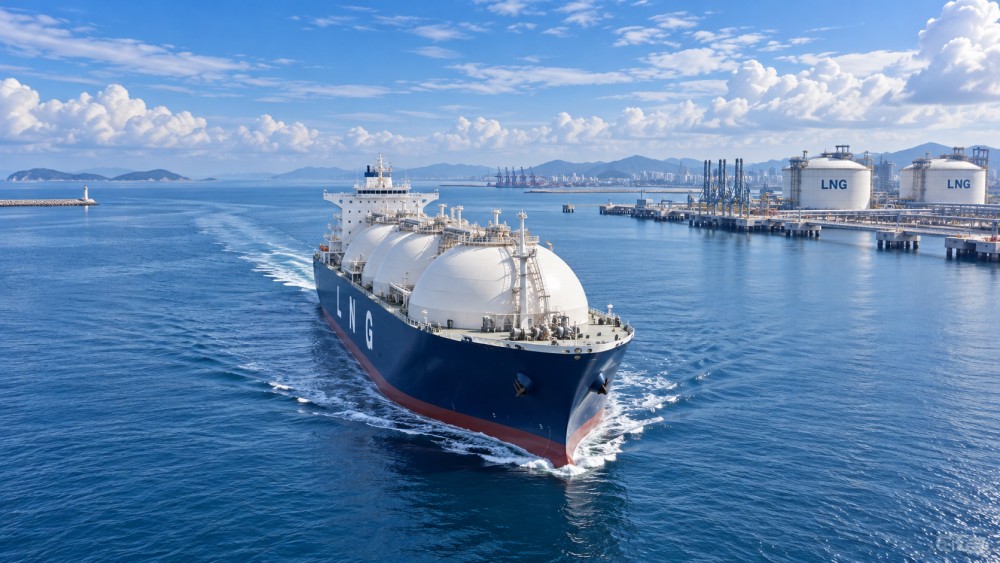
These benefits are particularly relevant to energy-intensive vessels. LNG carriers must balance cargo and boil-off gas management with propulsion demand and terminal timing. Cruise vessels operate within tightly choreographed itineraries where passenger experience, port slots, hotel loads, and weather routing interact. Offshore engineering vessels may face dynamic-positioning requirements, project-critical standby periods, and weather-sensitive installation windows. Their operating patterns differ, but the underlying question is the same: where can energy be saved without compromising the mission of the asset?
Not every “green” voyage plan is commercially optimal
Carbon optimization should not be treated as a blanket instruction to sail slower or take a longer weather-avoiding route. Both choices can be correct in some circumstances and costly in others.
A longer route may reduce wave-induced resistance and lower risk to cargo, personnel, or equipment. Yet it may also create a missed berth window, an additional day of charter exposure, or a conflict with downstream commitments. Similarly, reducing speed may improve fuel efficiency per nautical mile but increase auxiliary consumption over total voyage hours. For vessels with high hotel loads, cryogenic cargo systems, or power-intensive mission equipment, this distinction is essential.
Decision-makers should therefore ask for an optimization model that compares options on a total-voyage basis. The model should evaluate, at minimum, fuel consumption, expected arrival time, weather risk, emissions, port constraints, applicable commercial penalties or incentives, and operational feasibility. A recommendation that highlights carbon savings while hiding schedule consequences does not support a procurement-grade decision.
The most useful planning platforms make assumptions visible. Users should be able to see which weather forecast was used, how current data affected the route, what speed profile was assumed, which vessel performance curve informed the calculation, and how arrival constraints were treated. Transparency is not simply a technical preference. It is what enables a marine superintendent, chartering manager, master, and finance team to defend the same decision from their different perspectives.
From noon reports to a decision-ready performance baseline
Carbon optimized voyage planning is only as credible as the vessel data behind it. Many fleets have years of noon reports, AIS tracks, weather records, bunker delivery notes, engine logs, and port-call data. Yet historical data is not automatically decision-ready. Entries may be inconsistent, reporting intervals may vary, and fuel figures may not be reconciled against operational events.
A practical starting point is to establish a vessel-specific performance baseline. This does not require waiting for perfect data. It requires disciplined data treatment: identifying the variables that materially affect consumption, removing clearly unreliable observations, separating laden and ballast conditions where relevant, and accounting for environmental conditions and machinery configuration.
For a conventional cargo vessel, the baseline may focus on speed, draft, trim, wind, wave height, current, and main-engine power. For LNG carriers, planners may need to include boil-off behavior, reliquefaction or gas-combustion modes, cargo conditions, and the operational economics of different propulsion arrangements. In cruise operations, the analysis may extend to hotel loads, shore-power availability, port maneuvering, and itinerary integrity. Marine electric propulsion adds another layer: variable-frequency drive behavior, podded-thruster operating ranges, generator dispatch, and battery or hybrid system state can all change the best route-speed combination.
The goal is not to build a perfect digital twin before acting. It is to improve the quality of each planning cycle while documenting uncertainty. A system that states a likely savings range with clear assumptions is generally more useful than one that presents a precise figure unsupported by vessel-specific evidence.
What procurement teams should require from a voyage optimization solution
When evaluating a carbon optimized voyage planning platform or service, buyers should look beyond dashboards and route visualizations. The key issue is whether the solution can function within the operator’s actual decision environment.
1. Operational integration, not just analytical output
Ask how the solution connects with weather routing, fleet-management systems, noon-report workflows, engine performance tools, port-call data, and emissions reporting. If planners need to export data manually, rebuild calculations in spreadsheets, and re-enter voyage instructions in another system, the savings case can quickly erode.
2. Vessel-class relevance
A generic model may be adequate for initial screening, but specialized ships require more granular logic. Owners and operators of LNG carriers, luxury passenger ships, offshore construction vessels, and electrically propelled platforms should verify that the provider understands the operational physics and commercial constraints of their segment.
3. Clear human authority
Optimization tools should support—not override—the master’s safety judgment and the operator’s commercial authority. A good implementation defines who can approve a speed adjustment, who resolves conflicts between ETA and fuel objectives, and how route changes are communicated. Adoption improves when crews see the system as a source of better situational awareness rather than a shore-side compliance device.
4. Auditable emissions and savings methodology
Executives need to know whether reported savings are based on a baseline voyage, a historical average, a weather-normalized model, or an alternative route simulation. Each method has a place, but they should not be confused. For reporting, commercial discussions, or investment decisions, methodology must be consistent and traceable.
5. Cybersecurity and data governance
Voyage data can reveal commercially sensitive information about cargo movements, vessel utilization, port calls, and operating practices. Suppliers should be assessed for access control, data ownership terms, retention policies, integration security, and the resilience of their digital infrastructure.
Implementation works best when it starts with one decision loop
Fleet-wide transformation often begins with a narrower operational problem. An owner may start by reducing speed-related fuel waste on a specific trade lane. A cruise operator may focus on arrival synchronization at ports with recurring congestion. An LNG operator may investigate how voyage planning interacts with cargo management under volatile weather and terminal schedules.
Choosing one decision loop gives the organization a manageable test: Can the system generate recommendations in time? Are those recommendations accepted by the operational team? Does actual performance show a meaningful difference from the established baseline? Which assumptions proved weak?
During this phase, it is important to track both leading and lagging indicators. Leading indicators include recommendation acceptance rate, time between route update and action, data completeness, and ETA accuracy. Lagging indicators include fuel consumed, emissions per voyage or per transport work, waiting time, weather-related deviations, and schedule performance. If only fuel is measured, a company may overlook operational gains—or fail to detect that fuel savings were achieved at an unacceptable cost elsewhere.
The governance model matters as much as the software. Chartering, operations, technical management, masters, and sustainability teams may each own part of the outcome. A shared review process turns planning results into institutional learning rather than another isolated data stream.
Common reasons savings fail to materialize
The first is poor data discipline. When actual fuel use, speed, draft, or weather conditions are recorded inconsistently, the system cannot distinguish normal variation from a real performance loss.
The second is late intervention. A speed recommendation made a few hours before arrival has limited value if the vessel has already spent days sailing faster than necessary. Carbon optimization must begin early enough in the voyage to influence energy use.
The third is conflicting incentives. If operations teams are evaluated only on punctuality while sustainability teams are evaluated only on emissions intensity, the vessel may receive mixed signals. Shared voyage KPIs are more likely to produce durable savings.
Finally, organizations can mistake optimization for automation. Marine operations remain exposed to uncertainty: changing weather, traffic, port restrictions, equipment condition, and safety considerations. The purpose of intelligent planning is not to eliminate professional judgment; it is to give that judgment a stronger evidential foundation.
Turning navigation intelligence into a board-level cost lever
For corporate leaders, carbon optimized voyage planning deserves attention because it links three pressures that are often managed separately: bunker expenditure, emissions performance, and schedule reliability. It creates a way to examine each voyage as an operational system, where route, speed, machinery, cargo, weather, and port timing influence one another.
MO-Core’s Strategic Intelligence Center follows this convergence across high-value shipping segments, including advanced LNG transport, electric propulsion, cruise systems, and complex engineering vessels. The relevant insight is not that every ship should follow the same low-carbon playbook. It is that every asset class needs decision intelligence calibrated to its own energy profile, commercial mission, and compliance exposure.
Measurable savings arrive when an operator can answer a simple but demanding question before, during, and after a voyage: compared with the feasible alternatives, did we use the right amount of energy to deliver the required outcome? When the answer is supported by reliable data and repeatable planning discipline, lower carbon intensity becomes more than a reporting result. It becomes an operating advantage.