
Related News
- 00
0000-00
China Leads Global Shipbuilding Indicators in First Nine Months of 2026 - 00
0000-00
Marine Drive Class Approval: Is Type Approval Enough for Vessel Installation? - 00
0000-00
Hormuz LNG Transits Fall Sharply as Gulf Disruption Redirects Trade - 00
0000-00
Supply Chain Disruption: How to Assess Supplier Price Increase Requests - 00
0000-00
World’s First Commercial Ship-to-Ship Green Ammonia Bunkering Completed in China
Tags

China maintained its global lead in shipbuilding completions, new orders and outstanding orders in the first nine months of 2026, according to figures released by the Ministry of Industry and Information Technology on October 23, 2026. New orders grew faster than completed output, highlighting the importance of production scheduling and delivery execution as the order book expands.
Shipbuilding completions reached 58.05 million deadweight tonnes (DWT), up 50.7% year on year and accounting for 63.6% of the global total. New orders totalled 175.29 million DWT, an increase of 163.2%, representing 81.8% of worldwide orders. At the end of September, outstanding orders stood at 399.13 million DWT, equivalent to 72.4% of the global order book.
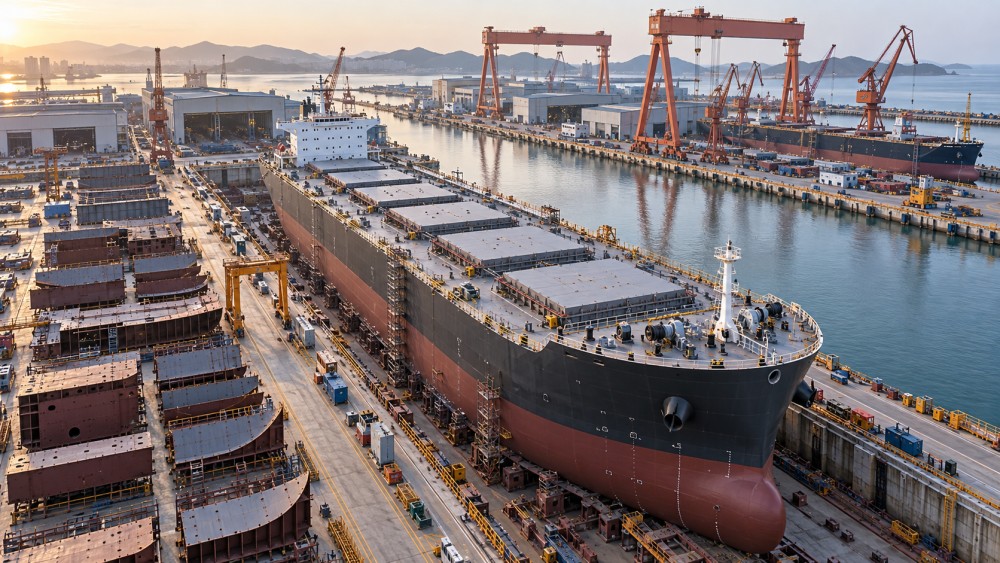
The three indicators describe different aspects of shipbuilding activity: completions measure delivered output, new orders track incoming business, and outstanding orders show the volume still to be fulfilled. China's lead across all three therefore extends from current deliveries to contracted future work. Its share of new orders was also higher than its share of completions, indicating a greater concentration of incoming business than of output delivered during the period.
For shipyards and their suppliers, the expanding order pipeline could increase demands on production planning, equipment coordination and delivery scheduling. The practical effect will depend on when vessels are due for delivery and how work is distributed across builders. The aggregate figures alone do not establish that shipyards face capacity shortages or that delivery times are lengthening.
The figures are expressed in deadweight tonnes, so they measure carrying capacity rather than contract value or profitability. Strong order growth supports a judgment about the scale of contracted demand, but does not by itself demonstrate higher margins or a shift toward higher-value vessels. Subsequent completion figures and changes in outstanding orders will help show how the current pipeline translates into delivered ships.