
Related News
- 00
0000-00
How to Evaluate an Integrated Propulsion Manufacturer for Vessel Retrofit Projects - 00
0000-00
LNG Carrier Price Trends: What Shipbuyers Should Budget for Newbuilds - 00
0000-00
How to Evaluate Marine Semiconductor Suppliers for Shipboard Reliability - 00
0000-00
How Dual-Fuel Ships Cut Emissions Across Different Fuel and Operating Profiles - 00
0000-00
How to Select Low-Voltage Marine Drives for Electric Propulsion Below 1 kV

For aftersales maintenance teams, dual-fuel integration often looks straightforward on paper but becomes complex once retrofit work begins. The biggest delays usually come from hidden interface conflicts, late engineering revisions, class approval bottlenecks, and fuel-system commissioning issues. Understanding where these setbacks emerge helps service professionals reduce downtime, improve planning accuracy, and keep vessel upgrades aligned with safety, compliance, and operational targets.
Why does dual-fuel integration create more retrofit delays than many teams expect?
The short answer is that dual-fuel integration is never just an engine job. It affects fuel storage, piping, ventilation, electrical interfaces, automation logic, alarms, safety shutdowns, structural supports, hazardous area compliance, and crew operating procedures at the same time. A retrofit can look manageable when reviewed as separate work packages, but delays usually appear when those packages begin to interact.
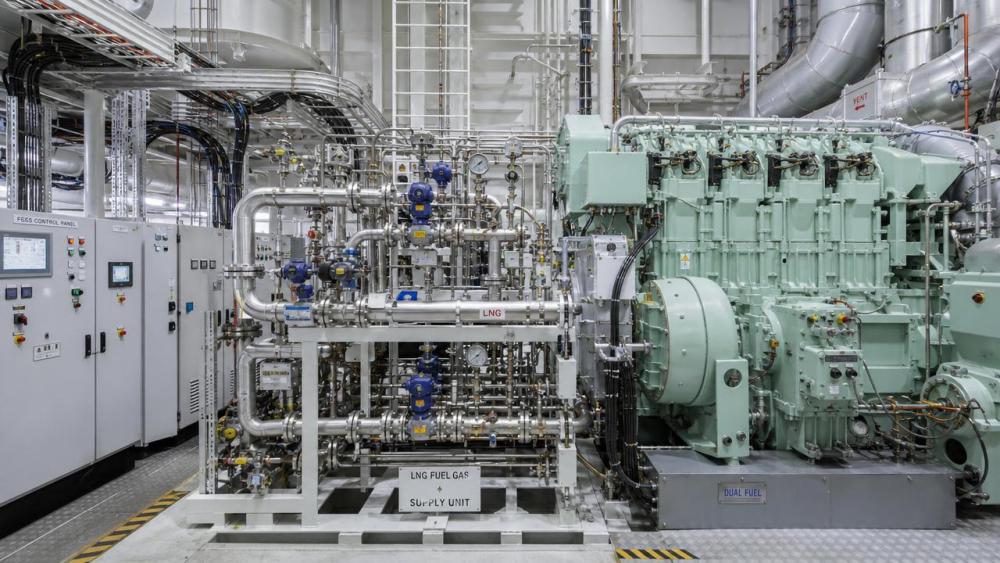
For aftersales maintenance personnel, this matters because the service team often enters the project at the point where theory meets reality. Drawings may show enough space for gas valve units, LNG piping, cable trays, and instrumentation, yet actual onboard conditions can differ because of undocumented modifications, insulation thickness, access restrictions, or legacy equipment clearances. That is why dual-fuel integration projects often lose time not on headline equipment delivery alone, but on interface discovery during installation.
Another reason for schedule slippage is that shipowners, yards, OEMs, class societies, and commissioning specialists may all define “ready” differently. The owner may focus on operational flexibility, the yard on installation completion, the engine maker on parameter validation, and class on safety evidence. If these readiness criteria are not aligned early, dual-fuel integration moves into a stop-and-start cycle that creates avoidable delay.
What are the biggest hidden causes of delay in dual-fuel integration projects?
The most common hidden cause is interface mismatch. Many retrofit teams assume that the major components are the critical path, but a project can be delayed by small connection issues between systems that were designed by different parties. Typical examples include signal mapping conflicts between the engine control system and vessel automation, incompatible cable gland arrangements in hazardous zones, insufficient capacity in ventilation systems, and pipe support locations that interfere with access routes or fire boundaries.
A second major cause is late engineering revision. Once onboard measurements reveal that original assumptions were wrong, the project may need fresh structural calculations, piping isometric updates, revised cable schedules, or new class submissions. These revisions do not simply consume design hours; they trigger procurement changes, fabrication delays, and revised installation sequencing. In practice, one engineering change can cascade across multiple disciplines.
The third hidden cause is incomplete pre-retrofit survey quality. If scanning, tagging, and field verification are weak, teams discover problems during hot work or system tie-in, when the cost of correction is highest. This is especially relevant in older vessels where as-built documentation may be fragmented or outdated. In dual-fuel integration, poor survey discipline often turns a planned retrofit into a live troubleshooting exercise.
The fourth cause is commissioning complexity. LNG and other gas-capable fuel arrangements demand strict sequencing for purging, leak testing, control logic validation, interlock proving, and emergency shutdown testing. Even if installation finishes on time, commissioning can slip if sensors drift, valves fail response criteria, or software permissions are incomplete.
Which delays affect aftersales maintenance teams most directly?
Aftersales maintenance teams are usually hit hardest by delays that compress the testing window. When installation overruns, the remaining schedule leaves less time for functional checks, troubleshooting, crew familiarization, and handover documentation. That raises the risk of defects being pushed into the post-delivery phase, where they become warranty claims, repeat visits, or operational restrictions.
Another direct impact comes from undocumented changes during the yard period. If cable rerouting, sensor substitutions, valve replacements, or software adjustments are made without proper record control, maintenance teams inherit a system that no longer matches the approved package. That slows fault diagnosis later because the service engineer must first establish what was actually installed before solving the issue.
Spare parts planning is also affected. In a delayed dual-fuel integration project, final component selections may change late, causing the recommended spare list to become inaccurate. For maintenance teams, that means the vessel may sail with incomplete spares coverage for cryogenic components, gas train instruments, actuator kits, filters, or control modules. The consequence is not just inconvenience but longer mean time to repair when the first operational faults appear.
Training delays are equally serious. Dual-fuel integration introduces new maintenance routines, lockout procedures, gas safety checks, and troubleshooting paths. If training is rushed or postponed, onboard personnel may operate the system conservatively, report avoidable alarms, or hesitate during mode changes. That can create the false impression that the retrofit itself is unreliable, when the real issue is weak knowledge transfer.
How do class approval and compliance reviews slow dual-fuel integration?
Class approval becomes a delay driver when technical submissions are incomplete, inconsistent, or out of sequence. Dual-fuel integration touches fire safety, gas detection, pressure relief, hazardous zoning, electrical protection, control logic, and emergency response. If one package is submitted without full alignment to the others, reviewers may raise comments that force cross-discipline redesign.
A common problem is assuming that approval of major equipment means approval of the total arrangement. In reality, class often needs evidence that the integrated system behaves safely under fault conditions, not just that individual components are certified. For example, approved valves and detectors do not eliminate the need to demonstrate safe shutdown logic, ventilation response, or gas-safe segregation.
For aftersales teams, the practical lesson is simple: track approval status at the interface level, not only at the equipment level. Ask whether the latest P&ID, cause-and-effect matrix, ESD philosophy, hazardous area drawing, and commissioning procedure are consistent with each other. Many dual-fuel integration delays appear because the paperwork says one thing while the installed arrangement reflects another.
What early-warning signs show that a dual-fuel integration retrofit is heading for delay?
Several warning signs appear well before the official schedule slips. One is repeated requests for revised onboard measurements after design freeze. Another is a growing list of “to be confirmed” points in control philosophy, alarm settings, cable routing, or vent mast details. These are not minor administrative gaps; in dual-fuel integration, unresolved details often sit on the critical path.
A second warning sign is when multiple vendors use different document revisions during installation or testing. If the engine supplier, gas system integrator, yard, and automation team are not working from synchronized information, field conflicts become almost guaranteed. Maintenance teams should pay attention to version control because inconsistent documentation today becomes service confusion tomorrow.
A third warning sign is late software availability. Mechanical progress can look strong while functional readiness remains weak. If HMI pages, PLC logic, parameter sets, or alarm lists are not finalized early enough, commissioning will bottleneck. In modern dual-fuel integration, software maturity is often as important as hardware completion.
Finally, if crew training is scheduled only after dock trials, the project is already carrying risk. Operators need time to absorb normal mode changes, bunkering precautions, purging routines, and emergency actions before the vessel enters live service. Late training usually signals that knowledge transfer is being treated as an afterthought rather than part of system readiness.
What checklist helps maintenance teams judge delay risk quickly?
A simple structured review can reveal whether dual-fuel integration is still under control or drifting toward reactive troubleshooting. The table below highlights practical checkpoints that aftersales maintenance teams can use during retrofit follow-up, pre-handover review, or early service preparation.
How can aftersales teams reduce dual-fuel integration delays before they become expensive?
The best approach is to move from passive support to early technical participation. Aftersales maintenance teams should not wait for final handover to begin engagement. Their field experience often identifies serviceability risks that design teams overlook, such as poor access to actuators, difficult calibration points, drain routing issues, insulation removal challenges, and unrealistic replacement procedures for sensors or filters.
It also helps to define a maintenance-focused readiness review before commissioning. This review should check whether manuals match the installed configuration, spare parts lists reflect final equipment, software backups are archived, alarm histories can be retrieved, and test records are complete. In dual-fuel integration, service readiness is not a paperwork exercise; it determines how quickly the vessel can recover from early-life faults.
Another practical step is to prioritize high-risk interfaces instead of trying to review everything at equal depth. Focus on gas valve units, pressure control loops, ESD chains, ventilation interlocks, cryogenic piping supports, hazardous area penetrations, and automation handshakes. These are the areas where small mistakes often create the largest operational consequences.
Finally, maintain a closed feedback loop between retrofit lessons and future project planning. Every delay in dual-fuel integration should produce a documented cause, not just a schedule revision. Over time, this intelligence helps service teams improve survey templates, acceptance checklists, training content, and spare strategy across the fleet. For a knowledge-driven maritime platform like MO-Core, that kind of structured learning is exactly where operational value and industry insight meet.
What questions should be answered first before confirming a retrofit plan or support scope?
Before moving further, maintenance and technical stakeholders should clarify a small set of decisive questions. Has the vessel been surveyed to a level suitable for final integration, not just concept design? Are class comments closed on the latest coordinated drawings? Which vendor owns the master cause-and-effect logic? What software version will be commissioned and archived? Which components changed from the original package, and how do those changes affect spares and maintenance procedures?
They should also ask whether crew training, service documentation, and post-delivery support are planned as part of the same dual-fuel integration strategy, rather than treated as downstream tasks. If those answers are unclear, delay risk remains high even when installation progress looks good.
If you need to confirm a specific retrofit pathway, technical parameters, likely schedule risks, support responsibilities, or cooperation priorities, start by aligning survey quality, interface ownership, class approval status, commissioning logic, and aftersales readiness. Those five discussion points usually reveal whether a dual-fuel integration project is truly under control or simply appearing on track.