
Related News
- 00
0000-00
How to Evaluate an Integrated Propulsion Manufacturer for Vessel Retrofit Projects - 00
0000-00
LNG Carrier Price Trends: What Shipbuyers Should Budget for Newbuilds - 00
0000-00
How to Evaluate Marine Semiconductor Suppliers for Shipboard Reliability - 00
0000-00
How Dual-Fuel Ships Cut Emissions Across Different Fuel and Operating Profiles - 00
0000-00
How to Select Low-Voltage Marine Drives for Electric Propulsion Below 1 kV

AI fuel optimization promises measurable gains, but enterprise decision-makers need clarity on when those savings are truly real. In maritime operations shaped by decarbonization targets, fuel volatility, and asset-intensive fleets, the value of AI depends on vessel type, data quality, operational discipline, and integration depth. This article explores where cost reductions are credible, where expectations are overstated, and how leaders can evaluate AI fuel optimization with strategic confidence.
For operators of LNG carriers, cruise ships, offshore engineering vessels, and electrically integrated fleets, fuel is no longer just a line item. It is tied to CII performance, voyage economics, charter competitiveness, maintenance planning, and emissions strategy. That is why AI fuel optimization has moved from a technical experiment to a board-level discussion.
Yet many projects underperform because the technology is evaluated as software alone. In practice, savings become credible only when algorithms are connected to vessel physics, machinery behavior, weather routing, trim decisions, and crew execution. For enterprise leaders, the central question is not whether AI can identify efficiency opportunities. It is whether those opportunities can be repeated across 12 months, 20 vessels, or 3 different operating profiles.
Where AI Fuel Optimization Delivers Real Savings
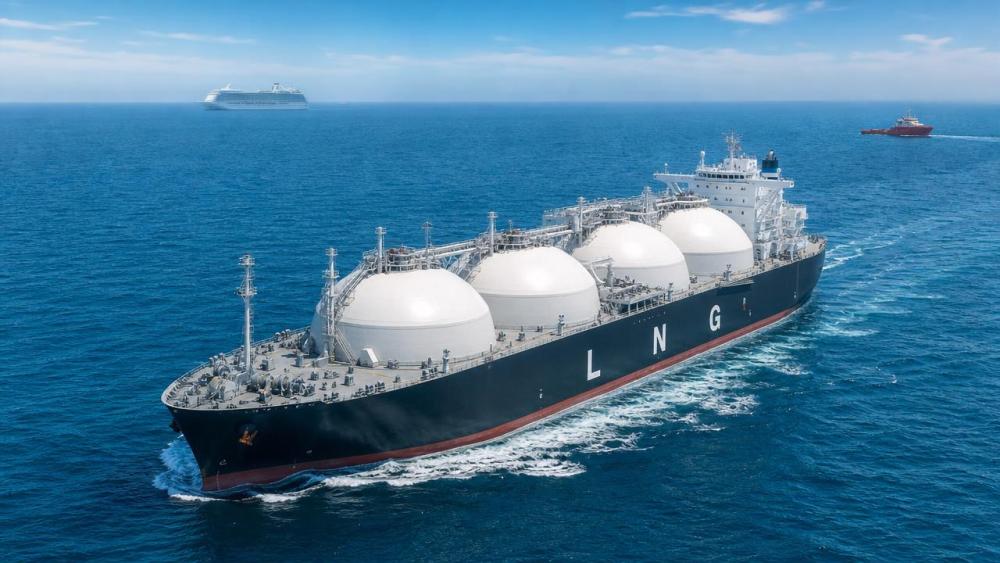
The strongest results usually appear in fleets with high fuel spend, measurable route repetition, and a stable data backbone. In marine operations, this often means vessels above 20,000 DWT, cruise ships with complex hotel loads, LNG carriers operating under narrow thermal and schedule constraints, and offshore support vessels with mixed transit and station-keeping modes.
Across these segments, AI fuel optimization typically targets 4 operational layers: route and weather decisions, speed profile management, machinery and propulsion tuning, and auxiliary load control. The achievable gain is often modest on any single lever, such as 1% to 3% on trim or 2% to 5% on speed discipline, but the combined effect can be commercially meaningful when fuel costs remain elevated for 9 to 12 months of operation.
The vessel profiles most likely to benefit
Not every ship has the same optimization potential. A modern LNG carrier with advanced automation, dense sensor coverage, and consistent long-haul routes gives AI more structured input than an aging multi-mission vessel with patchy instrumentation. Likewise, a cruise ship with significant hotel load variation may benefit more from energy orchestration than from route optimization alone.
- Long-haul vessels with repeatable routes and weather exposure
- Ships with annual fuel budgets large enough for a 2% to 6% gain to matter materially
- Fleets with noon reports, high-frequency sensor streams, and engine data aligned in one system
- Operations where masters, shore teams, and technical managers can act on recommendations within 12 to 24 hours
For many enterprise fleets, the most realistic first-year improvement range is 2% to 7%, not 15% to 20%. That narrower range is exactly why the business case can be trusted. It reflects operational friction, sea-state variability, schedule constraints, and the limits imposed by safety and charter obligations.
What savings look like in practical maritime scenarios
The table below shows where AI fuel optimization tends to create value in real maritime settings. The purpose is not to claim fixed percentages, but to help decision-makers compare conditions where the savings are more or less defensible.
The main conclusion is that credible savings correlate with operational structure. The more repeatable the duty cycle and the better the instrumentation, the easier it is to validate AI fuel optimization against a baseline over 30, 60, or 90 days.
Why data quality matters more than dashboard quality
A visually impressive platform does not guarantee economic value. If fuel flow meters drift by 1% to 2%, noon reports are inconsistent, or shaft power data is missing for 15% of voyage time, optimization recommendations can look precise while being commercially unreliable. For decision-makers, data completeness above roughly 90% is often more important than adding another predictive feature.
This is especially true in high-value ship segments. On LNG carriers and advanced cruise vessels, even small mismatches between propulsion, electrical load, and voyage context can distort the model. In those cases, marine engineering oversight must remain part of the loop, not an afterthought.
When Expectations Are Overstated
The market often treats AI fuel optimization as if it were a universal fuel-saving switch. It is not. In some projects, projected savings are inflated because the baseline is weak, the operating envelope changes mid-trial, or the solution is asked to compensate for issues that are fundamentally mechanical, procedural, or commercial.
Common reasons AI underdelivers
There are at least 5 recurring causes of disappointment. First, vessels have already captured the easy gains through speed reduction, weather services, or trim advice. Second, crews receive recommendations but lack incentives or authority to act. Third, technical teams expect software to fix hull fouling, injector degradation, or suboptimal maintenance timing. Fourth, one vessel pilot is scaled too quickly to a fleet of 10 to 30 vessels with different age profiles. Fifth, the commercial department prioritizes schedule integrity over fuel performance, which is often the correct decision but reduces the visible impact of AI.
- Poor baseline definition before the pilot starts
- Inconsistent sensor calibration across sister vessels
- No separation between weather effects and operator behavior
- Limited integration with voyage planning or engine advisory systems
- Short evaluation windows, such as 2 weeks, that are too narrow for fair comparison
In maritime operations, a trial period of at least 8 to 12 weeks is usually more defensible than a short demonstration. Seasonal weather, port waiting time, and charter-driven speed changes can otherwise produce false positives or false negatives.
The difference between optimization and control
Another source of overstatement is confusion between advisory AI and closed-loop control. Many solutions generate recommendations, but only some are integrated deeply enough to influence speed settings, power distribution, or auxiliary sequencing in near real time. Advisory systems can still create value, but the impact depends on human follow-through rates, which may range from 40% to 80% depending on onboard culture and shore oversight.
That distinction matters for enterprise forecasting. If a vendor’s projected savings assume perfect execution, but actual onboard adoption is 60%, the realized savings may be cut nearly in half. Leaders should ask whether the quoted value is gross potential or net captured performance.
Red flags in savings claims
Decision-makers should be cautious when savings claims are not separated by vessel class, season, route type, or operational constraint. A 6% result on one ocean passage is not the same as a sustainable fleet-level result over 4 quarters. Savings estimates also deserve scrutiny when they exclude software integration costs, crew training time, or data cleansing work in the first 3 to 6 months.
How Enterprise Leaders Should Evaluate AI Fuel Optimization
A sound evaluation framework should combine technical fit, operating reality, and financial discipline. The most successful buyers treat AI fuel optimization as a cross-functional program involving fleet management, marine engineering, digital teams, chartering, and ESG leadership. If any one group is absent, the project often stalls at the pilot stage.
A five-part decision framework
Before procurement, leaders should evaluate five areas: baseline accuracy, data architecture, vessel segmentation, operational governance, and payback logic. This reduces the risk of buying software that performs well in demonstrations but weakly in live marine environments.
- Define a baseline using at least 12 months of normalized fuel and voyage data when available.
- Segment vessels by age, propulsion type, route pattern, and digital readiness.
- Verify whether data arrives at intervals suited to the use case, such as 1 minute, 5 minutes, or noon-report only.
- Set governance for recommendation approval, onboard execution, and exception logging.
- Model payback under conservative, expected, and stretch scenarios, such as 2%, 4%, and 6% savings.
For capital-intensive fleets, payback expectations should reflect total program cost, not subscription price alone. That includes integration work, engineering time, crew familiarization, data validation, and change management. In many cases, a payback period under 12 to 18 months is attractive, but only if the savings are measured with discipline.
Questions to ask vendors and internal teams
The following matrix helps procurement and strategy teams assess whether a platform is suitable for serious marine deployment rather than a limited analytics exercise.
The strongest procurement teams also ask for evidence of baseline methodology, post-deployment validation logic, and exception handling. In marine contexts, transparency around assumptions is often a better indicator of long-term value than an aggressive headline saving.
What a credible pilot should include
A credible pilot generally includes 3 to 5 vessels, covers at least one full operating cycle, and defines success metrics before activation. Those metrics may include fuel per nautical mile, fuel per cargo unit, auxiliary consumption, weather-adjusted variance, and CII-related intensity measures. It should also include weekly review points and a final engineering reconciliation to separate algorithmic value from unrelated operational changes.
Implementation Priorities for High-Value Marine Fleets
For MO-Core’s focus sectors, implementation quality matters as much as software capability. Specialized engineering vessels, luxury passenger ships, LNG carriers, and electric propulsion platforms all operate within dense technical boundaries. That means AI fuel optimization must be embedded into a broader vessel-performance strategy rather than deployed as a standalone app.
Aligning AI with decarbonization and asset strategy
When assessed correctly, AI fuel optimization supports more than daily bunker reduction. It can improve emissions reporting discipline, help technical teams prioritize hull cleaning or engine service windows, and give commercial leaders clearer visibility into voyage cost sensitivity. On a fleet with 15 to 25 ships, even a conservative 3% efficiency improvement can materially affect annual planning if bunker prices remain volatile.
For LNG carriers, the integration challenge often includes boil-off behavior, propulsion mode selection, and cargo schedule constraints. For cruise systems, the main opportunity may sit in electrical integration, HVAC forecasting, and hotel load balancing. For offshore and engineering fleets, dynamic positioning and standby power logic can be just as important as open-sea routing.
Practical rollout priorities
- Start with the 20% of vessels that represent the highest fuel spend or the most stable routes.
- Map sensor coverage and calibration gaps before software activation.
- Assign both a shore-side owner and an onboard owner for recommendation execution.
- Integrate optimization outputs into voyage planning, maintenance review, and emissions reporting workflows.
- Review results monthly and re-baseline every 6 to 12 months as operating patterns change.
This phased approach is often more effective than fleetwide rollout. It limits risk, improves learning speed, and makes it easier to prove the economic case to finance and operations leadership.
A strategic view for decision-makers
The real value of AI fuel optimization is not simply lower fuel burn on one voyage. It is the ability to turn vessel performance data into repeatable operating decisions across commercial, technical, and environmental objectives. That matters most in sectors where shipbuilding cycles are long, equipment investments are large, and compliance pressure is rising year by year.
For enterprise leaders, the right question is therefore not, “Can AI save fuel?” It is, “Under our fleet conditions, with our data maturity and our operating discipline, can AI produce verified savings at scale?” When that question is answered honestly, investment decisions become far more reliable.
AI fuel optimization creates the strongest returns when vessel physics, quality data, crew adoption, and business governance work together. In high-value maritime sectors, disciplined evaluation is the difference between a promising pilot and a scalable efficiency program. If your organization is assessing fuel-saving technologies for LNG carriers, cruise systems, electric propulsion, or specialized engineering vessels, MO-Core can help frame the technical and commercial decision with sector-specific intelligence. Contact us to explore a tailored evaluation path, request a customized solution view, or learn more about practical strategies for verified marine fuel optimization.