
Related News
- 00
0000-00
How to Evaluate an Integrated Propulsion Manufacturer for Vessel Retrofit Projects - 00
0000-00
LNG Carrier Price Trends: What Shipbuyers Should Budget for Newbuilds - 00
0000-00
How to Evaluate Marine Semiconductor Suppliers for Shipboard Reliability - 00
0000-00
How Dual-Fuel Ships Cut Emissions Across Different Fuel and Operating Profiles - 00
0000-00
How to Select Low-Voltage Marine Drives for Electric Propulsion Below 1 kV

Before adopting an AI fuel optimization solution, technical evaluators should assume one thing: claimed savings mean very little unless the tool can prove data integrity, model reliability, onboard compatibility, and repeatable performance under real voyage conditions. In maritime operations, fuel efficiency is never an isolated software issue. It sits at the intersection of sensor quality, voyage planning logic, machinery behavior, crew adoption, weather routing, charter constraints, and compliance pressure.
For technical assessment teams, the key question is not whether AI can optimize fuel use in theory. It is whether a specific tool can generate trustworthy recommendations for a specific fleet, vessel profile, propulsion setup, and operating pattern. That requires a structured evaluation process. The most useful approach is to check the tool in the same way you would assess any critical marine technology: inputs, assumptions, interfaces, failure modes, verification method, and lifecycle value.
This article focuses on what evaluators should verify before procurement or pilot deployment. It prioritizes practical checkpoints over marketing language, with special relevance for commercial shipping stakeholders navigating decarbonization targets, efficiency demands, and increasingly complex propulsion architectures.
What technical evaluators are really trying to confirm before adoption
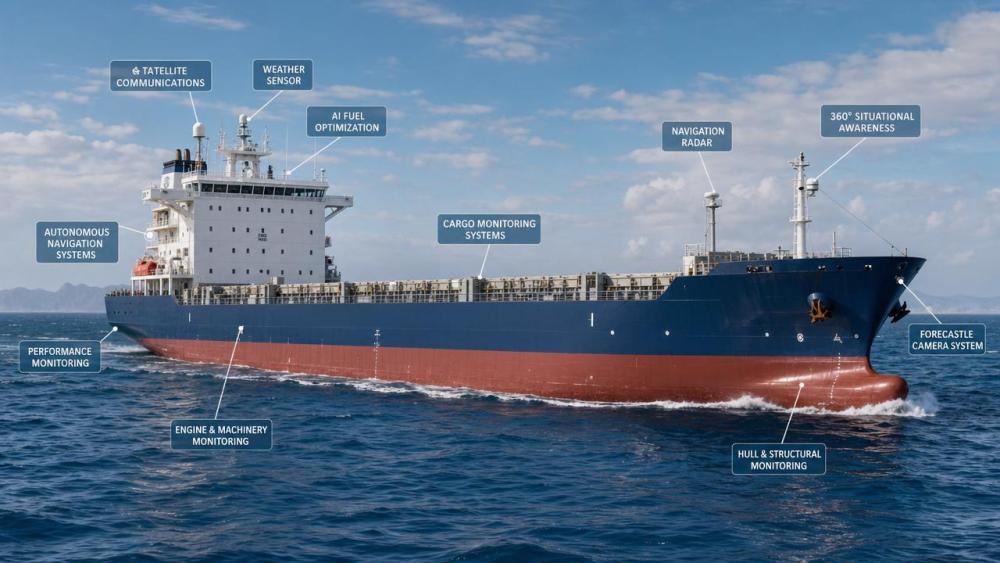
When people search for guidance on AI fuel optimization tools, the core intent is usually decision support. They are not looking for a generic explanation of artificial intelligence. They want to know how to distinguish a genuinely useful maritime optimization platform from a dashboard that repackages historical averages.
For technical evaluators, the central concerns are straightforward. Does the system produce measurable fuel savings? Can the output be trusted by engineers, operators, and masters? Will it integrate with existing vessel systems and shore-side analytics? Can the vendor explain how the model behaves when conditions change? And does the expected gain justify implementation cost, operational effort, and cyber or compliance risk?
These are not abstract concerns. A fuel optimization tool may look impressive during a software demo but fail in daily operation if noon reports are inconsistent, shaft power data is noisy, weather feeds are delayed, or crew members do not understand recommendation logic. The adoption decision therefore depends less on AI branding and more on engineering fit, governance, and operational verifiability.
Start with the data: poor inputs will invalidate every promised saving
The first and most important checkpoint is data quality. No AI fuel optimization model can outperform the integrity of its input layer. If the vessel’s fuel flow meters are uncalibrated, speed-through-water readings are unstable, draft records are delayed, or engine load data is incomplete, the tool may still generate recommendations—but they may be misleading rather than useful.
Evaluators should ask which onboard and external data streams the platform requires. Typical inputs include GPS position, speed over ground, speed through water, shaft power, engine RPM, fuel consumption by engine or consumer group, draft, trim, weather, wave, current, hull condition indicators, and voyage instructions. The vendor should clearly distinguish between mandatory data, optional enrichment data, and substituted values when direct measurement is unavailable.
Data granularity matters as much as data type. Some tools are designed around high-frequency sensor data captured every few seconds or minutes. Others rely largely on noon report structures. A model trained on low-resolution reporting may support trend analysis but struggle with dynamic route or machinery optimization. Technical teams should align the model’s data demands with what their fleet can realistically deliver today, not what an ideal digital vessel might provide later.
It is also essential to check how the system handles missing or conflicting data. Does it flag anomalies, estimate gaps, or silently smooth irregular values? Does it identify sensor drift over time? Can evaluators audit the original signal against the cleaned dataset? In marine operations, harsh environments and inconsistent reporting are normal. A credible AI fuel optimization platform should be resilient to imperfect conditions without hiding uncertainty.
Check whether the optimization logic matches real vessel operations
A second major checkpoint is operational fit. Many fuel optimization tools claim broad applicability across vessel classes, but a model that performs well for one operating profile may not translate to another. An LNG carrier, a cruise vessel, a heavy engineering ship, and a conventional bulk carrier operate under very different technical and commercial constraints. Even sister vessels can diverge due to retrofits, fouling conditions, maintenance quality, and trading patterns.
Evaluators should ask how the tool accounts for propulsion configuration and mission profile. For example, does it understand electric propulsion behavior, variable frequency drives, podded thrusters, dual-fuel engine modes, boil-off gas management, DP operations, hotel load patterns, or scrubber energy penalties? If the model simplifies these effects too aggressively, the recommended operating point may look efficient on paper while being impractical or suboptimal in service.
Voyage optimization logic also needs inspection. Does the system optimize only speed, or also trim, route, machinery load sharing, auxiliary scheduling, and weather response? How does it balance fuel saving against ETA, charter party clauses, weather avoidance, emissions constraints, and safety margins? The most useful tools do not chase a single mathematical optimum detached from reality. They support constrained optimization within the actual decision envelope of the vessel and operator.
This is particularly important in sectors where reliability and compliance are as critical as fuel cost. A recommendation that reduces daily consumption by a small percentage but increases schedule risk, maneuvering complexity, or machinery stress may create more operational downside than value. Technical teams should therefore assess not just the existence of an optimization engine, but the realism of its objective function.
Demand model transparency, even if the tool uses advanced AI
Technical evaluators do not need every line of proprietary code, but they do need model transparency at a level sufficient for engineering trust. If a vendor cannot explain how the system derives recommendations, what variables matter most, how the model was trained, and under what conditions accuracy degrades, the risk of blind adoption rises sharply.
In practice, transparency means several things. First, the vendor should identify whether the core engine is rule-based, physics-informed, machine learning-driven, or hybrid. Second, they should explain how the model is validated across different vessel types and sea states. Third, they should provide confidence indicators, not just single-point recommendations. A speed recommendation with no uncertainty range is far less useful than one accompanied by sensitivity to weather error, draft variation, or propulsion mode.
Explainability is also crucial for user adoption. Masters, chief engineers, and shore performance teams are more likely to trust recommendations when they can see the drivers behind them. For example, the system might show that a suggested speed reduction is linked to forecast wave resistance, or that a trim adjustment is expected to lower shaft power under a specific loading condition. Without this context, crew may ignore the tool or treat it as a compliance burden rather than an operational aid.
Technical buyers should also check for model retraining policy. How often is the model recalibrated as the vessel ages, fouling increases, equipment is overhauled, or routes change? Static models often lose value over time. An effective AI fuel optimization solution should learn from new operational patterns while preserving governance controls and traceability.
Evaluate onboard and shore-side integration before discussing ROI
Many adoption failures are integration failures disguised as analytics disappointments. A platform may have strong optimization logic but still underperform if it cannot connect smoothly to vessel systems, fleet performance platforms, or decision workflows. Integration therefore needs to be evaluated early, not after commercial approval.
Key questions include whether the tool can interface with existing sensors, automation systems, voyage management software, planned maintenance systems, and reporting platforms. Does it support standard marine data protocols or require custom middleware? Can it operate in low-bandwidth environments? Are recommendations available both onboard and ashore, and are they synchronized well enough for time-sensitive voyage decisions?
User interface design matters more than many teams expect. If the bridge receives a recommendation in one system, the chief engineer sees another trend in a separate dashboard, and the shore office reviews a delayed summary elsewhere, the optimization loop breaks down. Good AI fuel optimization tools support role-specific views without fragmenting the underlying decision picture.
Cybersecurity and system resilience should be part of the integration review as well. The more a platform touches voyage planning, propulsion data, or remote connectivity, the more attention it deserves under maritime cyber risk management frameworks. Technical evaluators should verify authentication controls, data segregation, update procedures, incident response support, and fallback modes if data links fail. An optimizer for critical operations must degrade safely, not disappear into a black box when connectivity becomes unstable.
Ask how savings are measured, normalized, and verified
Perhaps the most common source of confusion in AI fuel optimization procurement is the savings claim. Vendors may advertise a percentage reduction, but that number is often based on assumptions that do not survive close review. Technical evaluators should therefore insist on a transparent measurement methodology before pilot launch.
The core issue is normalization. Fuel use depends on weather, speed, cargo condition, draft, hull fouling, current, traffic, schedule pressure, and engine mode. If the vendor cannot isolate the effect of their recommendation from these variables, the reported saving may be little more than correlation. A credible approach should compare like-for-like conditions or use a validated baseline model that adjusts for the main drivers of consumption.
It is also important to define what “saving” means. Does it refer to total fuel burned per voyage, fuel per nautical mile, fuel per transport work, reduced auxiliary consumption, or combined fuel and emissions performance? Different fleets and charter structures need different metrics. For a cruise vessel, hotel load can distort voyage efficiency comparisons. For LNG carriers, gas management strategy may complicate simple fuel accounting. For engineering vessels, station-keeping and mission load may outweigh transit efficiency.
Pilot design should reflect this complexity. A meaningful trial typically needs a defined baseline period, agreed vessel selection, stable data capture, documented control variables, and clear acceptance criteria. Evaluators should avoid pilots built only around favorable routes or highly managed demonstration voyages. Real value appears when the tool performs under ordinary operational variability, not curated conditions.
Consider the human factor: recommendations only matter if crews use them
Even a technically sound system will fail to deliver savings if the people using it do not trust it, understand it, or have the authority to act on it. This is especially true in shipping, where operational judgment, safety culture, and commercial constraints influence every voyage decision.
Technical evaluators should ask how the vendor supports onboard adoption. Does the interface fit bridge and engine room workflows? Are alerts actionable or excessive? Can crew members see why a recommendation changed? Is there a feedback mechanism for rejecting a suggestion and recording the reason, such as weather avoidance, traffic separation, charter pressure, or machinery concern?
Training should go beyond software familiarization. The best implementations align masters, engineers, fleet performance analysts, and commercial planners on how recommendations should be interpreted and when they may be overridden. Without this governance, the platform may create friction instead of efficiency. One team may optimize for fuel, another for punctuality, and a third for machinery margin, with no shared framework for trade-offs.
Adoption is often strongest when the tool supports decision quality rather than trying to replace seamanship. In other words, crews tend to accept systems that help them compare scenarios, quantify consequences, and document rationale. They resist systems that present opaque instructions disconnected from operational reality.
Do not ignore lifecycle economics, compliance value, and vendor maturity
Finally, the adoption decision should include a full-lifecycle view. Upfront licensing is only one part of the cost. Evaluators should include sensor upgrades, integration work, crew training, change management, support contracts, cybersecurity maintenance, and internal analyst time required to interpret results. A low-entry-cost platform may become expensive if it depends heavily on custom engineering or frequent manual intervention.
On the value side, fuel savings are still the headline, but not the only benefit. Depending on the fleet and region, the tool may also support CII improvement, emissions reporting quality, charter performance transparency, maintenance planning insight, and stronger evidence for decarbonization programs. These secondary benefits matter because they can improve the business case even when direct savings vary between vessel classes.
Vendor maturity is another practical filter. Technical teams should review reference cases, vessel-type relevance, update frequency, support responsiveness, and roadmap credibility. A vendor serving high-value maritime sectors should understand the complexity of LNG systems, electric propulsion architectures, dynamic operational profiles, and regulatory reporting expectations. Generic fleet analytics experience may not be enough if the targeted vessels operate near technical or environmental limits.
It is also sensible to ask about contractual alignment. If savings are central to the sales case, does the vendor support performance-based structures, phased rollout, or pilot exit conditions? Strong vendors usually welcome rigorous evaluation because it helps differentiate them from less proven entrants.
Conclusion: adopt only when the tool proves engineering trust, not just digital ambition
For technical evaluators, the best way to assess AI fuel optimization tools is to treat them as operational technologies, not software accessories. The adoption decision should be based on six practical questions: Are the data inputs reliable? Does the optimization logic fit the vessel and mission? Is the model transparent enough to trust? Will the system integrate cleanly into onboard and shore workflows? Can savings be measured credibly? And will people actually use it?
If the answer to these questions is yes, AI-based optimization can move beyond dashboards and contribute to measurable voyage efficiency, emissions control, and better technical decision-making. If the answers are vague, the tool is likely to create more reporting activity than real savings. In a maritime environment shaped by fuel volatility, decarbonization pressure, and increasingly complex vessel systems, disciplined evaluation is what separates digital promise from operational value.