
Related News
- 00
0000-00
How to Evaluate an Integrated Propulsion Manufacturer for Vessel Retrofit Projects - 00
0000-00
LNG Carrier Price Trends: What Shipbuyers Should Budget for Newbuilds - 00
0000-00
How to Evaluate Marine Semiconductor Suppliers for Shipboard Reliability - 00
0000-00
How Dual-Fuel Ships Cut Emissions Across Different Fuel and Operating Profiles - 00
0000-00
How to Select Low-Voltage Marine Drives for Electric Propulsion Below 1 kV

Low-carbon navigation is no longer a theory for ship operators—it is a daily discipline shaped by routing, speed control, propulsion efficiency, and onboard energy management. This article looks at what actually reduces fuel use in practice, separating measurable gains from industry buzz and helping users and operators make smarter decisions under rising cost and emissions pressure.
For operators of engineering vessels, cruise ships, LNG carriers, and electrically advanced fleets, fuel use is rarely determined by a single technology. In real operations, the largest gains usually come from a stack of controllable actions: voyage planning, engine loading discipline, hull and propeller condition, auxiliary power control, and data-based crew routines. Low-carbon navigation works best when it is treated as an operating system rather than a marketing label.
That matters because fuel cost, CII pressure, schedule reliability, and emissions compliance now interact on every voyage. A 3% to 8% reduction in fuel use may look modest on paper, but over a 6-month operating window it can materially change voyage economics, maintenance timing, and charter competitiveness. For users and operators, the question is not whether low-carbon navigation matters, but which actions produce measurable results first.
Where Fuel Savings Actually Come From at Sea
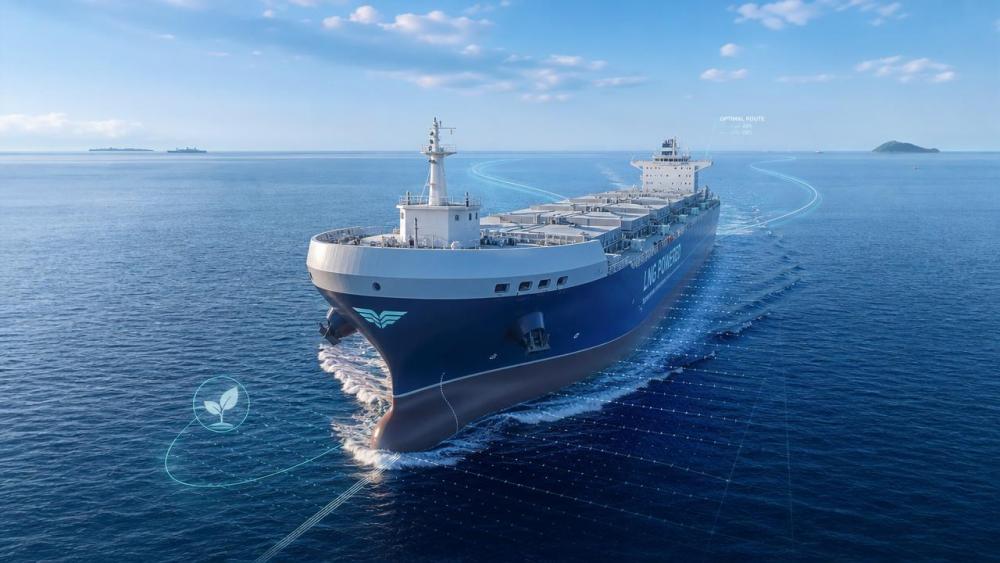
In practice, low-carbon navigation depends less on a single retrofit and more on controlling the variables that drive resistance, propulsion load, and hotel power demand. Most vessels can influence fuel performance through 5 core levers: speed, route, trim, machinery loading, and auxiliary consumption. On many ship types, these levers can be adjusted within 1 voyage cycle rather than waiting 6 to 18 months for major capital upgrades.
1. Speed discipline remains the fastest win
Speed management is still one of the most effective tools in low-carbon navigation. Because propulsion power rises disproportionately with speed, even a reduction of 1 knot can create noticeable fuel savings, especially on long ocean passages. On many vessels, moving from 15 knots to 14 knots may reduce daily fuel use by roughly 8% to 15%, depending on hull condition, sea state, draft, and engine configuration.
However, speed reduction only works when linked to realistic ETA control. If a ship slows down at sea but then waits 12 to 36 hours at anchorage, the total carbon benefit shrinks. Operators need voyage instructions, berth coordination, and weather-adjusted planning to avoid “save at sea, waste in port” outcomes.
2. Weather routing cuts avoidable resistance
Route optimization is not just about distance. In low-carbon navigation, the lowest-fuel route is often different from the shortest route. Avoiding adverse swell, head current, or repeated course changes can reduce engine load over several days. In rough conditions, poor routing may add 5% to 12% fuel use across a single leg, while better routing logic can protect both consumption and schedule stability.
For offshore engineering vessels and LNG carriers, routing also affects mission risk. Heavy weather can degrade DP performance, increase thruster demand, and raise auxiliary load. That means route planning should combine weather, current, traffic density, and power management limits rather than relying on distance alone.
3. Trim and draft management still matter
Trim optimization is often overlooked because the gain per adjustment may appear small. Yet in low-carbon navigation, repeated small gains accumulate. A trim correction of a few decimeters can improve hydrodynamic performance across a full voyage, especially when loading condition changes between ballast and laden legs. Typical savings may fall in the 1% to 4% range, but that is meaningful when applied across dozens of voyages each year.
What matters is not using a fixed trim rule for every condition. Different speeds, drafts, sea states, and hull forms require different settings. Operators should review noon data, shaft power trends, and performance software outputs at least once per watch cycle on fuel-sensitive routes.
The table below shows where operators usually see measurable low-carbon navigation gains first, and what level of onboard effort is required to maintain them.
The key takeaway is simple: low-carbon navigation is usually built from repeatable 1% to 5% improvements rather than one dramatic intervention. Operators that measure each lever separately are more likely to protect savings over time and less likely to overestimate the effect of a single software tool or retrofit.
Propulsion, Hull Condition, and Onboard Power Control
If voyage planning shapes fuel demand, technical condition determines how efficiently the ship responds. For many operators, the difference between a clean and a degraded underwater profile can offset the gains from routing software. Low-carbon navigation therefore depends on daily operations and maintenance discipline at the same time.
Hull fouling and propeller condition can erase voyage savings
Biofouling, rough coatings, and damaged propeller surfaces increase drag and reduce propulsive efficiency. Depending on trading pattern and water conditions, a vessel may see measurable performance loss within 3 to 6 months after cleaning or drydocking. In some cases, moderate fouling alone can increase fuel use by 5% to 10%, while severe deterioration may push the penalty higher.
For users and operators, the practical issue is timing. Cleaning too early wastes maintenance budget; cleaning too late burns excess fuel every day. A data-driven trigger—such as a sustained speed-loss or power-rise trend over 2 to 4 weeks—usually supports better decisions than calendar-only planning.
Electric propulsion and variable speed systems improve controllability
On vessels equipped with marine electric propulsion, VFD-based control and podded or azimuth systems can support low-carbon navigation by matching thrust more precisely to operating demand. This is particularly relevant for cruise ships, offshore construction vessels, and LNG-linked ships with complex power profiles. The efficiency gain is not just from propulsion hardware itself, but from avoiding inefficient load swings and excess reserve power.
Operators should focus on load distribution, generator commitment, and hotel or mission power overlap. Keeping engines in healthier load bands—often around 70% to 85% for many operating modes—can reduce specific fuel consumption compared with fragmented low-load running. Exact targets vary by engine and power plant architecture, but the principle is widely applicable.
Common onboard actions that support propulsion efficiency
- Monitor shaft power, RPM, and slip trends every watch rather than relying only on daily noon reports.
- Review generator loading in 3 operating states: transit, maneuvering, and port stay.
- Align thruster use with sea state and mission demand to prevent avoidable electrical peaks.
- Check cooling systems, filters, and air paths at planned intervals such as every 250–500 running hours where relevant.
Auxiliary systems often hide easy fuel savings
A vessel may optimize main propulsion yet still waste fuel through pumps, HVAC, boilers, reefer loads, cargo handling systems, or unnecessary lighting and ventilation. On cruise ships, hotel load can represent a significant share of total energy demand. On LNG carriers, cargo handling and boil-off management add another layer of operational complexity. In both cases, low-carbon navigation requires integrated power awareness, not just bridge decisions.
Many operators find that simple load audits performed once per voyage or once every 7 days reveal persistent energy waste. Examples include redundant pump operation, poor start-stop logic, over-ventilation in mild weather, or running extra generators for comfort rather than necessity. These are not glamorous changes, but they are often bankable ones.
The following table helps operators prioritize technical and operational checks that usually have the clearest impact on low-carbon navigation performance.
For most fleets, the strongest technical fuel-saving strategy is not “install everything.” It is to control drag, maintain propulsive surfaces, stabilize engine loading, and reduce hidden electrical waste. That approach is usually more practical than waiting for a full newbuild or major retrofit cycle.
How to Implement Low-Carbon Navigation Without Disrupting Operations
The operational challenge is not identifying fuel-saving ideas; it is turning them into repeatable routines across bridge, engine room, and shore teams. Low-carbon navigation succeeds when responsibilities are clear, data is comparable, and performance reviews happen often enough to correct drift. A workable implementation model usually takes 3 stages over 4 to 12 weeks.
Stage 1: Establish a clean performance baseline
Start by defining a baseline for at least 2 to 4 voyage legs or 30 days of operation. Use consistent inputs: speed, draft, weather band, RPM, daily fuel use, auxiliary load, and waiting time. Without a normalized baseline, operators may mistake weather variation for efficiency improvement.
This stage should also identify one or two dominant loss areas. On one vessel, the issue may be idle time and poor ETA coordination. On another, it may be fouling, low engine loading, or unnecessary generator overlap. Focusing on the biggest losses first usually creates faster commercial results.
Stage 2: Apply a small set of controllable rules
The best low-carbon navigation programs usually begin with 4 to 6 rules, not 20. Examples include speed bands by weather class, trim review every watch, route update intervals of 6 or 12 hours, generator commitment rules, and an auxiliary load checklist before departure and after arrival. Short rule sets improve crew adoption and reduce reporting fatigue.
- Set target speed windows instead of one rigid speed number.
- Assign one bridge-side and one engine-side owner for fuel performance review.
- Track exceptions such as heavy weather, DP duty, cargo handling, or delayed berth access.
- Review outcomes weekly and adjust only after enough comparable data has been collected.
Stage 3: Link fuel decisions to commercial and compliance outcomes
Operators are more likely to sustain low-carbon navigation when the data connects directly to cost, charter value, CII trajectory, and maintenance planning. A fuel-saving measure that reduces consumption by 4% but causes schedule penalties may not be commercially acceptable. By contrast, a 2% saving that also lowers engine stress and supports emissions reporting may have stronger long-term value.
This is where intelligence-led review becomes critical. Decision-makers need clear interpretation of technical trends, dual-fuel operating logic, electrical integration effects, and compliance constraints. For specialized fleets and high-value vessels, the right insight often prevents expensive missteps such as overpromising retrofit gains, underestimating mission power demand, or applying generic speed policies to vessel-specific realities.
Common mistakes operators should avoid
- Treating low-carbon navigation as software alone, without crew routines and maintenance support.
- Using daily average fuel data without separating port stay, waiting time, and transit mode.
- Ignoring hull and propeller penalties while expecting routing tools to do all the work.
- Reducing speed without berth coordination, then losing the gain in anchorage delays.
- Applying one efficiency rule to LNG carriers, cruise vessels, and offshore units despite very different load profiles.
Who benefits most from a structured approach
The strongest results are usually seen by operators managing fuel-sensitive long-haul voyages, electrically complex ships, vessels with variable mission loads, and fleets under tighter emissions scrutiny. That includes LNG carriers balancing cargo and propulsion demands, luxury passenger ships with high hotel loads, and engineering vessels where DP and thruster usage can distort ordinary fuel benchmarks.
For these users, low-carbon navigation is not a generic green initiative. It is a measurable operating framework that helps protect margin, support compliance, and improve technical decision quality across the vessel lifecycle.
What actually cuts fuel use is rarely mysterious: disciplined speed control, better routing, correct trim, clean underwater surfaces, efficient generator loading, and tighter auxiliary power management. When these actions are measured consistently, low-carbon navigation becomes practical, credible, and commercially useful rather than theoretical.
MO-Core supports ship operators, technical users, and marine decision teams with high-authority intelligence across marine electric propulsion, LNG carrier systems, advanced vessel operations, and emissions-related performance strategy. If you are evaluating fuel-saving priorities, vessel optimization pathways, or decarbonization-focused operating decisions, contact us now to get a tailored solution, discuss technical details, and explore more maritime efficiency insights.