
Related News
- 00
0000-00
What Drives Pipe-Laying Vessel System Prices? Equipment and Integration Costs - 00
0000-00
Energy-Efficient Ship Design: Matching Hull and Propeller to Service Speed - 00
0000-00
Modeling Cryogenic Tank Sloshing: When Does Phase Change Matter in CFD? - 00
0000-00
Choosing Heavy-Lift Crane Vessels for Offshore Projects: Capacity and Outreach - 00
0000-00
Choosing a Ship Component Availability Database: Stock Accuracy and Lead Times

A port authority may see several announcements in the same quarter: a new shore connection tender, a utility upgrade discussion, a vessel operator’s emissions target, and a regulator’s tighter reporting expectations. Read separately, these items can look like routine port decarbonisation news. Read together, they often signal a change in where shore power investment is becoming commercially necessary rather than merely environmentally desirable.
The immediate decision is not whether shore power is “good” in principle. It is whether a port can connect the right berth, to the right vessel calls, with enough dependable electrical capacity and an operating model that does not turn a climate investment into an underused asset. The strongest market signal is a shift away from isolated equipment purchases toward coordinated programmes that link berth electrification, grid planning, vessel compatibility, tariff design, and terminal operations.
Why shore power announcements deserve closer reading
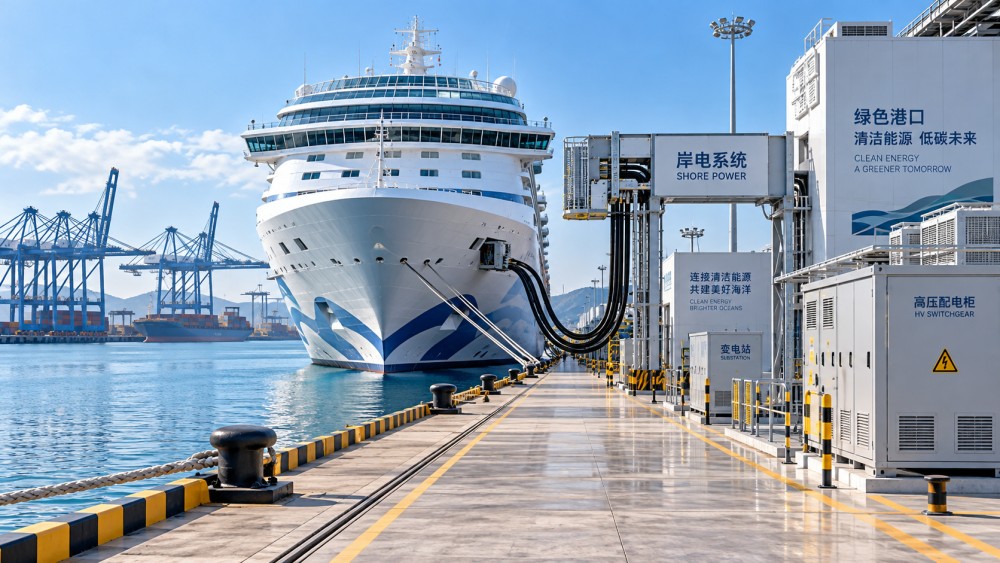
Shore power, also called cold ironing or onshore power supply, allows a berthed vessel to switch off auxiliary engines and receive electricity from the local grid. For cruise ships, LNG carriers, ferries, and certain offshore or engineering vessels, the emissions and local-air-quality case can be compelling where a connection is technically feasible and vessel dwell time is sufficient.
Yet public announcements rarely describe the full commercial logic. A commitment to “electrify berths” may indicate anything from an early feasibility study to a funded deployment with a confirmed utility connection. Decision-makers should distinguish between policy intent, infrastructure readiness, vessel-side readiness, and operating readiness. Each layer affects whether capital produces meaningful utilisation.
Recent port decarbonisation news increasingly points to a more disciplined investment environment. Ports are being pushed to demonstrate credible pathways for cutting berth emissions, while vessel operators are looking for predictable access to compatible connections. At the same time, electrical networks face competing demand from industry, buildings, transport, and new energy facilities. Shore power is therefore becoming a planning issue at the interface of maritime operations and power-system capacity.
The market is moving from berth hardware to system readiness
Early shore power discussions often focused on visible assets: cable management systems, substations, converters, plugs, and berth-side cabinets. Those components remain essential, but the investment question has broadened. A port can install technically capable equipment and still struggle to deliver a reliable service if the upstream grid connection is delayed, fault levels are not properly assessed, or electricity tariffs make use unattractive to ships.
The practical shift is toward a systems view. A credible project now needs to answer several linked questions:
- Which vessel classes call regularly enough to justify a connection?
- How long do those vessels remain alongside under normal and disrupted schedules?
- What voltage, frequency, power demand, and connection interface are required at each berth?
- Can the local network supply the coincident load, not just an average annual estimate?
- Who operates the connection during turnaround, and what happens when a vessel is late or changes berth?
- How will the port recover operating costs without discouraging use?
This is why a grid-related announcement can matter as much as a marine equipment announcement. A new high-capacity connection, substation reinforcement, or demand-management arrangement may be the enabling step that turns a shore power ambition into a deployable asset. Conversely, a port can have strong policy support but face a long delay if network capacity has not been reserved early enough.
Where investment is concentrating first
Not every berth should be electrified at the same time. The most investable locations tend to combine recurring calls, meaningful time alongside, concentrated auxiliary load, and vessel fleets that can either connect now or are expected to do so on a known renewal cycle. This favours terminals with relatively predictable operations over berths serving highly variable or short-notice traffic.
Cruise terminals: high visibility, demanding load profiles
Cruise berths are often central to shore power plans because a single call can involve substantial hotel load and a long stay in port. Public pressure around local air quality can also be intense in passenger destinations. However, cruise vessels are not interchangeable electrical loads. Their connection arrangements, power needs, arrival patterns, and onboard integration can differ substantially.
A cruise terminal should avoid treating a headline commitment from a vessel operator as proof that all calls can connect. The relevant question is whether the vessels scheduled to use a particular berth have compatible onboard systems, whether a connection can be made within the operational window, and whether the terminal can maintain safe passenger and baggage flows during cable deployment. Berth geometry, tidal range, mooring arrangement, and the location of ship connection points can become design constraints rather than minor engineering details.
Ferries and fixed-route services: utilisation can be stronger
Regular ferry services can offer a clearer business case because schedules and vessel assignments are generally more predictable. Where vessels make repeated short calls, however, the connection process itself becomes critical. A system that takes too long to engage or disengage may disrupt turnaround discipline and reduce adoption.
For these operations, automation, crew procedures, and resilient communications may carry as much weight as nominal installed capacity. The port should model the actual connection window, including late arrivals, weather interruptions, and the possibility of simultaneous calls. The right design may involve a smaller but highly usable system rather than a larger installation that cannot fit the timetable.
Specialised vessels and LNG-related calls: technical fit comes first
Engineering vessels, offshore support assets, and LNG carriers may have substantial onboard electrical demand, but their calling patterns can be irregular. Their shore power potential depends heavily on service profile, berth availability, safety zoning, cargo or maintenance activity, and the configuration of onboard generation systems. An LNG-related berth may also require particularly careful coordination of electrical equipment, hazardous-area considerations, emergency systems, and terminal operating procedures.
In these segments, demand cannot be inferred from vessel size alone. A port needs vessel-by-vessel technical engagement before committing to standardised equipment. The commercial case may be sound at a multi-user berth, but weak where a small number of vessels have uncertain schedules or incompatible connection arrangements.
Grid capacity is becoming the decisive constraint
Shore power can create a large, intermittent demand at the edge of a local distribution network. A berth may be quiet for part of the day and then require substantial capacity when a vessel arrives. Ports that evaluate only annual electricity consumption can underestimate the importance of peak demand, connection charges, power quality, harmonics, and redundancy requirements.
The first conversation with the electricity network should therefore occur before detailed equipment procurement. It should cover available capacity, reinforcement pathways, expected delivery dates, metering requirements, fault contribution, export limitations where onsite generation is planned, and whether flexible demand arrangements are possible. These issues are not administrative details; they determine project scope and timing.
Load diversity also deserves scrutiny. A planning model may assume that vessels will not connect simultaneously, yet berth schedules can converge during weather recovery, seasonal peaks, or operational disruption. A port needs to test the design against credible high-load scenarios rather than relying on the most convenient forecast. This may lead to phased deployment, energy storage for limited support functions, demand controls, or contractual rules governing simultaneous connections.
How to read investment signals without mistaking ambition for readiness
When reviewing port decarbonisation news, leaders can use a simple evidence hierarchy. The further an announcement moves down this list, the closer it is to an operational shift:
- Strategic statements: broad commitments to reduce port emissions or examine shore power potential.
- Feasibility activity: vessel surveys, berth studies, utility engagement, or preliminary engineering.
- Funding and approvals: identified capital sources, planning permission, procurement authority, or signed delivery arrangements.
- Grid confirmation: defined connection capacity, reinforcement plan, delivery schedule, and commercial terms.
- Vessel participation: confirmed compatible callers, connection protocols, and operational agreements.
- Commissioned service: tested systems, trained personnel, billing processes, maintenance arrangements, and actual connection availability.
A port may be advanced in one category and immature in another. For example, a funded terminal project can remain exposed if grid reinforcement is uncertain. Equally, a vessel operator may have technically capable ships but no practical certainty that compatible berths will be available across its route network. The investment opportunity lies in identifying these gaps early, not in assuming that a public target resolves them.
Commercial models are under pressure to become more transparent
Shore power changes costs rather than eliminating them. Fuel use at berth may fall, but the port assumes capital expenditure, network charges, maintenance requirements, operating labour, and technology-obsolescence risk. The vessel operator needs confidence that the electricity price, connection fee, and reliability level compare reasonably with continued auxiliary generation.
Pricing models should separate fixed infrastructure recovery from variable energy costs wherever possible. A single opaque fee can create friction when electricity prices change or when different vessel classes impose very different connection demands. Transparent structures make it easier for operators to forecast port-call costs and for ports to explain how availability, utilisation, and peak demand affect charges.
Availability also has commercial value. A ship that plans to connect but finds the service unavailable may need to run auxiliary engines at short notice, potentially affecting emissions reporting and operational expectations. Service-level definitions should cover planned outages, fault response, connection assistance, metering accuracy, and the treatment of weather-related or vessel-side failures. These details are often left until late in procurement, when they should shape the operating model from the outset.
A practical sequence before committing capital
The most robust projects start with traffic and electrical evidence, then move into engineering. Begin by mapping calls by berth, vessel type, dwell time, seasonality, and likely future deployment. Do not rely solely on aggregate port throughput; shore power economics are driven by the specific calls that can connect.
Next, obtain technical data from likely users. This includes onboard connection capability, voltage and frequency requirements, maximum and typical load, preferred cable arrangement, switching procedures, and operational limits. Where fleet data is incomplete, build uncertainty into the business case rather than filling the gap with generic assumptions.
Then run grid engagement in parallel with berth engineering. Waiting until the equipment specification is complete can create expensive redesigns. Network constraints may influence where equipment is placed, whether conversion equipment is required, how many berths can be supplied at once, and whether deployment must be staged.
The strategic implication for equipment suppliers and port leaders
The market is likely to reward organisations that can reduce integration risk rather than simply offer individual components. Ports need clear interfaces between electrical infrastructure, marine operations, digital monitoring, and compliance reporting. Vessel operators need confidence that a connection will work across more than one terminal. Suppliers need visibility into fleet plans and port development schedules early enough to align technical configurations.
For senior decision-makers, the most useful interpretation of shore power news is not “more projects are coming.” It is to ask which constraints are being removed: funding, grid access, vessel compatibility, operational procedures, or commercial alignment. An announcement that resolves one of those constraints can materially improve a project’s prospects. An announcement that addresses none of them may still be important politically, but it should not be treated as evidence of near-term utilisation.
Shore power investment is becoming a measure of how well a port can coordinate long-life infrastructure with changing vessel technology and emissions expectations. The ports best positioned to capture the shift will be those that treat electrification as an operational service built around real calls and real network conditions—not as a standalone symbol of decarbonisation.