
Related News
- 00
0000-00
How Low-Carbon Navigation Systems Optimize Ship Routes to Reduce Fuel Use - 00
0000-00
How Shipbuilding Supply Chain Lead Times Affect Vessel Delivery Schedules - 00
0000-00
Maritime Digitalization: Where Fleet Operators Can Cut Fuel and Compliance Risk - 00
0000-00
Class Approval for Podded Thrusters: Design, Testing, and Vessel Integration Requirements - 00
0000-00
How to improve vessel carbon intensity without slowing schedules

How to Improve Vessel Carbon Intensity Without Slowing Schedules
Learning how to improve vessel carbon intensity without slowing schedules has become a practical operating question, not a theoretical decarbonization exercise. A vessel can reduce fuel consumption by cutting speed, but that answer quickly falls apart when berth windows are fixed, charter-party commitments are tight, weather margins are narrow, or passengers and cargo owners expect predictable arrival times.
The more useful approach is to remove wasted energy from the voyage rather than simply reduce the voyage’s average speed. On an LNG carrier, that may mean coordinating propulsion demand with boil-off gas management. On a cruise ship, it may mean reducing hotel-load peaks and avoiding unnecessary generator operation during port approaches. For a subsea construction vessel, the main opportunity may sit in dynamic positioning, crane operations, and the interaction between thrusters and power-management systems.
Carbon intensity is shaped by the whole operating profile: fuel choice, distance sailed, cargo or passenger activity, engine loading, auxiliary demand, hull condition, weather routing, and time spent waiting outside port. The vessel is only one part of the equation. Dispatch teams, port planners, charterers, technical managers, and onboard crews all influence the result.
Do Not Treat Speed Reduction as the Only Lever
Slow steaming can reduce fuel use in the right trading pattern, but it should not be applied blindly. A vessel that slows down only to spend the recovered time drifting outside a congested port has not solved the underlying problem. In some cases, the lower transit speed also creates operational complications: machinery may operate outside its preferred load range, refrigeration or cargo-management demands may rise, and crew work planning becomes less predictable.
The better question is: what is the minimum energy needed to meet the actual required time of arrival? That is different from asking for the lowest possible speed. A reliable just-in-time arrival plan considers berth availability, pilot arrangements, tidal constraints, cargo readiness, weather exposure, bunkering, and local traffic separation schemes. If those inputs are uncertain, the vessel usually carries unnecessary speed margin “just in case.” That margin is often where avoidable emissions hide.
A practical operating routine is to review the voyage plan whenever a material port update arrives, not only at departure. If the berth is delayed by six hours, the response should not automatically be “maintain speed and wait.” The bridge, engine department, and shoreside operations team need a shared decision on whether a revised arrival profile can absorb the delay safely.
Start With the Energy Profile, Not a Generic Fuel-Saving Checklist
Every vessel has a different energy signature. A large engineering vessel may consume heavily during DP work but relatively little during transit. A cruise ship can see substantial hotel load driven by HVAC, galleys, accommodation systems, entertainment spaces, and freshwater production. LNG carriers have the additional operational relationship between propulsion, reliquefaction arrangements where fitted, cargo boil-off gas, and tank-pressure management.
Before changing procedures, establish where energy is actually going. This does not require a perfect digital twin on day one. It does require disciplined data: main-engine load, generator loading, shaft or propulsion power where available, fuel flow, speed through water, speed over ground, weather, draft, trim, auxiliary consumers, and time in each operating mode. If the data is inconsistent, crews will understandably distrust the conclusions drawn from it.
One useful distinction is between necessary energy and recoverable loss. Necessary energy may include maintaining a safe sea margin in adverse weather, keeping cryogenic systems within operating limits, or holding position during a critical subsea lift. Recoverable loss may include generators running lightly loaded for convenience, excessive thruster use during benign conditions, poor trim, fouled hull surfaces, or a transit plan that ignores a forecast current.
This matters because carbon-intensity improvement efforts often fail when crews are asked to chase a single fuel target without being shown which losses they can genuinely control.
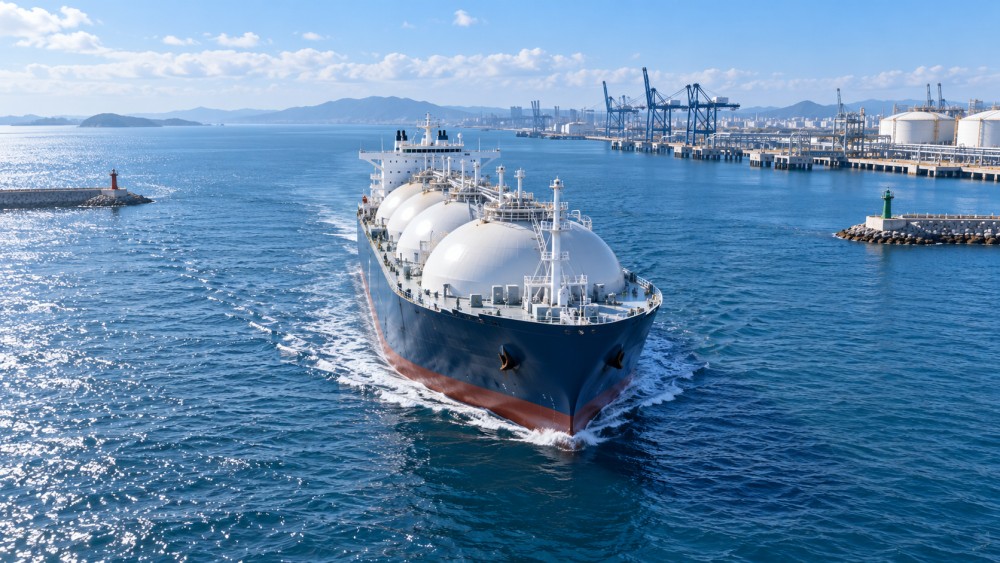
Protect Arrival Time Through Better Voyage Execution
Weather routing is often discussed as a safety tool, which it is, but it is also a carbon-intensity tool. The shortest route on a chart is not always the lowest-energy route. Countercurrents, wind-driven resistance, wave direction, and prolonged pitching can force more propulsion power for the same speed over ground. Conversely, a slightly longer track may produce a more stable operating condition and a more reliable ETA.
The key is not to make routing decisions solely on forecast fuel savings. A route recommendation needs to be checked against vessel capability, cargo constraints, passenger comfort requirements where relevant, machinery condition, and navigational limits. For vessels with narrow schedule tolerance, a useful practice is to define an arrival corridor rather than a single rigid ETA. That gives the bridge team room to use currents and weather windows without losing operational control.
Trim optimization belongs in the same category. It is not glamorous, and its benefit varies with hull form, draft, displacement, sea state, and speed. Still, trim is worth examining because it can be adjusted without changing the commercial schedule. The mistake is to rely on a static trim table as though it applies in every condition. A vessel leaving port in ballast, operating at partial cargo load, or navigating in rougher seas may need a different setting from the one that looked best during a prior trial.
Hull and propeller condition deserve equal attention. Cleaning intervals should be based on observed performance deterioration, trading pattern, coating condition, and environmental restrictions at the planned service location—not just a calendar routine. A badly timed cleaning can disrupt availability; a delayed cleaning can quietly consume the fuel margin that the schedule relies on.
Keep Engines and Generators in Their Useful Operating Range
Improving carbon intensity is frequently less about asking machinery to do less work and more about avoiding inefficient work. Running too many generator sets at light load is a familiar example. It may offer a sense of redundancy, but it can also increase specific fuel consumption and maintenance burden. The correct number of online sets depends on redundancy requirements, load volatility, class rules, operational risk, and the vessel’s electrical architecture. It should never be reduced simply to improve a dashboard number.
For diesel-electric ships, power management has a direct connection to voyage reliability. Load sharing, generator start-stop logic, spinning reserve, battery support where installed, and large consumer sequencing all affect fuel use. A crane start, bow-thruster demand, or hotel-load peak can trigger unnecessary engine starts if the system is tuned too conservatively. On the other hand, aggressive start-stop logic can create instability and wear. The right setting is usually found through operating data and sea trials of the control strategy, not by copying another vessel’s parameters.
Variable-frequency drives and podded propulsion systems can offer meaningful flexibility because they allow propulsion and electrical demand to be matched more closely to the operating condition. But their value depends on integration. If a vessel has sophisticated electric propulsion while hotel systems, pumps, cooling circuits, and DP settings are managed independently, the full efficiency benefit will not appear.
Treat LNG and Dual-Fuel Operations as an Operating System
For LNG carriers and dual-fuel vessels, carbon-intensity management cannot be separated from fuel-gas handling and cargo behavior. The operating choice between consuming gas, managing boil-off, using liquid fuel, or relying on installed reliquefaction capability is shaped by the vessel design and voyage condition. It also depends on equipment availability, fuel quality, cargo instructions, weather, and the commercial framework of the voyage.
This is why simple fuel comparisons can be misleading. A decision that looks favorable from an engine-efficiency perspective may have implications for tank pressure, gas-handling equipment, maintenance planning, or arrival readiness. Engineering and operations teams need to look at the whole energy balance. Cryogenic fluid behavior, machinery limits, and emission performance are connected, particularly on long voyages or during changing ambient conditions.
The same principle applies to exhaust-treatment equipment. Scrubbers and SCR systems can support compliance objectives, but they are not a substitute for reducing avoidable fuel burn. Pumps, fans, reagent systems, pressure losses, washwater arrangements, and maintenance condition all create operational considerations. The best result comes when exhaust treatment is managed alongside combustion quality and engine load, rather than being treated as a separate compliance box.
Reduce Port and Waiting-Time Emissions
A vessel can execute an efficient sea passage and still lose much of the gain near port. Long anchorages, repeated maneuvering, standby generator operation, and poorly coordinated service calls can be disproportionately wasteful. For cruise vessels and offshore units in particular, auxiliary load can remain high even when propulsion demand is low.
Port-call planning should therefore include energy questions: Is shore power available and compatible? Can cargo, stores, bunkering, and maintenance activities be sequenced to reduce generator demand? Is the arrival speed being coordinated with a confirmed berth window? Are tug and pilot timings being communicated early enough to avoid repeated repositioning?
Not every port offers the infrastructure needed for a lower-emission call, and compatibility must be checked carefully. Shore connection voltage, frequency, capacity, safety procedures, and local requirements are vessel-specific matters. Still, the operational discussion should happen before arrival, not after the ship is already alongside with several generators online.
Make Carbon Data Useful to the Crew
Reporting requirements linked to IMO carbon-intensity measures have made performance data more visible, but visibility alone does not change behavior. A monthly fuel report is too late to help a chief engineer decide whether an auxiliary engine should remain online tonight. The most useful information is timely, credible, and tied to a decision the crew can make.
A practical onboard view might compare planned versus actual fuel consumption by operating mode, identify unexplained deviations, and show whether speed loss came from weather, hull condition, machinery limits, or route choice. The purpose is not to turn the bridge or engine control room into an accounting office. It is to make abnormal performance visible while there is still time to correct it.
MO-Core’s work across advanced marine propulsion, LNG containment and gas systems, cruise-ship electrical integration, and exhaust-treatment technologies points to the same conclusion: isolated equipment upgrades rarely deliver their expected benefit unless the vessel’s operating logic changes with them. A new drive, pod, scrubber, or monitoring platform must be understood within the vessel’s actual duty cycle.
Choose Improvements That Do Not Create a New Bottleneck
When deciding what to change, start with measures that are reversible, measurable, and low-risk to schedule integrity. Voyage-speed optimization, trim review, generator dispatch discipline, cleaning strategy, route updates, and port-call coordination usually deserve attention before major capital work. They also reveal whether the vessel has a process problem, a maintenance problem, or a genuine technical limitation.
Capital upgrades may be appropriate where the operating profile supports them, particularly for vessels with long remaining service life or energy-intensive missions. Electric propulsion improvements, battery integration, advanced control systems, fuel-system modifications, and emissions-treatment upgrades should be evaluated against space, weight, redundancy, class implications, drydock timing, crew training, and lifecycle maintenance. A technically elegant retrofit that causes extended off-hire or adds fragile complexity may not be the right answer.
The strongest carbon-intensity improvements usually come from many disciplined decisions rather than one dramatic intervention. Protect the schedule by planning earlier, use machinery in the range where it performs properly, avoid waiting at full readiness when the port cannot receive the vessel, and make performance data specific enough to guide the next watch. That is how emissions can fall without turning punctuality into the sacrifice.