
Related News
- 00
0000-00
How to Evaluate an Integrated Propulsion Manufacturer for Vessel Retrofit Projects - 00
0000-00
LNG Carrier Price Trends: What Shipbuyers Should Budget for Newbuilds - 00
0000-00
How to Evaluate Marine Semiconductor Suppliers for Shipboard Reliability - 00
0000-00
How Dual-Fuel Ships Cut Emissions Across Different Fuel and Operating Profiles - 00
0000-00
How to Select Low-Voltage Marine Drives for Electric Propulsion Below 1 kV

In today’s green oceans, shipbuilders are discovering that growth lies not only in capacity, but in high-value specialization, decarbonization, and smarter vessel systems. From LNG carriers and electric propulsion to cruise engineering and emission control, new demand is reshaping competitive advantage—making strategic intelligence essential for business evaluators assessing where the next wave of maritime value will emerge.
Green oceans are changing the growth map for shipbuilders
The most important shift in today’s green oceans is that volume alone no longer defines leadership. Business evaluators are increasingly looking beyond orderbook size and asking a different set of questions: which yards can build technically demanding vessels, which suppliers can support decarbonization pathways, and which business models are aligned with long-cycle maritime demand. In that environment, value is moving toward specialized engineering vessels, luxury cruise systems, LNG carrier technologies, electric propulsion integration, and compliant exhaust treatment.
This is not a temporary cycle driven only by freight volatility. It reflects a deeper transformation across the marine economy. Environmental regulation is tightening, energy trade patterns are shifting, vessel owners are balancing fuel flexibility with asset longevity, and advanced onboard systems are becoming central to operational efficiency. As a result, green oceans now reward technical depth, systems integration capability, and the ability to convert complex regulation into commercially viable vessel solutions.
For decision-makers, the implication is clear: future growth in green oceans is likely to be concentrated in segments where engineering barriers are high and compliance requirements are rising. This makes intelligence-led assessment more important than simple market optimism.
What signals show the market is moving toward higher-value maritime demand?
Several visible signals are reshaping the competitive landscape. First, shipowners are placing more emphasis on fuel efficiency, emissions reduction, and lifecycle adaptability. Second, project complexity is increasing, especially in LNG containment, cryogenic handling, marine electrical systems, and vessel-level integration. Third, procurement decisions are becoming more strategic, because selecting the wrong technology platform can lock in operating costs and compliance risks for decades.
These signals matter in green oceans because they change how value is measured. A vessel is no longer judged only by delivery price or deadweight capability. It is also judged by emissions readiness, energy efficiency, automation potential, maintainability, and compatibility with future rules. This trend especially benefits players that can combine naval architecture, cryogenic expertise, electrical integration, and environmental systems knowledge.
Why green oceans are being driven by technology, regulation, and energy strategy
The growth story in green oceans is being shaped by three forces acting at the same time. The first is regulation. IMO-related environmental standards are pushing the market toward practical compliance technologies, including exhaust gas treatment, efficient propulsion, and fuel-saving digital control. Compliance is no longer a box-ticking issue; it directly affects charterability, financing discussions, and asset competitiveness.
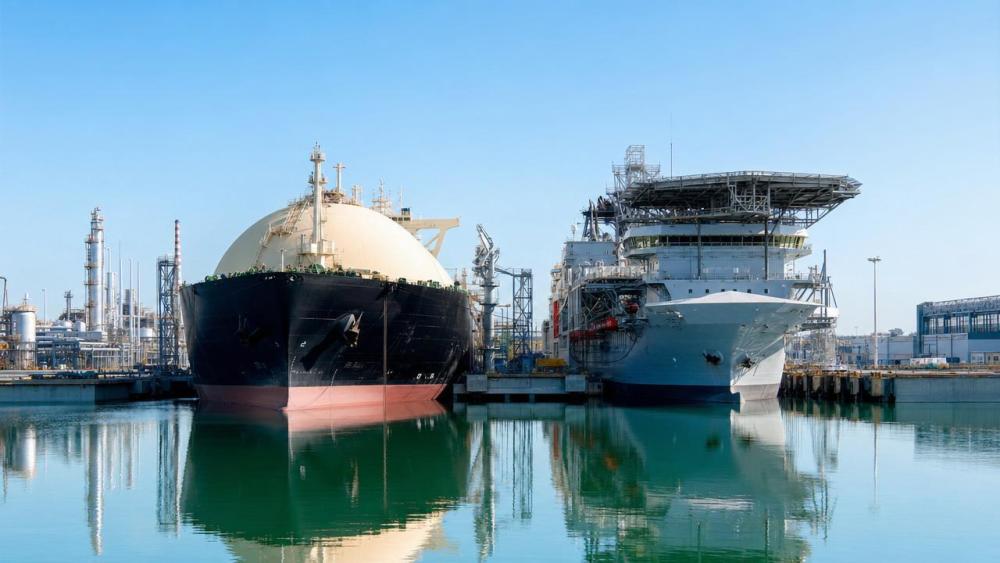
The second force is energy transition. LNG remains a major bridge fuel in global shipping and energy logistics, which supports demand for sophisticated LNG carriers and related systems. These vessels are among the highest-value products in shipbuilding because they combine structural complexity, cryogenic containment, thermal management, and strict safety requirements. In green oceans, that makes LNG technology a strong indicator of where premium margins can still be found.
The third force is system electrification. Marine electric propulsion, including VFD drives and podded thrusters, is gaining attention because it can improve fuel efficiency, flexibility, and vessel control. For engineering vessels and cruise ships in particular, electric architecture supports operational precision and optimized onboard power management. This turns electrical integration from a supporting discipline into a strategic capability.
Which business segments feel the impact of green oceans most strongly?
Not every maritime player benefits equally from the same changes. Business evaluators should separate broad marine exposure from high-value participation. The strongest opportunities in green oceans tend to appear where technical barriers are high, retrofit and newbuild logic are both relevant, and customers face direct pressure to improve efficiency or compliance.
For suppliers, the opportunity is especially strong where products sit at the intersection of regulation, safety, and energy efficiency. Exhaust treatment systems, SCR integration, cryogenic components, propulsion electronics, and digital fuel optimization tools all fit this pattern. These areas are difficult to commoditize because they require engineering credibility, service support, and compatibility with vessel-specific design constraints.
What makes specialized vessels the clearest growth zone in green oceans?
Specialized vessels stand out because they respond directly to structural demand rather than only cyclical freight spikes. Mega engineering vessels support offshore infrastructure, subsea installation, and resource development. Their value lies in mission capability, onboard power sophistication, dynamic operational control, and integration of multiple technical systems. That favors yards and vendors with deep engineering depth rather than purely low-cost capacity.
Luxury cruise systems represent another area where green oceans are creating differentiated demand. Cruise ship development requires a difficult balance: premium guest experience, strict fire safety, redundancy, noise and vibration management, and increasingly efficient energy architecture. This means business evaluators should not view cruise exposure simply as tourism-linked demand. It is also an advanced manufacturing and systems integration market where design quality and safety engineering carry significant value.
LNG carriers remain the clearest symbol of high-end shipbuilding. Their strategic appeal comes from the complexity of storing and transporting cargo at minus 163 degrees Celsius while protecting safety, minimizing boil-off losses, and ensuring reliable long-haul performance. In green oceans, this segment often acts as a benchmark for whether a shipbuilder or supplier can operate at the top end of the maritime value chain.
How should business evaluators judge the next phase of maritime competition?
The next phase of competition in green oceans will likely be decided less by broad demand narratives and more by execution quality. Evaluators should focus on whether a company has real positioning in growing niches, not just marketing exposure to sustainability themes. A useful framework is to test five dimensions: segment relevance, technical barrier strength, regulation alignment, project-cycle resilience, and intelligence capability.
Segment relevance asks whether the company is exposed to vessel classes and subsystems where demand is structurally supported. Technical barrier strength looks at whether competitors can easily replicate the offering. Regulation alignment considers whether the solution benefits from stricter standards instead of being threatened by them. Project-cycle resilience tests whether the business can survive long order-to-delivery windows. Intelligence capability examines whether management can track raw material changes, policy shifts, fuel pathway uncertainty, and evolving owner preferences.
What should companies monitor now to capture value in green oceans?
Companies that want to strengthen their position in green oceans should monitor several signals continuously. One is the evolution of owner preference between immediate compliance investments and broader fuel-transition strategies. Another is whether LNG-related infrastructure and transport demand continues to support vessel ordering and technology upgrades. A third is the pace at which electric propulsion and digital optimization move from premium options to expected specifications.
They should also watch practical bottlenecks: engineering labor availability, material cost fluctuations, integration lead times, and certification timelines. In a market where value comes from execution, these factors can shape profitability as much as headline demand. That is why intelligence platforms with deep-blue manufacturing focus are becoming more valuable. They help companies connect market signals with technical consequences rather than treating the maritime sector as a single undifferentiated industry.
For MO-Core’s audience, the key takeaway is that green oceans are not just about environmental branding. They are about identifying where specialized shipbuilding, marine electrification, LNG technology, and compliant emissions systems are creating defensible commercial positions. The real winners are likely to be organizations that understand how policy, engineering, and demand are converging—and can make decisions before that convergence becomes obvious to the wider market.
A practical decision lens for the next move
If an enterprise wants to judge how green oceans may affect its business, it should start with a focused internal review. Which vessel segments are gaining technical value? Which products solve an urgent compliance or efficiency problem? Which partnerships are needed to improve integration capability? And which market assumptions depend too heavily on short-term sentiment rather than long-term shipping transformation?
The most useful next step is not to chase every trend, but to confirm where the company sits in the maritime value chain and whether it has credible exposure to high-barrier demand. In green oceans, better judgment often creates more value than broader activity. For business evaluators, that means asking sharper questions now—before the next wave of maritime growth becomes fully priced into the market.