
Related News
- 00
0000-00
Choosing a Ship Component Availability Database: Stock Accuracy and Lead Times - 00
0000-00
How Low-Carbon Navigation Systems Optimize Ship Routes to Reduce Fuel Use - 00
0000-00
How Shipbuilding Supply Chain Lead Times Affect Vessel Delivery Schedules - 00
0000-00
Maritime Digitalization: Where Fleet Operators Can Cut Fuel and Compliance Risk - 00
0000-00
Class Approval for Podded Thrusters: Design, Testing, and Vessel Integration Requirements

For financial decision-makers, energy-efficient ship design is not simply a technical refinement requested by naval architects or a response to environmental pressure. It is a lifecycle cost-control decision made before steel is cut. A vessel’s fuel profile, maintenance burden, compliance exposure, cargo capability, and resale appeal are shaped by early design choices that may remain in place for 20 years or more.
That long horizon changes the procurement question. The relevant comparison is rarely “Which design costs less to build?” It is “Which vessel creates the lowest cost of moving a tonne of cargo, supporting an offshore project, or accommodating a passenger over its useful life?” In an industry where fuel remains one of the largest operating expenses, even modest improvements in daily consumption can compound into a meaningful difference in asset economics.
For owners, lenders, charterers, and fleet investment committees, the most valuable designs are not necessarily those with the longest list of green equipment. They are the designs in which hull form, propulsion, power generation, hotel load, operational profile, and future compliance requirements work together as a coherent system.
Fuel cost is a lifecycle issue, not a bunker-price issue
A fuel-cost forecast based only on today’s bunker price can make an efficient vessel appear expensive. A more useful financial view considers the full operating period: annual sailing days, speed distribution, weather margins, port time, auxiliary loads, dry-docking intervals, fuel availability, carbon-related charges, and the likelihood that future regulations will affect operating flexibility.
The practical lifecycle equation is broader than fuel consumption alone:
Lifecycle operating cost = fuel expense + energy-related maintenance + carbon and compliance cost + downtime risk + loss of commercial flexibility.
Energy-efficient ship design influences every part of that equation. A hull requiring less propulsive power reduces fuel use directly. Smaller or more appropriately sized machinery can lower maintenance demand. Better power management may reduce generator running hours. Lower emissions intensity can mitigate exposure to carbon-pricing mechanisms and help preserve access to charter opportunities where environmental performance is increasingly screened.
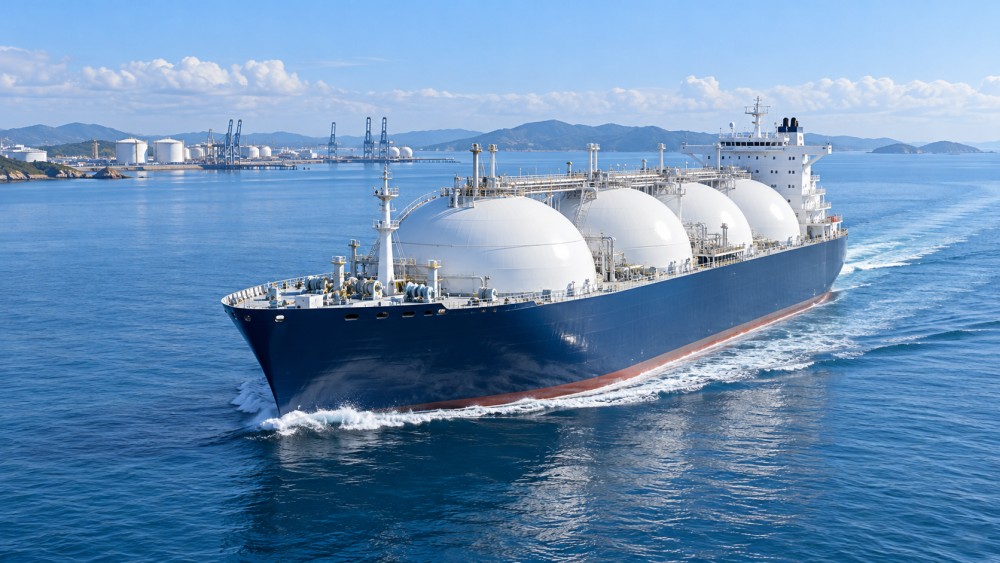
The effect is especially important for vessels with high annual utilization. LNG carriers, cruise ships, offshore construction vessels, and other energy-intensive platforms may have radically different operating profiles, but they share one commercial reality: inefficiency is paid for repeatedly, voyage after voyage.
Where the fuel savings are actually designed in
Fuel efficiency does not come from one headline component. It is the result of reducing the energy needed to perform the vessel’s intended mission without undermining safety, redundancy, cargo capacity, or operational resilience.
Hull form: reducing resistance before adding technology
Hull optimization is often the most fundamental lever because resistance is built into every nautical mile. Designers assess the relationship between displacement, beam, draft, bow geometry, stern flow, appendages, propeller inflow, and the vessel’s expected speed range. The objective is not an abstract “low-resistance hull,” but a hull that performs efficiently in the conditions the ship will actually face.
A vessel designed around a service speed it rarely maintains may carry an expensive mismatch for its entire life. Likewise, a design optimized only for calm-water trials may disappoint in real operations if it encounters persistent waves, wind, fouling, shallow-water restrictions, or frequent maneuvering.
For a financial review, the key question is whether the design basis reflects the commercial deployment plan. A low-resistance hull creates value only when its performance assumptions match routes, loading conditions, speed policy, and operational duty cycle.
Propulsion integration: efficiency is gained at the system boundary
Propeller selection, shaft arrangements, gearboxes, podded propulsion, electric motors, variable-frequency drives, and engine operating points should be evaluated as an integrated chain. Losses at each conversion stage matter, particularly on vessels with large hotel loads, dynamic positioning requirements, or frequent changes in power demand.
Marine electric propulsion can be compelling where flexible load management and redundancy are central to the vessel’s mission. Variable-frequency drives allow equipment to operate closer to actual demand rather than continuously at maximum output. Podded thrusters can improve maneuverability and, in suitable applications, contribute to more efficient propulsion and hull arrangement. Yet neither solution should be treated as universally superior. Their financial case depends on duty profile, repair strategy, installed redundancy, crew capability, and lifecycle service availability.
For complex engineering vessels and cruise platforms, the most relevant savings may not come from a single propulsion device. They may arise from avoiding unnecessary generator loading, reducing spinning reserve, or allowing the power plant to remain within more favorable operating ranges.
Auxiliary energy: the overlooked side of vessel economics
On many ships, propulsion is only part of the energy story. Cooling, pumps, compressors, HVAC, cargo-handling systems, lighting, accommodation services, and control equipment can create substantial auxiliary demand. This is particularly visible on luxury passenger ships, where the expectations of a floating city meet the constraints of a marine power plant, and on LNG carriers, where cryogenic cargo systems require carefully managed energy flows.
Energy-efficient ship design therefore includes heat recovery, optimized HVAC zoning, intelligent pump control, efficient refrigeration architecture, shore-power readiness where relevant, battery-supported load smoothing, and disciplined electrical integration. These measures may look secondary in a capital budget, but their cumulative contribution is often material because auxiliary systems run for long periods and may operate even when the vessel is alongside.
Why a higher acquisition price can still be the lower-cost decision
Procurement teams understandably focus on the contract price, especially when shipbuilding budgets are under pressure. The difficulty is that a lower initial price can conceal a more expensive operating model. A design with less optimized hydrodynamics, limited automation, oversized machinery, or weak provision for future energy upgrades may save capital expenditure at delivery while creating years of recurring cost.
That does not mean every efficiency feature deserves approval. Financial discipline requires separating measures with a credible operating case from attractive but poorly matched specifications. A premium should be tested against a transparent business case that includes:
- Expected annual fuel consumption under realistic—not idealized—operating conditions;
- Fuel-price sensitivity across low, central, and high price scenarios;
- Impact on cargo capacity, passenger capacity, deck space, or mission equipment;
- Maintenance requirements, spares availability, and service-network maturity;
- Potential changes in carbon cost, emissions reporting, and charterer preferences;
- Expected downtime during installation, repair, retrofit, or dry docking;
- Residual value and the vessel’s attractiveness in a tightening regulatory market.
A useful investment model also distinguishes between savings that are contractually verifiable and savings that depend on operator behavior. A high-efficiency propulsion package cannot deliver its full potential if the vessel is consistently operated outside its intended speed range. Similarly, digital energy-management systems require reliable data, disciplined onboard use, and shore-side interpretation. Procurement should assign ownership for these assumptions rather than treating all projected savings as equally certain.
Different vessel types, different economic logic
The phrase “fuel-efficient vessel” can hide important differences. For an LNG carrier, boil-off management, cargo handling, propulsion choice, and reliquefaction or fuel-use strategy are interconnected. Decisions must account for cryogenic performance, voyage duration, cargo economics, methane-related considerations, and the operational reliability of equipment designed to work around minus 163 degrees Celsius.
For a cruise ship, the challenge extends beyond propulsion. Hotel load, HVAC, wastewater treatment, galley operations, entertainment systems, safety redundancy, and port-side emissions all influence energy demand. Efficiency investments must be weighed alongside passenger comfort and the need for uninterrupted service.
For offshore engineering vessels, operating modes can change rapidly—from transit to dynamic positioning, crane operations, subsea work, and standby. Their value often lies in power flexibility and mission uptime rather than a single fuel-consumption figure. Here, integrated electrical systems, energy storage, and intelligent load control may have a stronger business case than they would on a vessel with a stable, predictable route.
Financial reviewers should therefore avoid comparing technology packages across vessel classes without normalizing the mission. The right benchmark is energy consumed per unit of useful work: cargo moved, passenger-night delivered, offshore operation completed, or mission hour sustained.
Compliance risk belongs in the fuel-cost model
Fuel efficiency and compliance are becoming harder to separate. IMO carbon-intensity requirements, regional emissions schemes, fuel standards, and customer reporting demands all increase the value of ships that can demonstrate lower energy use and clearer operational data. An inefficient design may remain technically legal while becoming commercially disadvantaged through higher compliance costs, lower charter attractiveness, or more limited deployment options.
Exhaust treatment systems, including scrubber and selective catalytic reduction configurations, can support compliance strategies in appropriate fuel and trading scenarios. However, they should be assessed as part of a whole-vessel decision. Their impact on weight, power demand, maintenance, washwater arrangements, space, and port restrictions can alter the original economics. The same caution applies to alternative-fuel readiness: future optionality is valuable, but only if the provision is practical and aligned with likely fuel infrastructure and trading routes.
A sound capital plan recognizes that future-readiness need not mean installing every technology immediately. In some cases, reserving space, designing electrical capacity, selecting adaptable control architecture, or preparing structural interfaces can provide a more economical path to later upgrades.
What to request before approving an energy-efficient ship design
Finance leaders do not need to reproduce the naval architect’s calculations. They do need evidence that the design case is robust. A procurement package should include a clear design-operating profile, the assumptions behind predicted fuel consumption, and sensitivity testing that shows what happens when speed, weather, utilization, or fuel prices differ from plan.
Ask for performance data by operating mode rather than one headline consumption number. Request explanation of how sea margin, hull fouling, machinery degradation, and hotel load have been treated. Confirm whether quoted figures are based on model tests, simulations, comparable in-service performance, or manufacturer ratings—and understand the limitations of each source.
It is also worth examining the measurement plan after delivery. If the business case depends on fuel savings, the vessel should have the metering, data architecture, and reporting discipline needed to verify them. AI-based fuel optimization and voyage-performance tools can turn raw operational data into better decisions, but their value rests on data quality and a practical process for acting on findings.
A stronger approval decision starts with lifecycle clarity
The best energy-efficient ship design is not defined by the most elaborate technology stack. It is the design that fits the vessel’s real mission, protects operational reliability, and converts lower energy demand into defensible lifecycle value.
For financial decision-makers, this means shifting the conversation from equipment cost to cost of ownership. It means challenging optimistic assumptions, pricing compliance exposure, and giving proper weight to the recurring expense of every extra tonne of fuel burned. In high-value shipping segments, that discipline can be the difference between buying a vessel that merely meets today’s specification and investing in an asset that remains commercially credible through changing fuel markets, regulation, and customer expectations.
MO-Core’s intelligence coverage across advanced vessel engineering, LNG carrier systems, marine electric propulsion, and emissions-control technologies is built around this wider view: technical choices matter most when they can be connected to operating realities, regulatory pathways, and long-term capital returns.