
Related News
- 00
0000-00
How to Evaluate an Integrated Propulsion Manufacturer for Vessel Retrofit Projects - 00
0000-00
LNG Carrier Price Trends: What Shipbuyers Should Budget for Newbuilds - 00
0000-00
How to Evaluate Marine Semiconductor Suppliers for Shipboard Reliability - 00
0000-00
How Dual-Fuel Ships Cut Emissions Across Different Fuel and Operating Profiles - 00
0000-00
How to Select Low-Voltage Marine Drives for Electric Propulsion Below 1 kV

Shipbuilding cycles are entering a new phase as yard capacity, financing conditions, and decarbonization mandates reshape global orderbooks. For researchers tracking high-value vessels, LNG carriers, and marine technology investment, the next shift will hinge on how supply constraints and strategic demand evolve together. This article highlights the signals worth watching to understand where capacity is moving—and what it may mean next.
Why scenario differences matter more than headline trends
For information researchers, broad commentary on shipbuilding cycles is no longer enough. The same cycle can create very different outcomes depending on the vessel category, the yard’s technical specialization, the buyer’s financing profile, and the regulatory timetable affecting deployment. A full orderbook in one segment does not automatically mean tightness everywhere. Capacity for standard bulk carriers, for example, is not interchangeable with capacity for LNG carriers, electric propulsion retrofits, luxury cruise systems, or highly specialized offshore engineering vessels.
This is why scenario-based analysis is essential. In practice, researchers usually face one of several business questions: Where will capacity move next for high-value ships? Which yards can actually absorb technologically complex demand? How will decarbonization reshape ordering priorities? And which supply-side bottlenecks are likely to extend delivery windows? Understanding shipbuilding cycles through these specific scenarios produces better conclusions than relying on aggregate vessel counts alone.
For a platform such as MO-Core, this distinction is especially important because deep-blue manufacturing depends on technical barriers, not just steel volume. Cryogenic containment systems, podded propulsion, scrubber integration, and advanced electrical architecture all convert shipbuilding cycles into a multi-layer capacity story. What to watch next, therefore, is not simply whether ordering rises or falls, but where specialized capacity becomes scarce, where it expands, and which users are most exposed.
Where shipbuilding cycles show up in real research scenarios
Most decision-making around shipbuilding cycles appears in a handful of recurring research settings. Each one requires a different lens.
- A supplier assessing whether to invest in LNG cargo handling, marine electrification, or emissions-control components.
- A buyer comparing whether to place orders now, defer, or shift to alternative yards or vessel designs.
- An investor tracking whether current yard utilization implies earnings resilience or future overcapacity.
- A policy or market analyst evaluating how decarbonization rules redirect yard slots and retrofit demand.
- A technology provider determining which vessel classes will support premium systems despite cost pressure.
In each case, shipbuilding cycles behave differently. Researchers who separate these scenarios can better identify whether the current market is driven by replacement demand, energy transition demand, regulatory demand, or strategic national industrial policy.
Scenario comparison: what different market users should watch next
The table below shows how the same shipbuilding cycle can look different depending on the underlying application scenario.
This comparison makes one point clear: shipbuilding cycles are not just about volume. They are about the interaction between vessel complexity, yard specialization, regulation, and capital discipline.
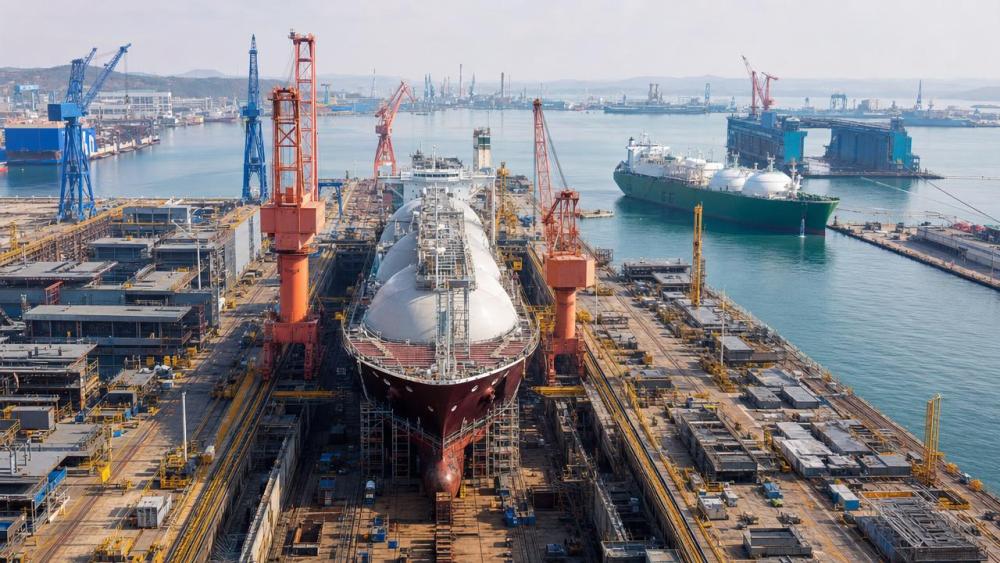
Scenario 1: High-value LNG carriers and the tight-capacity question
Among all current shipbuilding cycles, LNG carriers remain one of the most capacity-sensitive segments. This is the scenario where technical specialization matters most. Not every yard can deliver advanced cryogenic containment systems, integrated gas handling, and strict safety performance at scale. That makes headline capacity numbers less useful than qualified capacity numbers.
Researchers following this scenario should watch four signals closely. First, order concentration among top LNG-capable yards reveals whether the market is becoming operationally constrained. Second, lead times for tanks, pumps, valves, and insulation systems indicate whether bottlenecks are shifting upstream. Third, long-term charter activity can validate whether owners are ordering against durable transport demand or chasing a short-term freight spike. Fourth, financing discipline matters: if lenders become selective, some announced projects may not convert into firm construction demand.
For suppliers and intelligence users, this scenario is best suited to deep technical positioning. When shipbuilding cycles tighten in LNG, approved vendors with cryogenic credibility gain leverage. But newcomers must be cautious. Entering the segment requires long certification cycles, integration trust, and a realistic timeline for design adoption.
Scenario 2: Cruise, premium passenger ships, and the return of complex integration
Cruise-related shipbuilding cycles look different from cargo markets because demand is shaped by consumer recovery, corporate balance sheets, and very high integration complexity. These vessels combine hotel systems, safety redundancy, emissions compliance, and increasingly advanced electric propulsion. As a result, yard capacity is constrained not only by physical berth space but also by engineering bandwidth.
This scenario is relevant for researchers studying luxury cruise systems, marine electrification, and interior safety materials. Key watchpoints include whether operators are prioritizing fleet renewal over expansion, how quickly premium environmental technologies become standard specifications, and whether major yards can maintain margins despite labor intensity. Shipbuilding cycles in cruise can appear slow from the outside, yet they often create strong demand for high-value onboard systems once project confidence returns.
The main mistake in this scenario is to focus only on passenger demand. In reality, technical package complexity often determines who wins business. Suppliers linked to fireproof lightweight interiors, integrated power management, and emission reduction systems should track specification depth, not just vessel count.
Scenario 3: Offshore engineering and specialized workboats under energy transition pressure
A different face of shipbuilding cycles appears in mega engineering vessels, subsea construction units, and offshore support assets. Here, the trigger is often not consumer demand or commodity replacement, but project execution in offshore oil, gas, and wind infrastructure. Capacity shifts can happen quickly if governments accelerate energy security plans or offshore wind buildout.
This is an application scenario where business timing matters more than broad fleet averages. Researchers should examine subsea capital expenditure pipelines, offshore tender awards, and vessel specification trends such as dynamic positioning, heavy-lift capability, and hybrid power integration. A yard may have room in theory, yet lack the engineering profile to execute sophisticated offshore units efficiently.
For MO-Core’s audience, this segment is important because it often acts as an early indicator of how deep-blue manufacturing priorities are shifting. If offshore engineering demand strengthens while commercial newbuilds remain selective, shipbuilding cycles may favor specialized yards and premium suppliers rather than broad-based volume growth.
Scenario 4: Green retrofits, electric propulsion, and capacity outside the newbuild yard
Many observers still interpret shipbuilding cycles mainly through new orderbooks, but an increasingly important scenario sits in retrofit demand. Marine scrubbers, SCR systems, shaft and podded propulsion upgrades, battery integration, and digital fuel optimization all compete for technical labor and dock time. In some periods, this can absorb capacity that would otherwise support new construction.
This scenario is highly relevant when IMO decarbonization rules accelerate investment before owners are ready to commit to a full newbuild strategy. Researchers should watch retrofit queue lengths, drydock utilization, engine conversion pathways, and the economics of extending existing vessel life. For many operators, a green upgrade is not a secondary choice but a bridge strategy while fuel uncertainty remains unresolved.
The practical lesson is that shipbuilding cycles now extend across yards, repair docks, equipment ecosystems, and software-enabled efficiency upgrades. Any analysis that ignores retrofit capacity may underestimate demand for emissions technologies and marine electrical integration.
How to judge whether a scenario fits your research objective
A useful way to evaluate shipbuilding cycles is to match the scenario to the research objective before drawing conclusions. The following checklist can help:
- If the goal is supplier opportunity mapping, prioritize technical entry barriers, yard concentration, and certification lead times.
- If the goal is market timing, track berth availability, contract prices, and cancellation risk rather than raw order counts.
- If the goal is energy transition analysis, focus on dual-fuel logic, retrofit economics, and compliance-driven capex.
- If the goal is comparative vessel research, separate standardized vessels from highly engineered platforms.
This approach avoids a common analytical trap: applying one version of shipbuilding cycles to every segment. Capacity shifts are meaningful only when tied to the specific operational context.
Common misjudgments researchers should avoid
Several recurring errors can distort scenario analysis. One is assuming that capacity expansion announcements will quickly translate into effective output. In specialized shipbuilding, workforce quality, system integration capability, and vendor coordination often matter more than nominal dock additions. Another is treating decarbonization as a uniform demand driver. In reality, different vessel classes face different fuel pathways, regulatory urgency, and owner incentives.
A third mistake is overlooking financing structure. Shipbuilding cycles often appear stronger in public headlines than in executable contracts. High-value ships require confidence across chartering, technology selection, and capital access. Finally, many researchers underestimate substitution effects: when one yard segment becomes congested, owners may defer, redesign, retrofit, or switch to a different vessel strategy rather than simply pay more.
What to watch next: a focused signal list
For the next phase of shipbuilding cycles, the most actionable signals are concentrated in a few areas. Watch whether premium yards are adding qualified rather than nominal capacity. Watch how LNG and alternative-fuel vessel demand interacts with steel, cryogenic, and electrical equipment lead times. Watch whether green retrofit activity remains strong enough to absorb repair and conversion slots. And watch policy timing, especially around IMO implementation, because compliance schedules can pull forward investment even when freight markets cool.
Also important is the strategic behavior of buyers. Are they locking in long lead-time vessels early? Are they using modular specifications to preserve fuel flexibility? Are they concentrating on proven designs to reduce execution risk? These choices will shape how shipbuilding cycles unfold across high-value marine sectors.
Conclusion: use shipbuilding cycles as a scenario filter, not a single market verdict
For information researchers, the best way to read shipbuilding cycles is to treat them as a scenario filter. In LNG carriers, the core issue is specialized execution capacity. In cruise, it is engineering complexity and capital confidence. In offshore engineering, it is project timing and platform capability. In retrofits, it is compliance urgency and dock competition. Each scenario tells a different story about where value, risk, and opportunity are moving.
If your work involves vessel technology, marine equipment, or strategic maritime intelligence, the next step is to map your research target to the correct demand environment before interpreting orderbook signals. That is where a platform like MO-Core adds value: connecting shipbuilding cycles with the deeper technical and commercial realities that determine which capacity shifts matter next, and for whom.