
Related News
- 00
0000-00
Energy-Efficient Ship Design: Matching Hull and Propeller to Service Speed - 00
0000-00
Modeling Cryogenic Tank Sloshing: When Does Phase Change Matter in CFD? - 00
0000-00
Choosing Heavy-Lift Crane Vessels for Offshore Projects: Capacity and Outreach - 00
0000-00
Choosing a Ship Component Availability Database: Stock Accuracy and Lead Times - 00
0000-00
How Low-Carbon Navigation Systems Optimize Ship Routes to Reduce Fuel Use

Offshore renewable projects rarely fail because a single component is unknown. More often, trouble appears in the spaces between disciplines: a foundation concept that does not suit the available installation spread, an export cable route assessed too late, a dynamic cable interface treated as a supplier detail, or a vessel campaign planned around weather assumptions that do not hold offshore.
That is when offshore renewables subsea engineering services become necessary. They are not simply an extra design package added before construction. At their best, they provide the technical connection between seabed conditions, structures, cables, installation vessels, marine operations, permitting commitments, and long-term inspection needs. For project leaders, the value lies in making those interfaces visible while there is still room to change them.
The need can arise at several points in a project. Sometimes it is obvious from the start, particularly for floating wind, deep-water developments, complex seabed geology, or congested export corridors. In other cases, the trigger comes later: a geotechnical result changes the foundation assumption, cable protection requirements expand, a preferred vessel is unavailable, or the construction schedule begins to rely on an unrealistically narrow weather window.
The point at which a project needs subsea engineering support
A project does not need to wait until detailed design is complete before bringing in subsea specialists. In fact, that is often the expensive moment to do it. Early engineering is especially useful when the project team is still deciding what is technically buildable rather than merely selecting what looks efficient on a layout drawing.
One early warning sign is a mismatch between the commercial programme and the maturity of marine data. If turbine positions, platform locations, landfall options, or cable corridors are being fixed before the bathymetric, geophysical, and geotechnical picture is sufficiently understood, the project is carrying uncertainty into every downstream package. The risk is not limited to design. It can affect burial feasibility, scour protection quantities, route clearance, anchor placement, and the installation method itself.
Another trigger is a decision involving more than one contractor boundary. Offshore wind arrays, offshore substations, inter-array cables, export systems, mooring lines, and protection systems may be procured separately. That can make commercial sense, but it creates technical ownership gaps. A cable designer may define a cable system correctly within its own scope, while the foundation designer is working with different tolerances, installation assumptions, or protection constraints. Subsea engineering is needed when someone must own the whole interface rather than only the equipment package.
The same applies when a project moves from a fixed-bottom concept to floating infrastructure. Floating wind introduces coupled behavior between hull motion, moorings, anchors, and dynamic cables. The question is no longer just whether each component meets its own specification. The question is whether the complete system can tolerate fatigue loading, vessel interaction, installation sequence, and inspection access over its operating life.
Where the real offshore risks tend to sit
Project managers are often presented with a long risk register. The more useful approach is to identify the few issues that can reshape the design, schedule, or contract strategy. In subsea renewable work, these issues usually sit at interfaces rather than inside familiar equipment categories.
Seabed conditions are a clear example. A route may look direct on a chart, yet contain hard layers, boulders, steep gradients, mobile sediments, legacy infrastructure, fishing activity, or environmentally sensitive areas. None of these conditions automatically prevents development. They do, however, affect whether trenching, ploughing, jetting, mechanical cutting, rock placement, or a different route is appropriate. A route engineered only for cable length can become difficult to install and even harder to maintain.
Cable landfalls deserve similar scrutiny. They are often treated as a civil works problem on one side and a cable problem on the other. In practice, the transition zone can introduce difficult questions around horizontal directional drilling, pull-in loads, thermal performance, access restrictions, nearshore sediment movement, and coordination with local authorities or existing coastal users. Delaying these questions is rarely helpful, because changing a landfall corridor later may affect environmental studies, grid interfaces, and construction access.
Installation vessels are another practical constraint. A conceptual design can assume a generic cable-lay vessel, heavy-lift vessel, construction support vessel, or anchor-handling spread. The actual market is more specific. Deck space, crane outreach, carousel capacity, station-keeping capability, transit limitations, lifting arrangements, and crew competence all influence the feasible installation sequence. A technically elegant design may require a vessel configuration that is difficult to secure during the required campaign period.
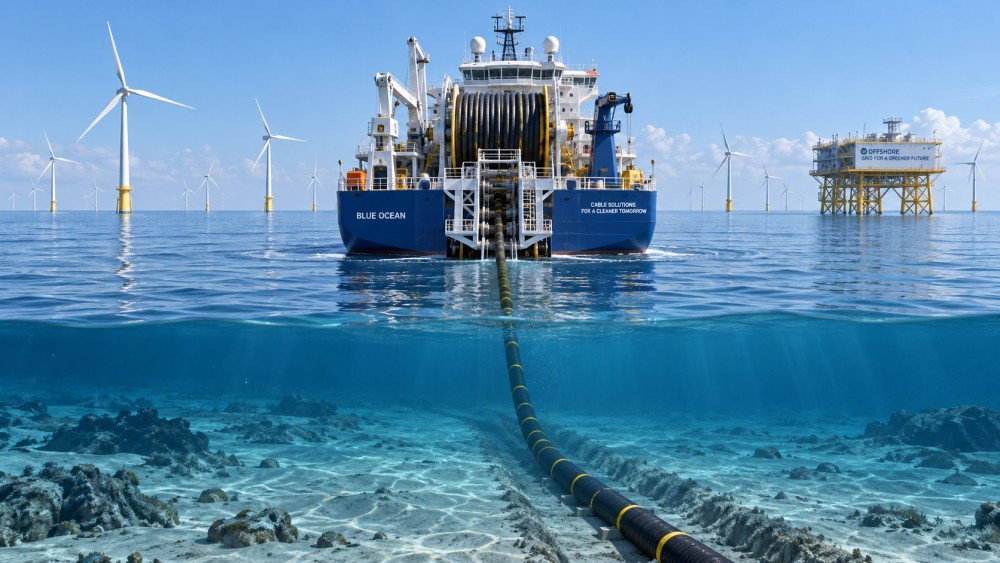
This is why experienced teams bring marine operations thinking into engineering reviews. The design should be checked not only against static drawings but also against how components are loaded, transported, lowered, connected, protected, tested, and recovered if something goes wrong. Offshore construction has little tolerance for assumptions that were never tested against vessel behavior and weather limitations.
What subsea engineering services should actually resolve
The scope should not be defined as “engineering support” in general terms. That phrase is too broad to manage. A useful offshore renewables subsea engineering services package answers specific project decisions and produces deliverables that can be used by designers, procurement teams, marine coordinators, and construction contractors.
For a fixed-bottom project, the work may include foundation interface assessment, cable route engineering, burial and protection philosophy, crossing design, scour considerations, installation analysis, and readiness review of contractor procedures. For floating projects, the emphasis may shift toward mooring and anchor arrangement, dynamic cable configuration, touchdown behavior, fatigue-sensitive interfaces, installation sequencing, and contingency planning for offshore connection work.
A good scope also addresses verification. This does not mean duplicating every contractor calculation. It means checking whether the inputs, assumptions, load cases, tolerances, and operational limits are consistent across work packages. A cable burial target, for example, needs to align with soil conditions, burial tool capability, cable mechanical limits, crossing requirements, and the inspection strategy after installation. If each party uses a different basis, the project may discover the inconsistency during offshore execution, when changes become slow and costly.
There is also a lifecycle dimension. Subsea assets cannot be treated as invisible simply because they are out of sight. Engineers should consider how a cable will be monitored, where it can be accessed, how protection systems will be inspected, what evidence will establish installed condition, and how repair operations could be performed. The right question is not “Can it be installed?” but “Can it be installed, proven, monitored, and repaired with credible marine methods?”
A practical decision check before tender
Before issuing an engineering, EPCI, or installation tender, project leaders should be able to answer a few uncomfortable questions:
- Is the available site investigation data sufficient for the decisions being transferred to bidders?
- Have cable route constraints been separated into confirmed constraints, probable constraints, and items requiring survey or stakeholder confirmation?
- Does the preliminary installation method reflect real vessel and tool limitations rather than a generic construction narrative?
- Are foundation, cable, scour, mooring, and topside teams using the same reference coordinates, tolerances, and environmental design basis?
- Has the project identified which party is responsible when an interface condition falls between contracts?
- Can the proposed inspection and repair philosophy be carried out without redesigning the asset after commissioning?
If several answers remain unclear, the project is usually ready for focused subsea engineering support. The purpose is not to produce more paperwork. It is to prevent bidders from pricing uncertainty in incompatible ways, or worse, excluding it from their assumptions altogether.
Why vessel intelligence belongs in the engineering conversation
Offshore renewables are often discussed through turbine ratings, capacity targets, and grid connections. Yet execution depends heavily on marine assets: heavy-lift ships, cable-lay vessels, subsea construction vessels, trenching support vessels, tugs, anchor handlers, and remotely operated vehicle spreads. Their capability is not interchangeable.
A vessel selection exercise should look beyond headline crane capacity or deck area. Project teams need to understand station-keeping mode, power availability, cable-handling equipment, lifting geometry, accommodation, fuel strategy, emissions constraints in the operating area, and the consequences of downtime. Increasingly, vessel energy performance and emissions management are part of operational planning, not only corporate reporting. Requirements may differ by port, charter arrangement, project jurisdiction, and client commitments, so they should be checked against the specific project framework rather than assumed.
This is where a broader maritime intelligence perspective is useful. MO-Core follows specialized engineering vessels alongside marine electric propulsion, advanced electrical integration, LNG carrier technologies, and exhaust treatment systems such as scrubber and SCR arrangements. Those fields may appear separate from a wind or tidal project, but the operational connection is direct: vessel power systems, fuel choices, onboard redundancy, and compliance capabilities can influence charter suitability and offshore execution resilience.
For a project manager, the lesson is simple. Do not assess the vessel only after the installation method has been frozen. Use vessel capability intelligence to challenge the installation concept early, especially where the work involves deep water, difficult pull-ins, large components, dynamic positioning, or a narrow seasonal campaign.
Common mistakes that make subsea work harder later
One frequent mistake is treating survey findings as a report to be archived instead of a design input that needs active interpretation. Geophysical and geotechnical data are valuable only when the engineering team translates them into route decisions, installation risks, and contractor requirements.
Another is assuming that a specialist contractor will resolve every unknown after award. Contractors do bring practical knowledge, and their involvement can improve constructability. But transferring an immature problem does not remove it; it usually turns into qualifications, change requests, schedule pressure, or conservative pricing. The owner’s team should define the essential design basis and interface responsibilities before asking the market to optimize the solution.
There is also a tendency to focus on installation and leave decommissioning, recovery, or major repair for later. Not every asset needs a fully developed end-of-life plan at concept stage, but early choices should not make future intervention unnecessarily difficult. Recovery clearances, disconnectable interfaces, cable slack management, and access for marine spreads are easier to consider when layouts are still flexible.
Choosing the right level of support
Not every project needs the same engineering model. A relatively straightforward extension near existing infrastructure may need targeted route, cable, and installation assurance. A first-of-a-kind floating project, a multi-contractor development, or a site with difficult ground conditions may justify an integrated subsea engineering team throughout design and construction.
The choice should follow the cost of uncertainty, not a generic organizational chart. If a single unresolved interface could delay a vessel campaign, force a cable redesign, or create uncertainty around long-term asset integrity, it deserves senior technical attention. Conversely, routine matters should not be over-engineered simply because they sit offshore.
The most effective subsea support gives a project team clear decisions: which risks must be retired now, which can remain under managed contingency, what bidders must demonstrate, and what evidence is required before offshore work begins. That is the practical moment when offshore renewables subsea engineering services earn their place—not as an added layer of complexity, but as the discipline that keeps an ambitious marine project connected to the conditions it will actually face.