
Related News
- 00
0000-00
Choosing Heavy-Lift Crane Vessels for Offshore Projects: Capacity and Outreach - 00
0000-00
Choosing a Ship Component Availability Database: Stock Accuracy and Lead Times - 00
0000-00
How Low-Carbon Navigation Systems Optimize Ship Routes to Reduce Fuel Use - 00
0000-00
How Shipbuilding Supply Chain Lead Times Affect Vessel Delivery Schedules - 00
0000-00
Maritime Digitalization: Where Fleet Operators Can Cut Fuel and Compliance Risk

Are Heavy-Lift Ships Available for Offshore Installation Projects?
Yes, heavy-lift ships are available for offshore installation projects, but “available” is rarely a simple yes-or-no question. A vessel may have enough crane capacity on paper and still be unsuitable because of deck layout, water depth, motion limits, station-keeping requirements, port restrictions, or its existing project commitments. For developers, EPC contractors, and offshore equipment suppliers, the practical question is not merely whether a heavy-lift vessel exists. It is whether the right vessel can be secured for the required installation window with an acceptable technical and commercial risk profile.
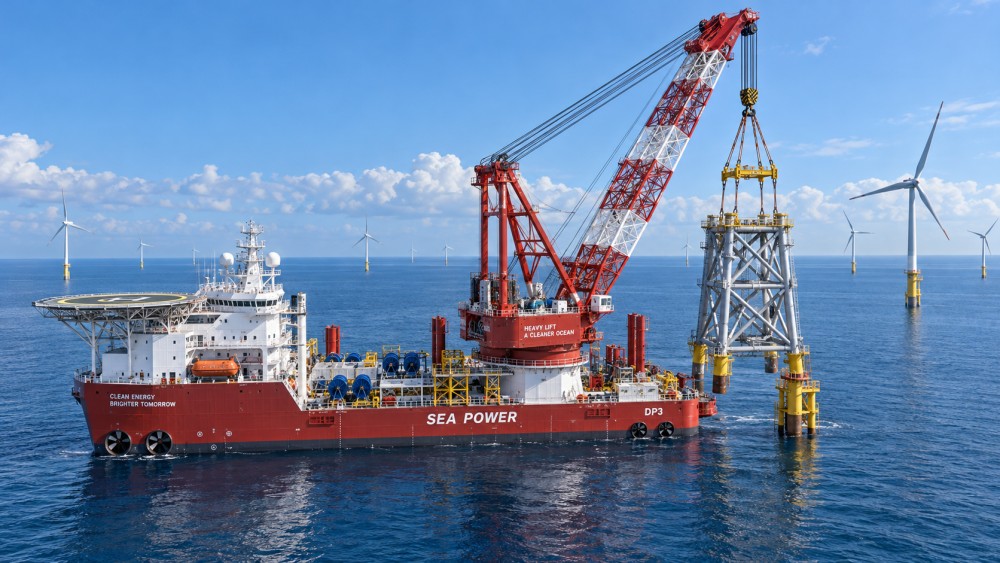
Specialized lifting vessels support a broad range of work: fixed offshore platforms, jackets, topsides, subsea production modules, offshore substations, monopiles, transition pieces, floating wind components, mooring systems, and decommissioning lifts. Their crane capability, dynamic positioning, deck strength, accommodation capacity, and ability to operate in defined sea states can determine whether an installation campaign proceeds smoothly or becomes an expensive sequence of standby days.
That distinction matters because offshore projects are built around interfaces. The vessel must work not only with the cargo, but also with the fabrication yard, load-out quay, transport barges, marine warranty requirements, installation spread, subsea conditions, and weather season. A heavy-lift ship is therefore part of the project engineering solution, not simply a chartered transport asset with a large crane.
What Counts as a Heavy-Lift Vessel Offshore?
The term covers several vessel types with different operating logic. Conventional heavy-lift ships are often used to transport large fabricated items and conduct offshore lifts where conditions allow. Semi-submersible heavy transport vessels can carry exceptionally large or unusual structures by ballasting down for float-on/float-off operations. Crane vessels and crane barges are designed around lifting work, while self-propelled heavy-lift construction vessels may combine high-capacity cranes with dynamic positioning, extensive deck space, and accommodation for large offshore crews.
For offshore wind, jack-up installation vessels remain important in many regions because their legs can create a stable working platform in suitable water depths and seabed conditions. In deeper water, rougher environments, or projects requiring greater operational flexibility, floating crane vessels and DP-enabled installation ships may be the more appropriate option. Floating wind introduces another variation: the principal lift may occur in port, at a sheltered assembly location, or offshore during connection and hook-up activities rather than during a conventional fixed-foundation installation.
Vessel categories overlap, so labels can mislead. A project team should assess actual capabilities: crane load charts, lifting radius, hook height, deck loading, ballast system, station-keeping mode, fatigue limitations, transfer arrangements, and the vessel’s approved operational envelope. The largest crane is not automatically the best answer.
Availability Is Shaped by More Than Fleet Size
The global fleet includes capable assets, yet high-specification availability can tighten quickly. Major offshore wind campaigns, platform decommissioning work, subsea field developments, and large-module transport programs can all compete for a limited pool of vessels. The constraint is often concentrated at the upper end of the market, where projects need very high lifting capacity, advanced DP capability, or a vessel configuration that can handle oversized structures safely.
A vessel may also be technically available but commercially impractical. Repositioning from another region can consume weeks, require fuel and crew planning, and create exposure to delays before the project has even begun. Port access may limit air draft, berth length, quay bearing capacity, channel depth, or cargo load-out sequence. Local-content rules, cabotage requirements, and offshore permitting arrangements can add another layer, depending on the jurisdiction.
Seasonality is equally important. In regions with narrow weather windows, chartering a vessel for the nominal lift duration is rarely enough. The schedule needs contingency for transit, mobilization, testing, adverse weather, installation holds, and the possibility that another work package slips. A low day rate can become a poor outcome if the charter period does not realistically absorb the project’s marine uncertainty.
The Technical Questions That Should Be Answered Before Vessel Shortlisting
A disciplined vessel search starts with the installation basis, not with a list of famous ships. The cargo weight is only one input. Project teams need to understand the complete lift condition, including the centre of gravity, lifting points, rigging weight, dynamic amplification, allowable tilt, required hook height, and clearances during set-down. For topsides and large modules, the lift radius can have more influence on suitability than the maximum crane rating stated in a brochure.
For DP operations, project teams should examine more than the words “DP capable.” The relevant question is whether the vessel’s redundancy concept, power generation arrangement, thruster configuration, reference systems, and consequence analysis suit the task and client requirements. Electrical integration is a central issue here. High-power drives, switchboards, thrusters, energy-management systems, and backup arrangements all influence how a vessel responds to a fault during a critical offshore lift.
Matching the Vessel to the Installation Method
There are several common mistakes in early planning. One is selecting a vessel based on headline crane capacity and then discovering that its boom geometry prevents the required placement. Another is treating transport and installation as separate packages without considering whether the handover between them creates unnecessary offshore handling. A third is assuming that a vessel optimized for large repetitive wind-farm foundations will be equally efficient for an irregular brownfield platform modification.
Fixed-platform work may require a vessel to lift close to existing structures, where congestion, dropped-object controls, and platform shutdown constraints govern the method. A subsea module installation may depend on precise lowering systems, heave compensation, ROV support, and controlled landing on a prepared foundation. Offshore substation installation involves not only structural lifting but also the timing of cables, commissioning interfaces, and marine coordination around the site.
For LNG-related offshore infrastructure, cargo and equipment interfaces can become especially sensitive. Components linked to cryogenic service require careful handling of their fabrication, preservation, transport restraints, and commissioning sequence. While a heavy-lift vessel does not determine cryogenic process performance by itself, poor lifting and transport planning can create avoidable risk at the boundary between marine construction and high-value equipment installation.
Weather Windows Are an Engineering Input, Not a Scheduling Footnote
Offshore lifting is governed by limits on wind, wave height, swell period, vessel motions, visibility, current, and sometimes temperature. Those limits vary by vessel, crane configuration, cargo geometry, lift phase, and approved procedure. A project manager should be cautious when a schedule relies on a single, uninterrupted weather window, particularly in exposed locations or seasons with variable conditions.
Weather downtime is not just a commercial inconvenience. It can affect fatigue exposure in mooring lines, cargo restraints, personnel transfers, fuel consumption, port calls, and the ability to retain specialist crews. Installation analysis should connect metocean assumptions with the vessel’s actual operating criteria and the duration of each critical step. Generic regional weather averages are not enough for a lift with narrow motion limits.
This is also where vessel efficiency and decarbonization become practical project issues. Extended standby on high-power offshore vessels affects fuel use and emissions, while repeated mobilizations add further exposure. Fuel-efficient propulsion, VFD-driven systems, battery-supported operating modes where fitted, and optimized routing may improve the operating profile, but these features should be evaluated against the mission rather than treated as a universal answer.
Commercial Planning: Secure Capability Without Locking in the Wrong Asset
A sensible procurement strategy usually begins earlier than many teams expect. Early market engagement can identify whether the project needs a dedicated vessel, a slot within a broader campaign, or a modular execution plan that retains flexibility. It also exposes constraints that are easier to solve during design: changing a lifting trunnion location, reducing transport height, revising module weight distribution, or altering the construction sequence can materially widen the vessel pool.
Charter terms should be read alongside the technical execution plan. Mobilization and demobilization responsibilities, weather-risk allocation, port costs, fuel treatment, cancellation provisions, survey requirements, and delay definitions can all influence the final project exposure. The contract cannot compensate for an immature lift plan, but it can clarify which party carries the consequence when a critical interface changes.
Marine warranty surveyor involvement, client assurance processes, class requirements, flag-state obligations, and local rules should be mapped early. The precise combination will depend on the project location and contractual structure. It is better to identify documentation expectations during vessel selection than to discover late in the campaign that a proposed operating method requires further engineering or approval.
A Better Way to Read the Heavy-Lift Market
For organizations following offshore infrastructure, vessel availability is tied to broader maritime developments: shipyard capacity, steel and equipment supply, propulsion choices, emissions compliance, offshore energy investment, and the evolution of installation methods. These relationships are easy to overlook when vessel sourcing is handled as a late-stage logistics activity.
The Global Marine-Optima Hub (MO-Core) examines this wider picture through its focus on mega engineering vessels, marine electric propulsion, LNG carrier technologies, and green marine systems such as scrubber and SCR arrangements. Its Strategic Intelligence Center connects vessel technology with commercial and regulatory context, including the way advanced electrical systems, fuel-use optimization, and IMO environmental expectations can influence fleet deployment and lifecycle decisions. For offshore planners, this perspective helps distinguish a temporary vessel shortage from a more structural capability constraint.
The answer to “Are heavy-lift ships available for offshore installation projects?” is therefore affirmative, with an essential qualification: capacity must be matched to the exact lift, site, season, logistics chain, and approval pathway. Start with a verified installation basis, test several vessel concepts rather than one preferred name, and protect the schedule with realistic contingency. That is usually more valuable than chasing the largest crane or the lowest initial charter figure.