
Related News
- 00
0000-00
How to Evaluate an Integrated Propulsion Manufacturer for Vessel Retrofit Projects - 00
0000-00
LNG Carrier Price Trends: What Shipbuyers Should Budget for Newbuilds - 00
0000-00
How to Evaluate Marine Semiconductor Suppliers for Shipboard Reliability - 00
0000-00
How Dual-Fuel Ships Cut Emissions Across Different Fuel and Operating Profiles - 00
0000-00
How to Select Low-Voltage Marine Drives for Electric Propulsion Below 1 kV

Why are costs rising so sharply in high-end shipbuilding, and why are new price gaps widening across projects? For financial approvers, the short answer is that premium vessel pricing is no longer driven mainly by steel, labor, or yard capacity. The biggest differences now come from technical complexity, regulatory exposure, integration risk, and the long-term economics of operating specialized ships.
In practical terms, two vessels that look similar in size may now carry dramatically different newbuild prices because one requires LNG containment, advanced electric propulsion, stricter emissions treatment, higher redundancy, digital control architecture, and more demanding class approval. These are not cosmetic upgrades. They change engineering scope, supplier concentration, commissioning difficulty, lifecycle efficiency, and the risk profile of the whole investment.
For finance teams, this means traditional benchmarking methods are becoming less reliable. A higher quote is not automatically overpriced, and a lower quote is not automatically efficient. The real question is whether the price premium reflects durable technical value, lower operating risk, stronger compliance resilience, and better earnings protection across the vessel’s service life.
This article focuses on the factors that are creating new price gaps in premium shipbuilding and explains how financial decision-makers can distinguish justified cost escalation from weak commercial discipline.
Why similar high-end ships now show very different prices
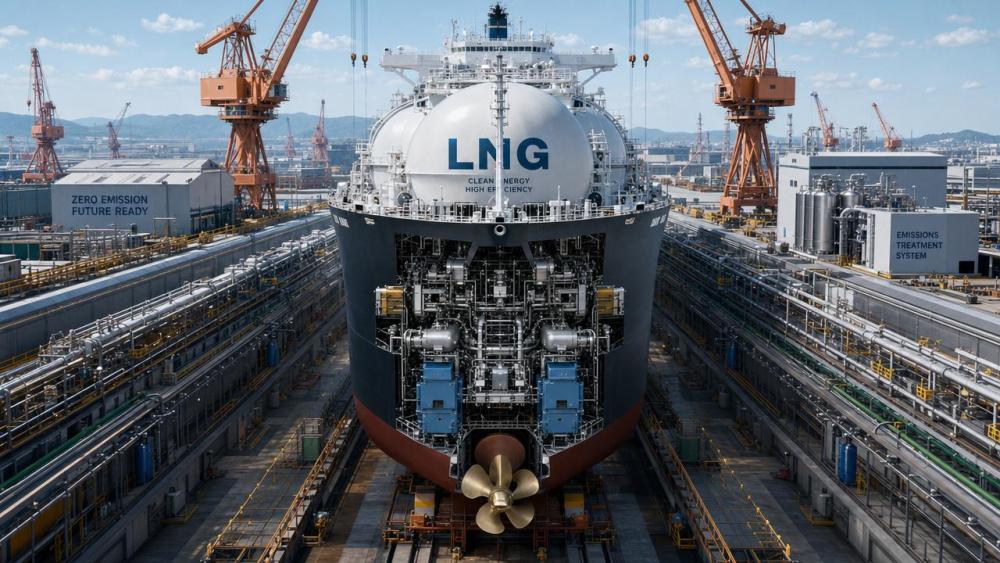
The widening gap in high-end shipbuilding costs starts with one structural change: ship value is increasingly determined by systems integration rather than hull tonnage alone. In earlier cycles, buyers could compare newbuilds more directly through deadweight, steel consumption, installed power, and yard labor assumptions. Today, those indicators explain only part of the final price.
High-value vessels such as LNG carriers, luxury cruise ships, offshore engineering vessels, and electrically advanced marine platforms contain dense layers of specialized technology. Their commercial value comes from how well propulsion, storage, automation, emissions systems, energy management, safety redundancy, and digital controls function together under strict regulatory and operational conditions.
That creates price divergence. One yard may offer a lower headline number but rely on less proven subsystems, narrower supplier choices, or a more aggressive integration schedule. Another yard may price higher because it includes stronger redundancy, deeper engineering hours, more mature commissioning support, and more robust lifecycle performance guarantees. From a finance perspective, these are very different risk propositions even if the vessels appear comparable on paper.
This is why cost evaluation must move beyond “price per gross ton” or “price per cubic meter.” In premium segments, what matters is the embedded complexity of the vessel and the financial consequences of getting that complexity wrong.
The biggest cost drivers are no longer basic materials alone
Steel, engines, labor, and inflation still matter, but they no longer explain the full rise in premium ship prices. In many specialized projects, the most powerful cost drivers come from high-spec systems, engineering depth, certification burden, and supplier concentration.
For LNG carriers, containment systems are among the clearest examples. Storing cargo at minus 163 degrees Celsius requires precise cryogenic engineering, insulation performance, boil-off gas management, and exceptionally high construction quality. The containment technology is not just expensive hardware. It also drives design review, installation tolerances, commissioning procedures, and schedule risk.
For electric or hybrid propulsion vessels, cost pressure comes from integrated electrical architecture, variable frequency drives, power management systems, batteries where applicable, harmonic control, cooling requirements, software coordination, and testing complexity. These components interact with thrusters, switchboards, and vessel operating profiles. Their value lies in efficiency and control, but their integration cost is materially higher than that of conventional propulsion packages.
Luxury cruise vessels add another layer. Interior design quality is visible, but the deeper cost issue is how hotels, entertainment systems, fire safety, evacuation rules, noise and vibration control, HVAC zoning, and lightweighting targets must all work together without compromising safety or class compliance. This makes design iterations more expensive and late changes particularly costly.
In offshore engineering vessels, the price uplift often comes from mission-specific equipment such as heavy-lift systems, dynamic positioning, subsea support tools, crane integration, deck strength, heave compensation, and specialized accommodation standards. These are not simple add-ons. They alter vessel architecture and often narrow the supplier field.
For financial approvers, the key point is that modern ship cost inflation is often technology-led and integration-led, not just commodity-led.
Regulation is widening the price gap between “compliant today” and “resilient tomorrow”
Another reason new price gaps are opening is regulation. IMO rules, regional emissions requirements, carbon intensity pressures, and owner ESG commitments are changing what buyers consider acceptable. As a result, two projects can differ sharply in price simply because one is designed for minimum current compliance while the other is built for future flexibility.
That difference matters financially. A vessel with scrubbers, SCR systems, dual-fuel capability, advanced fuel monitoring, or superior energy-efficiency design may cost more upfront, but it can reduce exposure to retrofit costs, trading restrictions, and commercial obsolescence. In volatile regulatory environments, future-readiness becomes an asset with measurable value.
However, not every “green premium” is equally justified. Finance teams should ask whether the specification is linked to likely charter requirements, fuel availability, route economics, and anticipated environmental regulation in target markets. A decarbonization feature has stronger investment logic when it improves utilization probability, protects resale value, or reduces compliance uncertainty over a long operating horizon.
The price gap therefore reflects not only hardware but also optionality. Owners are paying for the ability to operate across more markets, adapt to stricter rules, and preserve asset relevance longer. In premium shipbuilding, optionality is becoming a central component of valuation.
Supply chain concentration is making strategic equipment far more expensive
One of the most underestimated drivers of high-end shipbuilding cost is supplier concentration. Many critical systems in LNG shipping, electric propulsion, exhaust treatment, advanced navigation, and specialized deck machinery are sourced from a limited number of qualified vendors. When demand rises or technical qualification narrows the field further, pricing power shifts quickly toward suppliers.
This does more than raise equipment prices. It also changes lead times, payment schedules, integration sequencing, and project risk. If a critical cryogenic component, podded thruster, automation suite, or emissions-control package is delayed, the entire build timeline may be affected. That has direct financial implications through milestone shifts, financing costs, liquidated damages exposure, and revenue deferral.
Supplier concentration also reduces substitution flexibility. In standard vessel categories, owners can often compare multiple equivalent packages. In premium classes, replacing a selected supplier may require redesign, reapproval, interface changes, and fresh testing. That makes the original equipment decision more financially significant than in conventional shipbuilding.
For approvers, this means procurement resilience should be treated as part of capex quality. A higher-priced bid with stronger supplier alignment and clearer delivery confidence may produce a better risk-adjusted investment outcome than an apparently cheaper alternative built on fragile sourcing assumptions.
Engineering hours, design changes, and commissioning risk are major hidden cost multipliers
In premium projects, some of the largest cost differences are hidden in engineering and delivery execution rather than visible in the bill of materials. High-end vessels require a large volume of design coordination across structure, machinery, electrical systems, software, safety cases, class documentation, and owner-specific requirements. When complexity rises, engineering hours rise nonlinearly.
Late-stage design changes are especially expensive. A modification to accommodation layout, electrical load balance, LNG fuel integration, or emissions equipment placement can trigger effects across structural plans, cabling, piping, weight distribution, approvals, and commissioning procedures. What looks like a manageable change at board level may create broad downstream cost consequences.
Commissioning risk is another major factor. Premium ships do not create value simply when they are launched; they create value when complex systems operate reliably together. Sea trials, integration testing, safety validation, and software tuning can become schedule-critical. If the vessel is technically ambitious, handover delays can consume the perceived savings of a low initial contract price.
This is why financially sound project review should include questions about design maturity, interface management, change-order discipline, and commissioning readiness. These are not engineering side issues. They are direct drivers of capex certainty and time-to-revenue.
How financial approvers should judge whether a price premium is justified
The most useful approach is not to ask whether a vessel is expensive in absolute terms. The better question is whether the premium is tied to measurable outcomes. In high-end shipbuilding, a justifiable premium usually supports one or more of five value levers: lower operating cost, stronger compliance durability, better utilization potential, reduced downtime risk, or improved residual value.
Start with lifecycle economics. If a more expensive propulsion or energy system materially improves fuel efficiency, maintenance intervals, or route flexibility, the price premium may be rational even before considering environmental advantages. For many vessel types, small operating improvements compound significantly across years of service.
Next, examine revenue protection. A vessel that can access more charter markets, meet higher customer standards, or avoid periods of non-compliance often protects cash flow better than a lower-cost design. This is particularly relevant in LNG transportation, cruise operations, and specialized offshore support, where technical capability strongly influences commercial employability.
Third, assess execution reliability. Premium pricing is easier to defend when the yard and supplier team has proven experience with similar systems, clearer delivery planning, and stronger post-delivery support. A lower bid from a less prepared ecosystem may create greater total cost through delay, rework, underperformance, or warranty friction.
Fourth, evaluate strategic fit. Some high-spec features are essential for the owner’s operating model; others are prestige additions with weaker return logic. Finance teams should separate specification choices that improve asset competitiveness from those that mainly increase complexity without clear monetization.
Finally, apply scenario thinking. Ask how the vessel performs under different assumptions for fuel prices, carbon regulation, charter demand, maintenance burden, and resale markets. In many cases, what appears to be a price gap is actually a gap in future resilience.
Practical red flags that suggest the “cheap” newbuild may not be cheaper
Financial approvers should be cautious when a quote is materially below market without a transparent explanation. In premium shipbuilding, unusually low pricing can signal missing scope, weak interface definition, unrealistic schedules, underbudgeted commissioning, narrow warranty assumptions, or supplier choices that may not hold through delivery.
One common red flag is limited engineering detail at the commercial approval stage. If a project contains advanced LNG systems, electric propulsion, or specialized emissions solutions, vague technical boundaries often create later cost growth. Another red flag is a heavy reliance on owner-furnished equipment without clear installation and integration responsibility.
Approvers should also watch for optimistic assumptions around class approval, software harmonization, or sea-trial readiness. These areas are often underestimated in first-pass budgets. In addition, if a bidder lacks deep experience in the exact vessel category, early price advantages may disappear as complexity becomes real during production and testing.
A disciplined review process should therefore compare not only total contract price but also scope completeness, technical maturity, supplier lock-in exposure, milestone realism, and lifecycle support arrangements. That is where hidden price gaps become visible.
What this means for budgeting, approval, and investment discipline
For decision-makers overseeing capital allocation, the central lesson is clear: the new economics of high-end shipbuilding demand a more intelligence-led approval model. Cost benchmarking must be combined with technical due diligence, regulatory foresight, and operating scenario analysis.
Budgets should include explicit allowances for integration complexity, commissioning risk, and strategic equipment lead-time pressure. Approval frameworks should require evidence that high-spec features are linked to either revenue upside, compliance durability, or measurable operating savings. This helps prevent both overengineering and false economy.
It is also increasingly important to review vessel projects as long-cycle industrial assets rather than one-time procurement events. In segments shaped by maritime decarbonization, advanced propulsion, and specialized engineering, the wrong specification can remain expensive for decades, while the right premium can protect returns long after delivery.
For finance teams, that changes the core question from “Why is this vessel so expensive?” to “Which parts of this cost create lasting economic advantage, and which parts do not?” That is the right lens for evaluating today’s widening price gaps.
Conclusion: price gaps reflect a new hierarchy of value, risk, and future readiness
High-end shipbuilding costs are rising because premium vessels now embody far more than hull construction. LNG containment, electric propulsion, emissions compliance, software integration, specialized mission systems, and regulatory resilience are redefining what buyers are actually paying for. As a result, new price gaps are widening across projects that may look superficially similar.
For financial approvers, the best response is not to resist every premium, nor to accept every technical upgrade at face value. It is to identify whether the added cost supports stronger lifecycle economics, lower risk, better market access, and longer asset relevance. In today’s market, the most important distinction is not between expensive and cheap. It is between price and value.
When evaluated through that lens, rising costs in high-end shipbuilding become easier to interpret. Some premiums are signs of inefficiency. Others are the cost of building vessels that will remain compliant, competitive, and commercially useful in a far more demanding maritime future.