
Related News
- 00
0000-00
Green Energy Sea Delivered as China’s Largest LNG Carrier Project Reaches Eight Ships - 00
0000-00
Buying Marine Drives in North America: Lead Times, Parts, and Service - 00
0000-00
QatarEnergy-Controlled LNG Carrier Appears to Attempt Rare Suez Transit - 00
0000-00
Digital Shipbuilding in Southeast Asia: Which Upgrades Should Shipyards Prioritize? - 00
0000-00
What Drives Pipe-Laying Vessel System Prices? Equipment and Integration Costs
Tags

A shipping expert adds the most value before commercial terms harden around an incomplete view of vessel capability. In LNG chartering, two ships can appear comparable on cargo capacity, delivery window, and headline hire while carrying very different exposure to boil-off, fuel consumption, terminal compatibility, maintenance interruption, and emissions-related operating constraints. The expert’s contribution is to translate those differences into charter-party protections, operating assumptions, and a price comparison that remains valid after the vessel leaves the loading berth.
The need is greatest when a proposed fixture combines a long voyage profile, uncertain waiting time, a specific discharge terminal, or a vessel design that differs from the fleet being compared. Freight is visible immediately. The commercial effect of cargo retained, fuel burned, time lost, and compliance work often emerges later, when changing conditions test assumptions that were never written into the agreement.
When vessel descriptions conceal material differences
An LNG carrier should not be assessed as a generic transport unit. Its containment system, propulsion arrangement, reliquefaction capability, shaft-generator configuration, and gas-handling plant form an operating system. A specification sheet may state nominal cargo volume and service speed, but those figures do not establish how the vessel will perform on the intended route.
Containment technology is central because it influences boil-off behavior, cargo handling options, maintenance planning, and the operating response to delay. Membrane and independent-tank arrangements should not be treated as interchangeable merely because both are established solutions. Their insulation arrangements, operating practices, inspection approaches, and behavior during cooldown or prolonged idle periods differ. A specialist can identify whether the cargo profile relies on assumptions about boil-off that fit the actual design and condition of the ship.
The same applies to the propulsion plant. A dual-fuel engine configuration that performs well when boil-off gas is available at a stable rate may require different fuel-management choices during slow steaming, ballast passage, partial loading, extended anchorage, or low-demand operation. Burning cargo boil-off as fuel, reliquefying it, using forced vaporization, or supplementing with another fuel stream each affects the economic allocation between owner and charterer. The apparent efficiency advantage of a modern plant has limited meaning until the relevant operating envelope is defined.
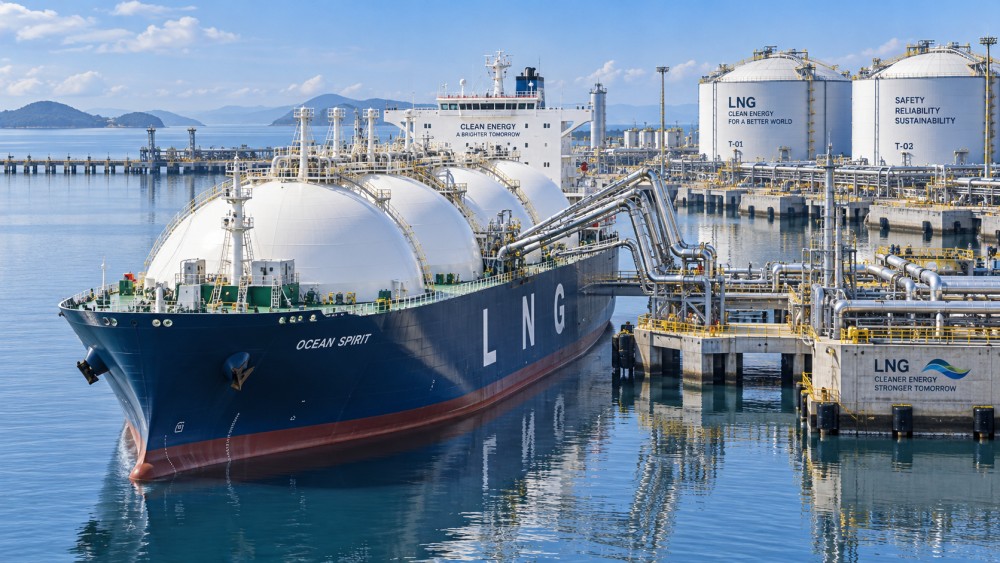
A useful technical review therefore begins with the voyage rather than with a vessel ranking. It asks how long laden passages are expected to last, whether canal transits or weather routing are likely, how often port congestion occurs, whether the cargo will be delivered within a narrow quality band, and whether the vessel must call at terminals with restrictive berthing or vapor-return arrangements. The answer may change which ship is commercially preferable.
Boil-off is a cargo, fuel, and contractual issue
Boil-off gas is frequently reduced to a daily percentage in preliminary comparisons. That number is useful only when its basis is understood. A stated rate may reflect design conditions, a particular tank-fill level, a defined ambient environment, a clean hull, and steady sea passage. It does not automatically describe performance during a delayed discharge, a short voyage, an extended ballast leg after heel management, or periods when the vessel must preserve pressure within a terminal’s preferred range.
An LNG shipping expert examines the full gas balance. This includes the expected natural boil-off rate, the capacity and operating limits of any reliquefaction plant, fuel-gas demand at different engine loads, compressor availability, cargo tank pressure margins, and the alternatives available when generated gas exceeds propulsion demand. The relevant question is not simply whether the vessel has reliquefaction. It is whether the plant can be used effectively under the anticipated voyage and terminal conditions without creating avoidable fuel, cargo, or time consequences.
For example, a slow voyage can reverse the assumption that more time at sea always improves fuel economics. Lower propulsion demand can leave less consumption capacity for boil-off gas. If reliquefaction is limited, unavailable, or uneconomic at the relevant operating point, the parties need clarity on gas-management procedures and allocation. Conversely, a fast schedule can increase fuel demand beyond available natural boil-off, making supplemental fuel consumption commercially important. An expert converts these operating states into assumptions that can be tested in the freight model.
Delivery terms require equal care. Cargo quantity and quality are affected by measurement methods, sampling procedures, custody-transfer timing, heel arrangements, and the treatment of boil-off during waiting time. A dispute is more likely when the agreement contains broad operational language while the terminal, vessel, and cargo seller work from different practical expectations. Technical input is valuable before wording is finalized, when provisions on cargo retention, diversion, ballast boil-off, cooldown, and terminal delay can still be aligned.
Fuel performance must be read against the duty cycle
Reported consumption figures are often based on a clean, well-maintained vessel operating near a stated speed and draft. Chartering decisions need a broader view. Hull and propeller condition, engine load range, auxiliary demand, weather margin, generator operating mode, and the age of critical gas-handling equipment all influence consumption. A vessel may meet an advertised consumption figure on one voyage pattern and depart from it materially on another without indicating poor operation.
A specialist distinguishes between parameters that describe capability and parameters that support a commercial guarantee. Service speed is not a promise of arrival time unless weather, current, draft, safety constraints, port restrictions, and bunker assumptions are specified. Likewise, a fuel figure cannot be used cleanly where the ship consumes a mix of boil-off gas and other fuels whose value is allocated differently in the charter.
Recent operational records deserve more weight than brochure-level descriptions, provided they are interpreted carefully. A single high-consumption voyage may result from severe weather, a routing constraint, or unusual port delay. Repeated variance under similar operating conditions points to a more relevant pattern. The review should seek engine condition reports, dry-docking history, maintenance deferrals, off-hire records where available, and explanations for deviations. The objective is not to demand an idealized ship; it is to avoid pricing an actual ship as if it were idealized.
Terminal fit can change the value of a fixture
Terminal compatibility is sometimes treated as an administrative clearance after commercial selection. That approach creates late-stage risk. LNG terminals differ in approach restrictions, berth geometry, manifold elevation, loading-arm operating envelope, vapor-return expectations, cargo transfer rate, tug requirements, emergency shutdown interface, and local rules for simultaneous operations. Even a technically compatible vessel may face an inefficient turnaround if its equipment arrangement or operating documentation does not align smoothly with the receiving facility.
The LNG shipping expert adds value by separating “accepted before” from “fit for this call.” Previous acceptance may relate to a different berth, terminal configuration, loading mode, or operating condition. A ship intending to conduct a partial discharge, reload, cooldown, ship-to-ship operation, or diversion needs review beyond its standard port list. This is especially important where the schedule has little buffer: a terminal query raised after nomination can disrupt an otherwise attractive fixture.
Interface details also affect contractual responsibility. If a terminal limits transfer rate because of shore-side constraints, the resulting boil-off and waiting-time effects should not be obscured within a general statement of port delay. If a vessel’s operational limitation reduces transfer flexibility, that is a different issue and should be identified before agreeing the allocation. Clear distinction prevents technical causes from being recast later as broad commercial disagreement.
Regulatory exposure belongs in the operating model
Environmental requirements matter in chartering when they alter routing, fuel selection, speed, reporting effort, equipment availability, or financial allocation. The practical review is not an abstract compliance exercise. It focuses on the vessel’s documented operating status, emissions-related equipment configuration, fuel pathways, monitoring arrangements, and any conditions that could limit trading freedom or create extra cost at a contemplated port.
Technical systems can produce different results under different duty cycles. A fuel-saving arrangement may depend on a particular power distribution. Emissions performance may be affected by engine load, fuel mode, maintenance condition, or auxiliary operation while alongside. A clause that assigns all consequences to one party without defining the operational trigger invites friction. The better approach identifies foreseeable scenarios, the records needed to establish them, and the point at which control passes between ship and chartering instruction.
Regulatory review should also include the quality of documentation. Missing manuals, expired evidence, unresolved class recommendations, or unclear change records can delay terminal acceptance even when the physical equipment is sound. These are not merely paperwork defects when the vessel is committed to a narrow loading window.
Where expertise should enter the negotiation
The strongest contribution comes before a preferred vessel is announced internally as the commercial winner. At that stage, the expert can challenge the assumptions embedded in comparative calculations and request missing evidence without turning a technical concern into a dispute over an already-selected ship.
- During vessel screening: identify design features that matter for the defined trade rather than removing candidates based on broad age, size, or propulsion labels.
- Before an offer is evaluated: test stated speed, consumption, boil-off, and availability figures against route duration, loading condition, and expected waiting time.
- While charter-party terms are being settled: connect operational realities to clauses on performance, off-hire, gas management, deviation, terminal delay, and documentary evidence.
- Before nomination and first loading: reconcile ship-shore interface information, cargo handling procedures, communication channels, and responsibility for exceptions.
Late technical involvement still has value, but its role changes from shaping the commercial choice to limiting the consequences of gaps already built into it. The most expensive misunderstandings often arise where a technical qualification was known informally yet never carried into the pricing basis, operational plan, or contract wording.
Longer charters require a different standard of review
For a single voyage, the commercial question may center on whether the vessel can complete a defined movement within acceptable cost and schedule parameters. A multi-voyage or period charter introduces condition drift, dry-docking timing, maintenance planning, changing terminal portfolios, and the risk that a vessel suited to the first employment is poorly matched to later instructions.
Here, an LNG shipping expert assesses resilience rather than only current compliance. Attention turns to planned maintenance of compressors, pumps, valves, engines, and control systems; access to critical spares; recurring alarms; crew familiarity with the installed plant; and the practical consequences of dry-dock windows. This does not require predicting a failure. It requires recognizing when a narrow operational program leaves little room for ordinary maintenance events.
Flexibility also has a price. A vessel capable of calling at a wider range of terminals, managing varied voyage durations, and maintaining cargo control through disruption may support a higher rate when the trading plan is uncertain. Where the route, terminal, and schedule are tightly fixed, paying for unused flexibility may not be justified. The technical assessment clarifies which of these conditions actually applies, allowing commercial terms to reflect the utility being purchased rather than a generic preference for newer or more complex equipment.
Sound LNG chartering decisions emerge when the freight comparison, vessel condition, cargo behavior, terminal interface, and contract allocation describe the same operating reality. That alignment is where specialist judgment produces its clearest commercial value.