
Related News
- 00
0000-00
Choosing a Cryogenic Flow Expert for Storage Tank Projects: What to Check - 00
0000-00
Alfa Laval to Acquire Norwegian Maritime Software Company NAVTOR for $700 Million - 00
0000-00
What Is Offshore Infrastructure? Key Types and Their Uses at Sea - 00
0000-00
Wärtsilä Wins Engine and Propulsion Order for First US FLNG Project - 00
0000-00
Class-Approved Marine Sensors: How to Verify Type Approval Certificates
Tags

Global alternative-fuel ship orders rose 77% year on year in October 2026, according to data cited from DNV's Alternative Fuels Insight (AFI) platform. LNG-fueled vessels led the month's orders, making the figures relevant to shipowners, shipbuilders and equipment suppliers assessing newbuild specifications. The supplied information identifies no new policy or regulatory change; its significance is as a market signal within shipping's decarbonization transition.
LNG Leads the October Order Count
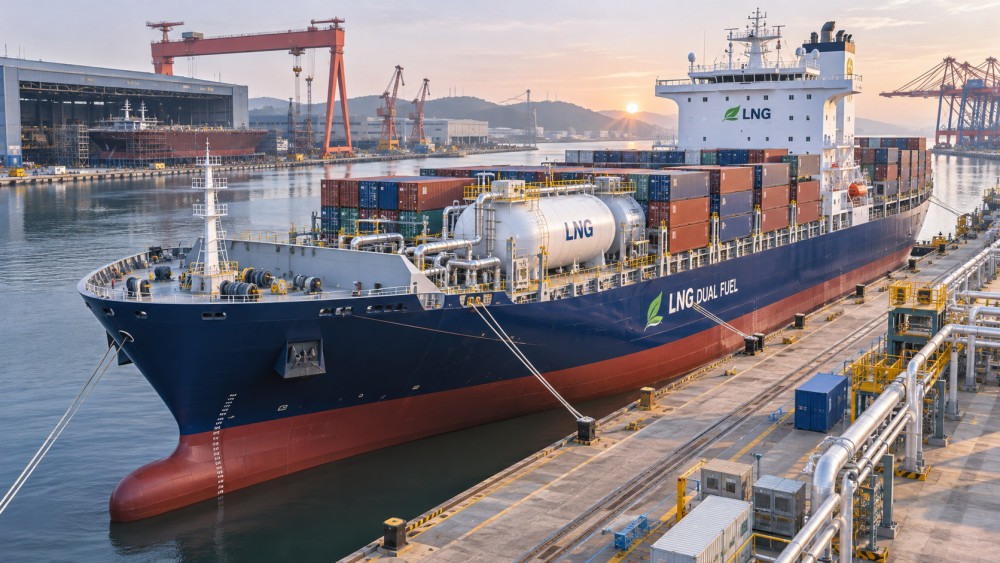
According to the supplied AFI data, global alternative-fuel ship orders increased 77% year on year in October 2026. LNG-fueled vessels accounted for 30 orders that month, including 18 container ships.
In the supplied event summary, LNG dual-fuel technology is described as a leading choice for shipowners' current newbuild investment and as a pragmatic route during the transition toward zero-carbon shipping.
What the Order Mix Could Mean for Newbuild Supply Chains
Shipowners and Shipbuilders
From an industry perspective, the concentration of LNG orders may make fuel-system specifications a particular point of attention in newbuild procurement and contract discussions. Shipowners and shipbuilders could review how the proposed vessel design, documentation and delivery arrangements align with the requirements applicable to each project. The order data alone does not establish that those requirements have changed.
Equipment Suppliers and Integrators
Analysis suggests that suppliers and integrators involved in LNG dual-fuel projects may need to pay close attention to technical specifications, supplier qualifications and documentation requested by buyers. Any effect on procurement schedules or delivery capacity remains a possibility to assess, not an outcome established by the October figures.
Verification and Compliance Services
Project-specific certification and verification work may also warrant attention where LNG systems are selected. The supplied information does not identify a new certification rule or change in assessment practice, so participants should verify applicable requirements for each vessel rather than infer them from the order figures.
Checks for LNG Newbuild Decisions
Review Project Requirements
Shipowners and builders may wish to check current requirements and any subsequent rule changes against the intended vessel design and operating plans. The figures do not establish which rules apply to a particular order or whether an approval has been obtained.
Align Specifications and Documents
Procurement teams could compare technical specifications, supplier qualifications and proposed documentation with the needs stated in each tender or contract. Where requirements are unclear, clarification before equipment selection may help limit uncertainty later in the project.
Assess Delivery and Alternatives
Companies considering LNG dual-fuel systems may also assess supplier capacity, delivery schedules and the suitability of alternative fuel options for their own projects. The supplied data does not establish lead times, availability or the relative performance of alternatives.
An Investment Signal, Not a New Rule
At this stage, it is more appropriate to understand the October figures as a market signal than as evidence that a policy, standard or certification requirement has been introduced or implemented. The order mix is consistent with the supplied summary's assessment of LNG as a practical transition choice, but one month's figures do not establish the future direction of every newbuild decision.
Further observations could include later order data, changes in project specifications and any relevant policy or certification guidance. These may help businesses assess whether procurement preferences or execution requirements are changing.
Putting the October Orders in Context
The reported increase and LNG-led order count highlight a current area of attention for the shipping supply chain. Companies can use the information as a prompt to review project assumptions while treating regulatory implications and future market effects as matters for verification, not established outcomes.
Basis for the Report and Further Verification
This article is based on the user-provided title, event date and summary, which attribute the order figures to DNV's AFI platform. No specific official source link was provided in the input; the figures and any subsequent developments should be independently verified. Relevant follow-up material may include platform data, official announcements, standards documents, certification guidance, tender specifications and industry feedback.