
Related News
- 00
0000-00
Choosing a Cryogenic Flow Expert for Storage Tank Projects: What to Check - 00
0000-00
Alfa Laval to Acquire Norwegian Maritime Software Company NAVTOR for $700 Million - 00
0000-00
What Is Offshore Infrastructure? Key Types and Their Uses at Sea - 00
0000-00
Wärtsilä Wins Engine and Propulsion Order for First US FLNG Project - 00
0000-00
Class-Approved Marine Sensors: How to Verify Type Approval Certificates
Tags

Bio-LNG accounted for 19.1% of Dutch fuel supplier Titan’s total deliveries in 2025, up from 6.5% in 2024, according to the company’s analysis. Titan linked the increase to the FuelEU Maritime pooling mechanism, as shipowners increased purchases of liquefied biomethane to meet regulatory requirements and achieve compliance surpluses.
The shift indicates that Bio-LNG became a substantially larger part of Titan’s delivery mix. It also points to the influence of compliance arrangements on marine fuel purchasing: demand can reflect both a vessel’s own requirements and the value of its compliance contribution within a pool.
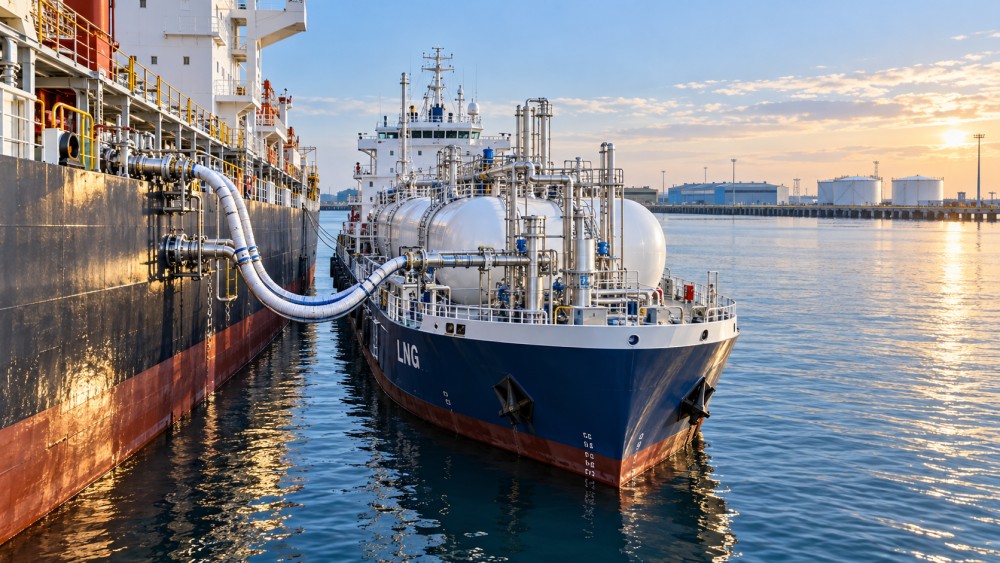
Pooling allows vessels to balance compliance positions collectively, helping shipowners manage compliance costs. This creates an incentive to use lower-carbon fuel beyond the level needed for an individual vessel’s compliance, where the resulting surplus can support the pool’s overall position. Titan’s analysis suggests that this incentive is translating into stronger demand for Bio-LNG.
For fuel suppliers, a sustained response could affect procurement volumes and delivery planning. For shipowners, the purchasing decision may increasingly depend on how fuel costs compare with the compliance value available through pooling. The strength of that incentive remains a key variable in whether demand continues to expand.
Titan’s figures describe its own delivery mix rather than the wider marine fuel market. A higher Bio-LNG share alone does not establish the change in absolute volumes or indicate how broadly other suppliers are experiencing the same shift. Further delivery figures and evidence of continued purchasing would help show whether pooling is supporting a lasting change in fuel demand.