
Related News
- 00
0000-00
Choosing a Cryogenic Flow Expert for Storage Tank Projects: What to Check - 00
0000-00
Alfa Laval to Acquire Norwegian Maritime Software Company NAVTOR for $700 Million - 00
0000-00
What Is Offshore Infrastructure? Key Types and Their Uses at Sea - 00
0000-00
Wärtsilä Wins Engine and Propulsion Order for First US FLNG Project - 00
0000-00
Class-Approved Marine Sensors: How to Verify Type Approval Certificates

According to the supplied event summary dated October 21, 2026, the LNG bunkering vessel KEYS Azalea completed its 100th fuel supply operation, serving the bulk carrier SG Dawn. The milestone points to further development of LNG bunkering infrastructure in western Japan, with potential implications for ship operators, fuel procurement teams and bunkering service providers. The supplied information identifies no new policy, regulation, standard or certification requirement; from a compliance perspective, its relevance is an operational development that may inform procurement and delivery assessments, rather than evidence of a rule change.
A 100th Operation in Western Japan's LNG Supply Network
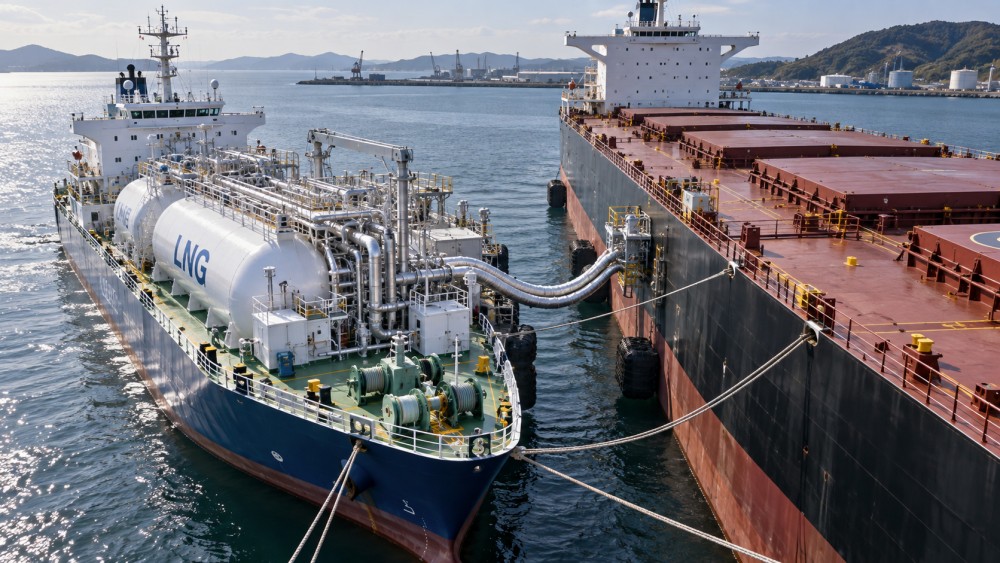
The 3,500-cubic-metre KEYS Azalea, operated by KEYS Bunkering West Japan, supplied LNG fuel to SG Dawn, a bulk carrier operated by NYK, on October 21, 2026. This was the bunkering vessel's 100th fuel supply operation.
Since its first ship-to-ship bunkering operation, KEYS Azalea has steadily supported the development of an LNG bunkering network in western Japan. The supplied summary reports estimated cumulative carbon dioxide emission reductions of approximately 75,000 tonnes and describes the milestone as further progress in Japan's domestic LNG bunkering infrastructure.
What Repeated Deliveries May Mean for Procurement and Service Planning
Ship operators gain a reference point for assessing supply options
From an industry perspective, the record of repeated bunkering operations may provide ship operators and fuel buyers with a useful reference when evaluating LNG supply arrangements in western Japan. Potential effects concern supplier assessment, voyage planning and the coordination of fuel deliveries. However, the operation count alone does not establish service availability for a particular route, delivery window or vessel.
As a procurement recommendation, buyers considering this service could verify applicable operating conditions, delivery documentation and contractual responsibilities directly with the provider. The supplied information does not establish that any of these requirements have changed.
Bunkering providers may face closer scrutiny of delivery evidence
Analysis suggests that a growing operating record could lead customers to seek more detailed evidence of service consistency when selecting bunkering providers. For operators and supporting supply-chain businesses, this may affect how delivery schedules, operational records and customer documentation are presented during procurement discussions.
The milestone should not be treated as confirmation of a new approval, certification or broader permission to operate. Any such status would need separate supporting documentation, which is not included in the supplied summary.
Checks That Can Support LNG Supply Decisions
Verify the scope of the available service
As a practical recommendation, procurement teams could confirm whether the provider can support their intended delivery location, timing and fuel quantity. KEYS Azalea's stated capacity and completed operation count provide context, but they do not establish the quantity available for an individual delivery or a guaranteed delivery schedule.
Review documentation for the proposed operation
From a compliance planning perspective, ship operators and suppliers could review the documents relevant to their proposed bunkering arrangement, including agreed delivery specifications, operational responsibilities and any applicable approval or certification evidence. This is a suggested verification step, not a claim that new documentation requirements have been introduced.
Check the basis of the emissions estimate
The reported reduction of approximately 75,000 tonnes is explicitly an estimate. Before using it in procurement comparisons, environmental reporting or customer communications, businesses could seek clarification on its calculation method, reference baseline, reporting period and emissions boundary. None of those details is supplied, so the figure does not by itself demonstrate compliance with a particular emissions rule or certification framework.
An Operational Signal, with No Identified Regulatory Change
As an editorial assessment, the 100th supply operation is best understood as a signal of continued practical development in LNG bunkering services. It provides a basis for examining supply capability, while offering no evidence that a regulator has introduced a new obligation or that a certification body has changed its criteria.
What deserves closer attention is whether subsequent announcements clarify service coverage, delivery conditions or the basis of the emissions estimate. If later policy documents, certification guidance or tender requirements refer to these matters, their business implications would need to be assessed against the actual wording and scope. The current summary does not support conclusions about such changes.
Use the Milestone to Inform, Rather Than Settle, Supply Assessments
Analysis suggests that KEYS Azalea's milestone may help businesses assess the development of LNG bunkering infrastructure in western Japan. Its immediate value lies in prompting specific checks on supplier capability, delivery arrangements and environmental claims. For current business decisions, it is more appropriate to treat the event as an operational reference requiring transaction-specific verification than as proof of a new compliance obligation or assured service performance.
Basis of This Article and Points for Further Verification
This article is based solely on the news title, event date and event summary supplied by the user. Specific official source links were not provided in the input, and the reported event and associated figures remain subject to further verification against primary sources.
Relevant material for subsequent checking could include operator announcements, vessel service information and, where applicable, regulatory publications, certification documents or tender documents. Further observation should focus on confirmed service conditions, the methodology supporting the emissions estimate, any subsequently documented rule changes and feedback on delivery execution. No specific policy amendment, certification decision or trade-rule change is established by the supplied information.