
Related News
- 00
0000-00
Critical Equipment Lead Times: How Procurement Teams Can Prevent Project Delays - 00
0000-00
How to Evaluate an Integrated Propulsion Manufacturer for Vessel Retrofit Projects - 00
0000-00
LNG Carrier Price Trends: What Shipbuyers Should Budget for Newbuilds - 00
0000-00
How to Evaluate Marine Semiconductor Suppliers for Shipboard Reliability - 00
0000-00
How Dual-Fuel Ships Cut Emissions Across Different Fuel and Operating Profiles

Choosing the right blue power supplier can determine vessel efficiency, compliance, and long-term operating costs. For procurement teams in marine and offshore sectors, comparing leading suppliers means looking beyond price to assess technical integration, reliability, decarbonization readiness, and lifecycle value. This guide outlines the key factors that matter most when evaluating blue power systems for high-performance maritime applications.
In practical procurement terms, blue power can refer to marine electric propulsion packages, integrated power management systems, hybrid energy solutions, shore power compatibility, and associated controls that support safer, cleaner, and more efficient vessel operation. For buyers serving LNG carriers, offshore engineering vessels, cruise platforms, and other high-value ship segments, the supplier comparison process usually spans 4 to 8 major criteria and often affects asset performance for 15 to 25 years.
That is why marine procurement teams increasingly treat supplier selection as a lifecycle decision rather than a one-time transaction. A lower upfront offer may be offset by higher fuel burn, longer commissioning, weaker integration support, or limited compliance readiness for IMO-linked emissions and efficiency requirements. In blue power sourcing, a structured comparison model is essential.
What Blue Power Means in Marine Procurement
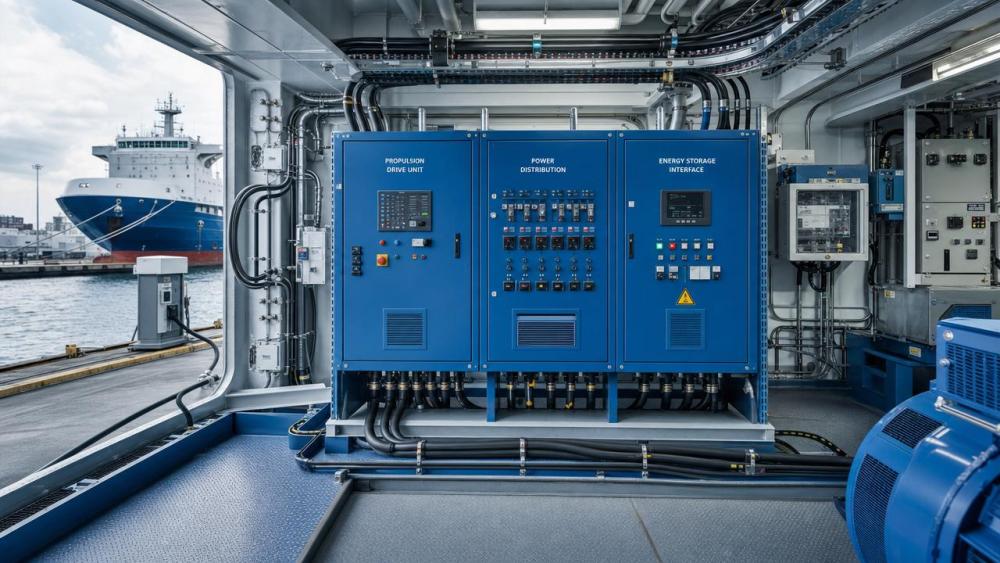
For marine and offshore buyers, blue power is not a single product category. It usually includes propulsion drives, switchboards, energy storage interfaces, automation layers, podded thruster support, VFD-based motor control, and sometimes exhaust or dual-fuel coordination logic. In many shipbuilding and retrofit projects, these elements must work as one electrical ecosystem rather than as separate pieces of hardware.
The procurement risk is clear: if the supplier can deliver strong component performance but weak system integration, the vessel may face delays of 2 to 6 weeks during commissioning, added engineering changes, or recurring alarms during sea trials. For operators managing fuel costs, emissions exposure, and charter reliability, those issues can materially reduce project value.
Core blue power applications buyers should define early
- Diesel-electric or dual-fuel propulsion packages for offshore support and engineering vessels
- Hybrid power architectures with battery, shaft generator, or peak-shaving functions
- Podded propulsion and thruster-related electrical integration for maneuverability-sensitive vessels
- Shore power compatibility for port-side emissions reduction and hotel load support
- Power management systems coordinating generators, loads, and redundancy logic
Why specification clarity matters
Many blue power tenders fail to compare suppliers on equal terms because specifications are too broad. A buyer may request “integrated propulsion” without defining power range, redundancy philosophy, harmonic control, class interface, ambient conditions, or LNG-related safety interfaces. This leads to inconsistent quotations and difficult technical normalization.
At minimum, procurement teams should define 6 baseline inputs: installed power range, operating profile, redundancy target, vessel class requirements, expected maintenance interval, and integration scope with automation or emissions systems. Without those six inputs, comparing leading suppliers becomes more subjective than analytical.
The 7 Procurement Factors That Separate Leading Suppliers
The strongest blue power suppliers are not always the cheapest or the largest. They stand out because they reduce technical risk across engineering, delivery, operation, and compliance. For procurement teams, seven factors usually reveal the real difference between a capable partner and a price-led bidder.
1. System integration depth
A marine power supplier should demonstrate how propulsion drives, switchboards, PMS, converters, thruster interfaces, and vessel control layers connect in one architecture. Integration depth is especially important for LNG carriers, cruise systems, and offshore vessels where uptime and load stability are mission-critical. Ask whether the supplier handles interface engineering in-house or relies on third parties for 30% to 50% of the package.
2. Performance under real operating profiles
Catalog efficiency is only one indicator. Buyers should request load-profile analysis across at least 3 operating modes, such as transit, dynamic positioning, and hotel load. A blue power solution that performs well at 85% load but poorly at 35% load may be less economical over a 12-month duty cycle.
3. Compliance and decarbonization readiness
Marine regulation is evolving faster than many procurement frameworks. Suppliers should explain compatibility with efficiency improvement strategies, emissions reduction pathways, and future retrofit options. This may include shore connection support, hybrid readiness, or easier integration with scrubber, SCR, or fuel-optimization logic. The best blue power systems help keep retrofit complexity lower over a 5- to 10-year horizon.
4. Reliability, redundancy, and failure response
Ask for the failure philosophy in plain engineering terms. Can the vessel retain partial propulsion after a converter fault? What is the isolation logic? How quickly can a damaged module be replaced onboard? In marine operations, a 6-hour recovery window and a 72-hour recovery window have completely different commercial impacts.
5. Delivery realism and project execution discipline
Standard lead times for marine electrical packages may range from 20 to 40 weeks depending on scope, testing requirements, and global component availability. Buyers should be cautious when a supplier promises a delivery period that is 25% shorter than peers without explaining stock strategy, assembly capacity, or FAT scheduling.
6. Service coverage and spare parts logic
Blue power systems are long-life assets, so service capability matters almost as much as equipment quality. Check response windows, regional technician coverage, spare parts stocking policy, and remote diagnostics support. A supplier with 24-hour remote support and a defined spare criticality matrix can reduce downtime risk significantly during the first 3 years of operation.
7. Total lifecycle cost, not bid price alone
Procurement teams should calculate at least 5 cost buckets: acquisition, engineering changes, installation and commissioning, energy consumption, and service over the expected maintenance cycle. In marine projects, an offer that is 8% lower upfront can still be more expensive over 7 years if efficiency losses, spare costs, or software support charges are higher.
The table below helps procurement teams translate these seven factors into a structured blue power supplier review model.
A useful pattern emerges from this comparison: leading suppliers usually score well because they connect engineering depth with execution reliability. If a bidder cannot clearly explain integration boundaries, support windows, and future compliance pathways, the lower purchase price should be treated with caution.
How to Build a Comparable Supplier Shortlist
A strong shortlist is built before final quotation review. In marine procurement, a 3-stage method often produces better outcomes than a simple RFQ round. Stage 1 defines technical baselines, Stage 2 normalizes supplier responses, and Stage 3 compares commercial and lifecycle value. This process typically reduces rework and clarifications by 20% to 30%.
Stage 1: Lock the technical baseline
Define operational and vessel constraints
Capture vessel type, power demand, redundancy class, environmental conditions, machinery space constraints, and fuel strategy. For example, an LNG carrier or high-end cruise platform may have stricter integration and safety coordination needs than a simpler support vessel. The baseline should also define expected operating life, such as 15 years or 20 years, because service architecture may differ accordingly.
Standardize the supplier questionnaire
Use one technical questionnaire for all bidders. Include 10 to 15 mandatory questions covering power range, harmonics mitigation, emergency operation, software support, FAT scope, onboard commissioning, and spare strategy. This avoids a common procurement mistake where suppliers respond with non-comparable assumptions.
Stage 2: Normalize commercial and engineering assumptions
Once bids are received, normalize them before discussing price. Confirm what is included in cabling interfaces, software licenses, sea trial attendance, and training hours. It is common for one blue power supplier to include 5 days of commissioning support while another includes only 2 days, which creates hidden cost differences later.
Stage 3: Score lifecycle risk and strategic fit
At the final stage, buyers should assign weighted scores to technical fit, service capability, project execution, compliance readiness, and commercial value. A weighted model of 100 points is practical. For high-value vessels, many teams assign 25 points to integration, 20 to reliability, 15 to service coverage, 15 to efficiency, 15 to compliance flexibility, and 10 to price competitiveness.
The following table shows a practical shortlist framework that procurement teams can adapt to their vessel program.
This kind of weighted scoring helps prevent overemphasis on capex alone. It also gives procurement managers a defensible basis for internal approval, especially when technical and operational teams need clear reasoning behind supplier selection.
Common Mistakes When Comparing Blue Power Suppliers
Even experienced buyers can misjudge suppliers when project pressure is high. In marine electrical procurement, the most expensive mistakes often begin with incomplete comparison logic rather than poor negotiation. Avoiding four common errors can improve both vessel readiness and long-term cost control.
Mistake 1: Treating blue power as a standard commodity
Two suppliers may both offer propulsion drives and power management, yet differ substantially in software maturity, commissioning resources, and marine integration experience. Standardizing blue power purchasing like a generic electrical order can create hidden technical liabilities that only appear during yard integration or sea trials.
Mistake 2: Ignoring vessel-specific duty cycles
A system optimized for steady transit may not perform equally well in dynamic positioning or cruise hotel load conditions. Procurement teams should request scenario-based energy and load behavior, ideally covering at least 3 operating patterns. This is especially important when fuel consumption optimization is part of the business case.
Mistake 3: Underestimating software and service dependency
Modern blue power systems are software-intensive. Alarm logic, load sharing, drive tuning, and fault diagnosis often rely on vendor-controlled tools. If software access, update policy, and cybersecurity responsibility are not addressed early, the owner may face avoidable service costs or delayed troubleshooting after handover.
Mistake 4: Measuring value only at handover
Marine assets operate for years under changing fuel, emissions, and charter conditions. A supplier should therefore be judged on how well the system adapts over time. Retrofit flexibility, training support, spare continuity, and future integration potential often determine value long after the acceptance certificate is signed.
Questions Procurement Teams Should Ask Before Award
Before contract award, buyers should move from brochure-level comparison to evidence-based discussion. The right questions can reveal whether a supplier truly understands marine operating risk, class expectations, and lifecycle support obligations.
Recommended pre-award checklist
- Which interfaces are included in the supplier’s engineering scope, and which remain with the yard or owner?
- What is the expected lead time from design freeze to FAT, and what factors could extend it by 2 to 4 weeks?
- How many commissioning days are included onsite, and what triggers additional charges?
- What spare parts are considered critical for the first 12 months of operation?
- Can the blue power architecture support future hybrid upgrades or shore power integration?
- What remote diagnostics, training modules, and software support windows are available post-delivery?
These questions help buyers compare not just equipment supply, but project accountability. In high-value vessel programs, award decisions are stronger when technical, commercial, and operational teams review the same evidence set.
A Practical Buying View for High-Value Maritime Segments
In specialized shipbuilding, blue power decisions should reflect vessel mission, compliance trajectory, and integration complexity. An offshore engineering vessel may prioritize dynamic load stability and redundancy. A cruise platform may emphasize silent operation, hotel load optimization, and safety-linked electrical resilience. An LNG carrier may place stronger weight on reliability, cryogenic-adjacent system coordination, and uninterrupted cargo-related power integrity.
For that reason, procurement teams benefit from intelligence-led comparison rather than generic vendor screening. Market visibility into long shipbuilding cycles, electrical integration trends, and marine decarbonization pathways can help buyers identify which suppliers are prepared for the next 5 to 10 years, not just the next delivery milestone.
A robust blue power selection process should balance technical detail with commercial discipline. Buyers who define specifications clearly, normalize bids carefully, and evaluate lifecycle outcomes systematically are more likely to secure dependable performance, smoother commissioning, and better long-term operating economics. If you are assessing blue power options for specialized vessels, LNG-related projects, cruise systems, or marine electric propulsion programs, contact us to get a tailored comparison framework, discuss product details, or explore more solutions aligned with your procurement priorities.