
Related News
- 00
0000-00
How to Evaluate an Integrated Propulsion Manufacturer for Vessel Retrofit Projects - 00
0000-00
LNG Carrier Price Trends: What Shipbuyers Should Budget for Newbuilds - 00
0000-00
How to Evaluate Marine Semiconductor Suppliers for Shipboard Reliability - 00
0000-00
How Dual-Fuel Ships Cut Emissions Across Different Fuel and Operating Profiles - 00
0000-00
How to Select Low-Voltage Marine Drives for Electric Propulsion Below 1 kV

In today’s volatile shipbuilding environment, risks across the LNG transport chain can trigger costly vessel delivery delays long before sea trials begin. For project managers and engineering leads, understanding how cryogenic equipment bottlenecks, yard coordination gaps, compliance pressure, and supplier disruptions interact is essential to protecting timelines, budgets, and contract performance.
For LNG carrier programs, the transport chain is not a narrow logistics issue. It is a multi-layer delivery system that links design freeze dates, steel cutting, tank fabrication, cargo handling package integration, electrical completion, insulation quality, and final commissioning. A delay of 2 to 6 weeks in one specialist package can easily cascade into a 2 to 4 month shift in vessel delivery when interfaces are tightly coupled.
This matters most in projects where membrane systems, cryogenic valves, pumps, reliquefaction modules, dual-fuel controls, and class documentation must arrive in a precise sequence. For project managers, the central question is not whether risk exists across the LNG transport chain, but which risk nodes have the highest schedule impact and how early mitigation can protect contract milestones.
Why LNG Transport Chain Risk Has Become a Schedule-Critical Issue
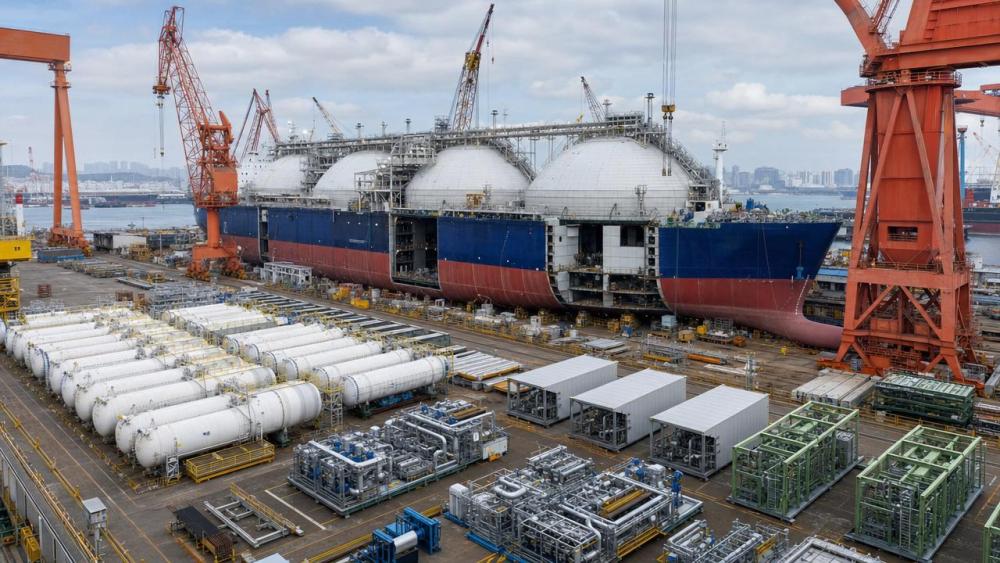
The LNG transport chain has become more fragile because shipyards, module suppliers, steel processors, automation vendors, and specialist cryogenic equipment makers are operating under simultaneous pressure. Orderbooks for LNG carriers and related high-value tonnage often stretch 24 to 48 months, while many critical components still depend on limited production slots, qualified weld procedures, and long approval cycles.
For a modern LNG carrier, the most schedule-sensitive packages usually include containment-related materials, cargo pumps, cryogenic piping spools, insulation systems, gas handling skids, and integrated electrical control architecture. These are not plug-and-play items. In many cases, one late subsystem blocks 3 downstream activities: onboard installation, interface testing, and harbor acceptance.
The hidden cost of timing mismatches
A frequent mistake in vessel planning is to treat procurement lead time and usable-onboard lead time as the same metric. They are not. A pump delivered in week 28 may still be effectively late if preservation, customs release, factory acceptance punch closure, or yard lifting windows push installation to week 34. In LNG programs, a 5-day slip at supplier level can become a 15-day yard disruption after re-sequencing.
Typical schedule amplification points
- Containment or insulation package approval lag of 2 to 3 weeks
- Cryogenic valve documentation mismatch delaying class release by 7 to 10 days
- Electrical integration conflicts causing rework across 2 or more zones
- Late arrival of pre-fabricated pipe spools affecting pressure test sequencing
- Vendor technician travel constraints extending commissioning windows by 1 to 2 weeks
The table below highlights major LNG transport chain risk categories and how they typically affect vessel delivery logic in shipyard execution.
The key lesson is that schedule risk in the LNG transport chain is cumulative, not isolated. Delays become severe when technical dependencies stack up across containment, cargo handling, and commissioning rather than failing in only one area.
The Four Risk Clusters Most Likely to Delay LNG Carrier Delivery
Project leaders usually see dozens of minor issues in parallel, but most serious delivery slippage can be traced back to 4 clusters: specialist equipment bottlenecks, interface management failure, compliance drag, and supply-chain instability. Managing these clusters early can reduce delivery variance by several weeks even when external conditions remain difficult.
1. Specialist cryogenic equipment bottlenecks
LNG containment and cargo systems rely on components that cannot be rapidly substituted. Cryogenic valves, high-duty pumps, insulation assemblies, and boil-off gas handling equipment require qualified manufacturing routes and inspection records. If one vendor extends lead time from 20 weeks to 30 weeks, the entire LNG transport chain can lose schedule elasticity.
This risk is especially high when buyers place orders before engineering maturity reaches 80% to 90%. Early commitment may protect slot availability, but it increases the chance of revision, material mismatch, or interface redesign. The result is often expediting cost without true schedule recovery.
2. Yard interface and sequencing failure
Even when equipment arrives on time, poor onboard coordination can delay delivery. LNG projects have tight tolerances in tank areas, hazardous zones, and cable routing paths. If structural completion, outfitting, insulation work, and electrical installation are not sequenced correctly, labor congestion rises and rework follows.
A common example is pre-fabricated spool installation before full verification of adjacent supports, penetration readiness, and instrument take-off locations. Recovering from that kind of mismatch often burns 7 to 21 days because multiple subcontract teams must be rescheduled.
3. Compliance pressure and approval drag
The LNG transport chain operates under strict technical and environmental controls. Classification review, flag expectations, hazardous area verification, insulation test records, welding traceability, and IMO-related compliance checks all shape the actual delivery timeline. Documentation gaps may seem administrative, but they can freeze progress at critical handover points.
For example, incomplete material certificates, missing pressure test packages, or late software validation for gas handling controls can block harbor trials. In practice, 1 unresolved compliance package may delay 3 milestone events: mechanical completion, commissioning sign-off, and owner acceptance.
4. External supplier and logistics instability
The final cluster sits outside the yard but still defines vessel delivery. Oversized module shipment, customs clearance, route disruption, sanctions exposure, packaging damage, and late export paperwork all affect the LNG transport chain. High-value cargo often needs controlled handling conditions, and a single missed transshipment window can add 10 to 20 days.
This is why robust supply visibility matters. A supplier reporting “completed” status is not enough. Project teams need at least 5 checkpoints: fabrication completion, inspection release, packing readiness, transport booking, and destination arrival forecast.
How Project Managers Can Build a Practical LNG Transport Chain Control Framework
The most effective response is not a generic expediting campaign. It is a disciplined control framework that combines engineering maturity, supplier surveillance, logistics visibility, and yard sequencing discipline. For most LNG vessel programs, risk control should begin 9 to 12 months before critical package installation, not after delays are visible at the berth.
Set milestone logic around installation readiness, not just delivery date
Project managers should track at least 3 dates for every critical package: contractual delivery date, site arrival date, and installation-ready date. The third date is often the most important because it reflects documentation status, preservation condition, lifting plan approval, and interface confirmation. Without this distinction, schedule dashboards can be falsely optimistic.
Recommended control steps
- Identify the top 15 to 20 critical LNG transport chain packages by schedule impact.
- Assign red-amber-green status based on both fabrication progress and interface readiness.
- Review supplier documents every 2 weeks during manufacturing and weekly in the final 30 days.
- Link logistics planning to oversized cargo handling, customs, and laydown constraints.
- Reserve recovery windows of 7 to 14 days for high-risk packages near commissioning gates.
The following table shows a practical monitoring structure that many engineering teams can adapt for critical LNG transport chain control.
A framework like this helps teams move from reactive expediting to predictive control. It also improves communication between owner, yard, system integrator, and specialist suppliers because each risk point is measured against a practical action threshold.
Strengthen supplier governance before crisis mode
Projects often wait too long before challenging supplier assumptions. Strong governance means checking labor loading, sub-tier dependency, long-lead raw material status, and non-conformance closure rates early. If a supplier depends on 2 or 3 upstream machining or forging sources, that dependency should appear in the risk register, not remain hidden in a purchase order appendix.
Engineering leads should also verify whether technical changes will trigger repeat inspections or revised testing. In LNG systems, even a small modification to thermal performance, control logic, or hazardous-area equipment can reopen approval loops and consume 1 to 3 additional weeks.
Common Procurement and Planning Mistakes in the LNG Transport Chain
Many vessel delays are not caused by one dramatic event. They result from repeated planning errors that seem manageable in isolation but become dangerous in combination. Procurement teams, project managers, and engineering coordinators should watch for a short list of recurring mistakes.
Mistake 1: Selecting on price without schedule resilience
A lower purchase price may hide a longer manufacturing route, fewer qualified inspectors, weaker packaging control, or limited service support during commissioning. In high-value LNG transport chain packages, the cheapest bid can become the most expensive if it creates 30 days of delay at the yard.
Mistake 2: Assuming all critical suppliers have equal recovery capability
Some vendors can recover a 2-week slip through overtime, parallel testing, or alternate routing. Others cannot, especially when they depend on specialist materials, qualified welders, or class witness attendance. Recovery capacity should be evaluated during supplier selection, not after schedule loss appears.
Mistake 3: Treating documents as secondary to hardware
In LNG carrier execution, documentation is part of the product. Drawings, certificates, inspection records, preservation procedures, software revisions, and commissioning manuals all affect delivery readiness. A physically delivered package with incomplete documentation may still be unusable for 1 to 2 weeks.
Checklist for procurement-stage evaluation
- Does the supplier disclose realistic production lead time in weeks, not generic “fast delivery” language?
- Are sub-tier risks for castings, forgings, actuators, sensors, or insulation materials visible?
- Can the vendor support FAT, document turnover, and commissioning with named resources?
- Is packaging suitable for cryogenic or sensitive equipment in multi-stage marine transport?
- Are there agreed escalation triggers at 7-day, 14-day, and 21-day delay thresholds?
Teams that build these checks into sourcing decisions usually reduce avoidable disruption across the LNG transport chain. They also gain a more reliable basis for comparing offers beyond unit price alone.
What MO-Core Intelligence Can Help Project Teams See Earlier
For engineering leaders working on LNG carriers and adjacent high-value shipbuilding programs, the challenge is not only to respond to delays but to detect weak signals early. That is where structured market and technical intelligence becomes useful. By tracking yard activity, specialist equipment pressure, compliance trends, and material movement across the maritime sector, teams can make earlier decisions on sourcing, buffering, and interface planning.
MO-Core’s domain focus on LNG carrier technologies, advanced marine systems, and decarbonization-linked shipbuilding issues is particularly relevant where long-cycle procurement meets high-consequence delivery risk. Project managers need more than headline market news. They need insight into how cryogenic package lead times, dual-fuel integration complexity, and supplier bottlenecks may affect real shipyard execution over the next 6 to 18 months.
Decision value for project and engineering teams
Useful intelligence should support 4 practical decisions: when to lock in a package, where to build schedule float, which interfaces need earlier review, and which suppliers require tighter surveillance. In the LNG transport chain, these decisions often define whether the program absorbs disruption or passes it directly into delivery delay.
If your team is evaluating risk exposure across LNG carrier equipment, yard execution, or marine decarbonization-related system integration, timely intelligence can sharpen procurement strategy and reduce blind spots. Contact MO-Core to discuss project-specific risk signals, obtain tailored insight, and explore more solutions for resilient vessel delivery planning.