
Related News
- 00
0000-00
How to Evaluate an Integrated Propulsion Manufacturer for Vessel Retrofit Projects - 00
0000-00
LNG Carrier Price Trends: What Shipbuyers Should Budget for Newbuilds - 00
0000-00
How to Evaluate Marine Semiconductor Suppliers for Shipboard Reliability - 00
0000-00
How Dual-Fuel Ships Cut Emissions Across Different Fuel and Operating Profiles - 00
0000-00
How to Select Low-Voltage Marine Drives for Electric Propulsion Below 1 kV

Blue power upgrades are transforming modern vessels, but the fastest payback depends on ship type, operating profile, and energy demands. From LNG carriers to cruise ships and advanced engineering vessels, owners and buyers alike are asking one key question: which investments deliver measurable fuel savings, lower emissions, and stronger long-term value first? This article explores where blue power creates the quickest commercial returns.
For buyers, operators, and decision-makers following the deep-blue manufacturing cycle, the answer is rarely universal. A podded propulsion retrofit that pays back in 2 to 4 years on one vessel may take 6 to 8 years on another. The difference usually comes down to duty cycle, hotel load, propulsion profile, maintenance intensity, and exposure to tightening IMO environmental rules.
In the MO-Core view, blue power should be assessed as a vessel-specific commercial strategy, not just an engineering trend. Whether the upgrade involves variable frequency drives, power management systems, battery-supported peak shaving, shaft generators, scrubber-electric integration, or propulsion optimization, the best investments are those that reduce fuel burn, improve operational flexibility, and protect asset value over a 10 to 20 year service horizon.
Why Payback Speed Varies So Much Across Vessel Types
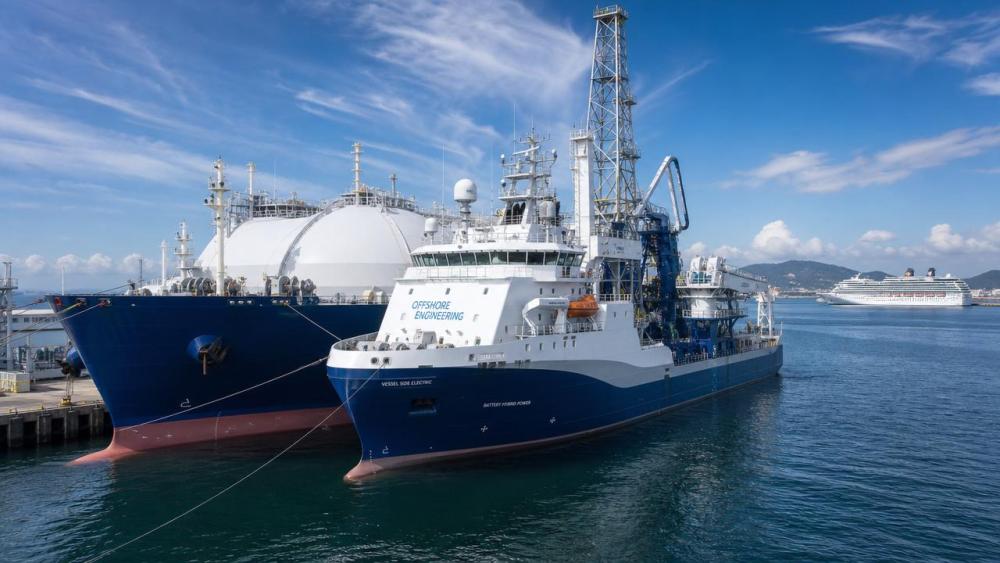
Blue power economics depend on how a ship consumes energy hour by hour. A vessel that operates 280 to 330 days per year, with frequent load variation and high auxiliary demand, usually creates more room for rapid savings than a vessel with long steady-state voyages and limited electrical complexity. That is why the same upgrade package can produce very different commercial outcomes.
The fastest payback often appears where three conditions meet: high annual fuel use, unstable load profiles, and expensive downtime. In practical terms, this tends to favor cruise ships, offshore engineering vessels, and some LNG carriers with advanced cargo handling and power-intensive onboard systems. Bulk tonnage with simpler electrical architecture may still benefit, but the return curve is usually slower.
The 4 drivers that shape blue power returns
- Annual operating days: 200 days versus 320 days can change payback by 30% to 50%.
- Load variability: dynamic positioning, maneuvering, and hotel load spikes improve the case for smarter electrical systems.
- Fuel price exposure: savings become more visible when marine fuel costs remain elevated over multiple quarters.
- Compliance pressure: investments tied to emission reduction can avoid future retrofit penalties and off-hire risks.
For end buyers evaluating ship value, this matters because blue power is not only about lower daily fuel cost. It also affects charter appeal, resale confidence, maintenance planning, and compatibility with future decarbonization pathways. In high-value ship segments, even a 3% to 7% energy improvement can materially influence lifecycle economics.
Typical payback pattern by vessel segment
The table below outlines a practical comparison of where blue power often pays back fastest. These are general commercial ranges used for decision framing rather than fixed promises, because actual outcomes depend on route, utilization, equipment baseline, and retrofit scope.
The key takeaway is clear: blue power delivers the fastest returns where electrical load is complex and energy waste is visible. Offshore engineering fleets usually lead the payback ranking, followed by cruise ships and then LNG carriers. Conventional vessels can still benefit, but selective upgrades often outperform full-system retrofits.
Which Blue Power Upgrades Usually Pay Back First
Not all technologies create equal value in the first 12 to 36 months. Owners sometimes focus on headline equipment while overlooking smaller control-layer improvements that produce faster and cheaper gains. In many projects, the quickest commercial return comes from optimizing how existing power is generated, distributed, and consumed before replacing major hardware.
1. Variable frequency drives and smart motor control
VFD-based upgrades often rank among the most efficient first-step investments, especially on ships with pumps, fans, compressors, thrusters, and cargo support systems that rarely need full-speed operation. Reducing motor speed by even 10% to 20% can create meaningful power savings because many fluid-handling loads scale nonlinearly.
For cruise and LNG applications, this can affect ballast systems, HVAC loops, cooling water circuits, and process support equipment. Typical implementation windows range from 2 to 6 weeks per subsystem during planned yard time, which helps contain installation risk.
Why this upgrade pays back quickly
- Lower initial capex than full propulsion replacement
- Broad applicability across multiple onboard systems
- Reduced wear on motors, seals, and auxiliary equipment
- Immediate energy savings visible in daily operating profiles
2. Power management systems and load balancing
A modern power management system can improve generator scheduling, spinning reserve logic, and transient response. On vessels with fluctuating demand, this reduces inefficient generator loading and helps keep prime movers closer to their best operating window. In many marine profiles, underloaded generators are a hidden cost center.
A practical target is to minimize long periods of operation below 40% load while avoiding overload events above 85% to 90%. Better automation can also improve redundancy discipline, which matters on cruise ships and complex engineering vessels where operational continuity is critical.
3. Battery-assisted peak shaving
Battery support is not always the first answer, but for vessels with frequent peak loads, short dynamic bursts, or port-side low-emission priorities, it can shorten generator runtime at inefficient operating points. The strongest use cases usually involve hybrid support rather than full battery propulsion.
Common early-stage installations are sized for short-duration support, often in the range of 10 to 30 minutes of high-power assistance rather than multi-hour autonomy. That approach can reduce capex while still unlocking fuel and maintenance savings.
4. Integrated propulsion and thruster optimization
Podded systems, advanced control logic, and optimized electric propulsion architecture can produce large lifecycle value, but the payback period depends heavily on vessel duty. Ships that maneuver frequently, hold position, or run highly variable mission profiles often recover these costs faster than ships spending long periods at stable ocean speed.
The table below compares common blue power upgrade paths by cost profile, savings mechanism, and retrofit complexity.
This comparison shows why many operators start with controls, drives, and power optimization before moving into more capital-intensive propulsion changes. The first wave of blue power often comes from making existing assets smarter, not just newer.
Where LNG Carriers, Cruise Ships, and Engineering Vessels Differ
The three flagship categories tracked by MO-Core sit at the center of high-value maritime transformation, but they do not produce savings in the same way. Each has a different energy logic, technical constraint set, and upgrade priority map.
LNG carriers: complexity rewards precision
LNG carriers operate in one of shipping’s most technically demanding environments, balancing propulsion, cargo handling, boil-off gas management, reliquefaction, and cryogenic support systems. Because cargo value and system reliability are so critical, blue power investments must protect process stability first and fuel savings second.
The strongest quick-payback areas usually include electrical integration around compressors, pumps, generator loading, and voyage-specific power planning. Even small efficiency gains can matter when ships operate long-haul routes and carry sensitive cargo at approximately minus 163 degrees Celsius.
Cruise ships: large auxiliary loads create broad savings potential
Cruise vessels behave like floating cities. In addition to propulsion, they must support HVAC, lighting, freshwater systems, kitchens, entertainment zones, elevators, and safety redundancy around the clock. That means auxiliary demand may remain high even when propulsion loads are moderate.
This is why blue power can pay back relatively fast on cruise platforms. The savings are distributed across dozens of systems, and better electrical coordination can improve both fuel efficiency and onboard comfort. For buyers comparing ship classes, this broad energy footprint makes cruise vessels strong candidates for integrated control upgrades.
Engineering vessels: the fastest commercial returns in many cases
Specialized engineering vessels often show the quickest blue power payback because they work under variable, mission-driven load conditions. Dynamic positioning, heavy lift support, subsea construction tools, and intermittent standby periods create repeated inefficiencies that smarter power systems can reduce.
If a vessel spends long windows in DP mode or cycles repeatedly between transit and worksite activity, blue power controls can reduce wasted reserve power, improve thruster coordination, and lower maintenance on generators running outside their optimal range. In commercial terms, that often translates into a 2 to 4 year return window.
How Buyers Should Evaluate a Blue Power Investment
A reliable investment decision requires more than a projected fuel-saving percentage. Buyers should test each proposal against operating reality, retrofit practicality, and future compliance value. A disciplined evaluation model usually includes at least 5 dimensions rather than a single payback estimate.
Five decision filters that matter most
- Baseline energy profile: review 6 to 12 months of fuel and electrical data where possible.
- Installation window: confirm whether the upgrade fits a scheduled drydock or requires additional off-hire.
- System integration risk: assess compatibility with existing automation, propulsion, and safety architecture.
- Maintenance effect: estimate whether the package reduces service intervals, spare parts use, or fault events.
- Compliance and asset value: consider how the upgrade supports future emission strategy and resale appeal.
Common buyer mistakes
- Choosing the largest technical package instead of the fastest-return package
- Ignoring crew training and software adoption time, which may take 2 to 8 weeks
- Using idealized operating assumptions rather than real load patterns
- Comparing capex only, without valuing downtime risk and maintenance savings
For consumer-facing buyers, investors, and charter-side evaluators, a ship with well-planned blue power can signal stronger lifecycle management. That can influence not only fuel cost expectations but also confidence in reliability, compliance readiness, and long-term service competitiveness.
Implementation Priorities and Risk Control for Faster Results
The fastest payback projects are usually the best-planned ones. In marine retrofits, delays often come from integration issues rather than hardware lead time alone. A practical blue power roadmap should break the project into clear stages, with each stage tied to measurable technical and commercial outcomes.
Recommended 3-stage rollout
Stage 1 is diagnostic mapping, typically 2 to 6 weeks, covering load analysis, equipment condition, control architecture, and retrofit boundaries. Stage 2 is targeted implementation, often scheduled around yard availability and operational constraints. Stage 3 is post-installation optimization, where software tuning and crew procedures can unlock an additional 2% to 5% performance improvement beyond initial commissioning.
Risk points to control early
- Electrical harmonics and power quality interaction
- Redundancy logic on safety-critical and passenger-related systems
- Cryogenic process interface on LNG vessels
- Software integration between legacy and new control layers
- Crew familiarization, alarm management, and operating discipline
In most cases, blue power performs best when linked to a broader vessel strategy that includes digital monitoring, emissions planning, and maintenance optimization. That is especially relevant in long shipbuilding and refit cycles, where one decision today may shape performance for the next 10 to 15 years.
Blue power creates the fastest payback on vessels with complex load patterns, high annual utilization, and strong pressure to improve efficiency without compromising reliability. Offshore engineering vessels often lead on return speed, cruise ships offer broad multi-system savings, and LNG carriers reward precise electrical integration where operational stability remains paramount.
For most buyers, the smartest path is to begin with the upgrades that improve control, loading efficiency, and auxiliary performance before committing to larger propulsion investments. If you want to assess which blue power pathway fits your vessel profile, operating cycle, or retrofit budget, contact MO-Core to get a tailored solution, compare upgrade scenarios, and explore more deep-blue decarbonization strategies.